
What Are the Best Activities for a 3-Year-Old at Home?
The best activities for a 3-year-old are short, simple, and based on things you already have at home. Three to ten minutes is often enough; after that, you can switch activities or return to free play.
The CDC suggests activities for children this age such as reading together, asking questions about pictures, counting everyday objects, matching identical items, playing with opposites, using play dough, and helping prepare food. The ideas below are built around that same kind of everyday learning.
If you want to match activities more closely to your child’s current stage, see our guide to what a 3-year-old can typically do.
How Can You Keep Play Safe?
With a 3-year-old, safety matters more than making materials look exciting. The American Academy of Pediatrics notes that small objects can be a choking hazard, so choose large items that a child cannot fit completely into their mouth instead of small beads, buttons, or balls.
Water, rice, grains, and other loose materials require constant adult supervision. Around water, an adult should stay close and focus fully on the child. These activities do not use scissors, sharp tools, magnets, button batteries, or water beads.
Language and Listening Activities
1. What Is Teddy Doing?
Materials: a soft toy or picture. Time: 3–5 minutes. Ask: “What is Teddy doing?”, “Where is Teddy sitting?”, “What will Teddy do next?”. This builds conversation and action words. Easier: offer two choices. Harder: ask for a two-sentence story.
2. Word Echo
Materials: none. Time: 3 minutes. Say a short sentence, for example, “The cat sleeps on the sofa,” and ask your child to repeat it or finish the last word. This practises listening and auditory memory. Easier: two words. Harder: a four- or five-word sentence.
3. What’s Missing?
Materials: 3–4 large toys. Time: 5 minutes. Let your child look at the objects, close their eyes, and then hide one. This practises memory and naming. Easier: two objects. Harder: four. You can also use the What’s Missing? game.
Counting and Comparing Activities
4. Count a Block Staircase
Materials: large building blocks. Time: 5 minutes. Build a tower together and count each block as you add it. This supports early counting. Easier: count to three. Harder: compare which tower is taller.
5. Big or Small?
Materials: pairs of large objects in different sizes, such as spoons, boxes, or soft toys. Time: 3–5 minutes. Ask your child to point to the bigger and smaller object. Easier: use a very obvious size difference. Harder: put three objects in order from smallest to largest.
6. Find One Like Mine
Materials: large matching pairs, such as cups, socks, or blocks. Time: 5 minutes. Show one object and ask your child to find the matching one. This practises comparison and attention. Easier: two pairs. Harder: four.
Fine Motor Activities
7. Play-Dough Rolls
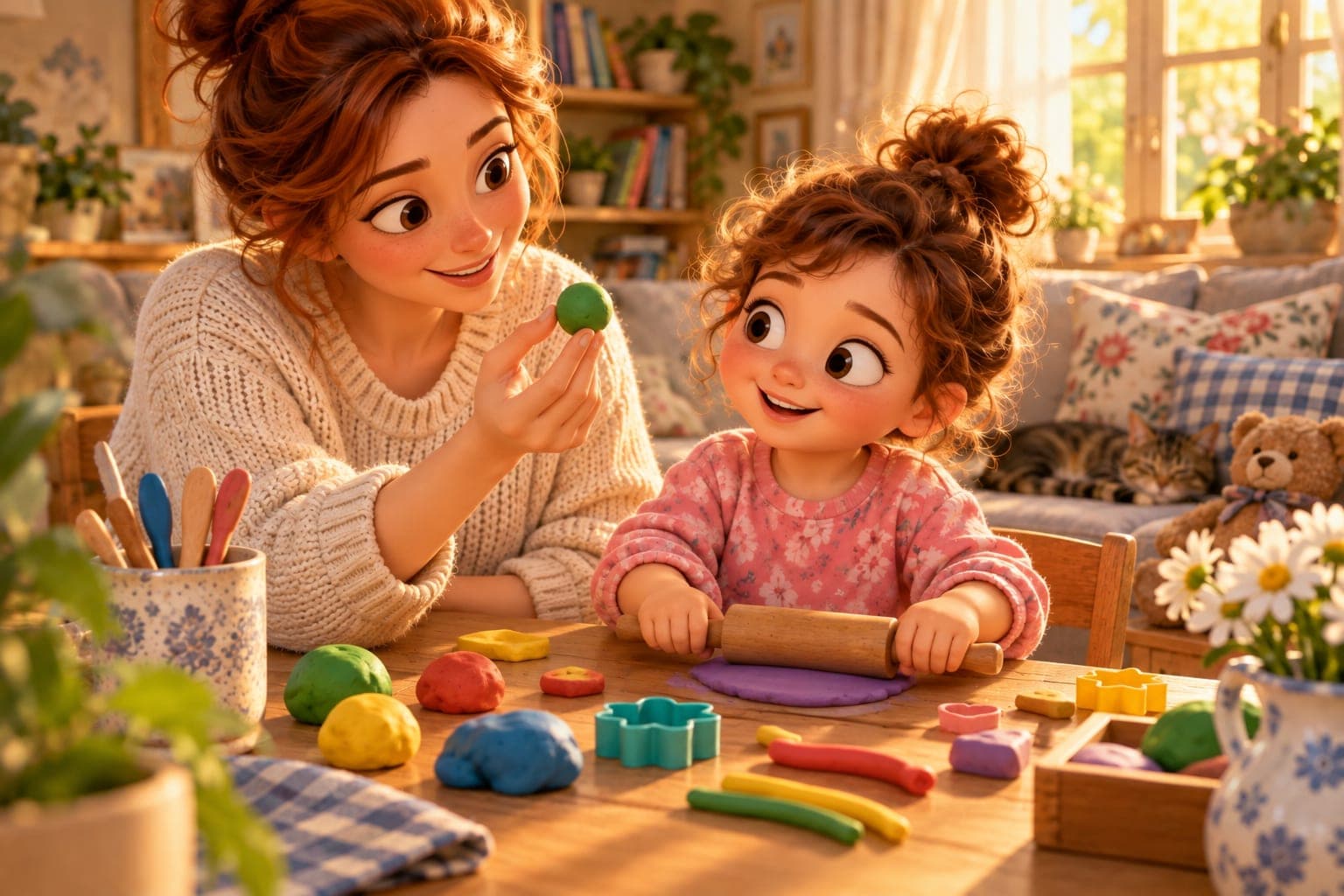
Materials: age-appropriate modelling dough. Time: 5–7 minutes. Let your child squeeze, roll, and make large balls. This works the hands and fingers. Easier: just squeeze the dough. Harder: make a circle from a roll.
8. Waves With a Chunky Crayon
Materials: a chunky crayon and the waves for ages 3–4 worksheet. Time: 5 minutes. Your child follows the line with a calm, steady movement. Easier: trace the pattern with a finger first. Harder: draw another wave independently beside it.
9. Trace the Apple
Materials: a chunky crayon and the apple dot-to-dot sheet. Time: 5 minutes. This practises hand control and direction of movement. Easier: the adult starts the line. Harder: the child finishes it independently.
10. Colour the Farm
Materials: chunky crayons and a farm colouring page. Time: 5–10 minutes. Name the animals and colours together without expecting your child to stay neatly inside the lines. For more ideas, see our guide to colouring pages for 3-year-olds.
Movement Activities
11. Move Like an Animal
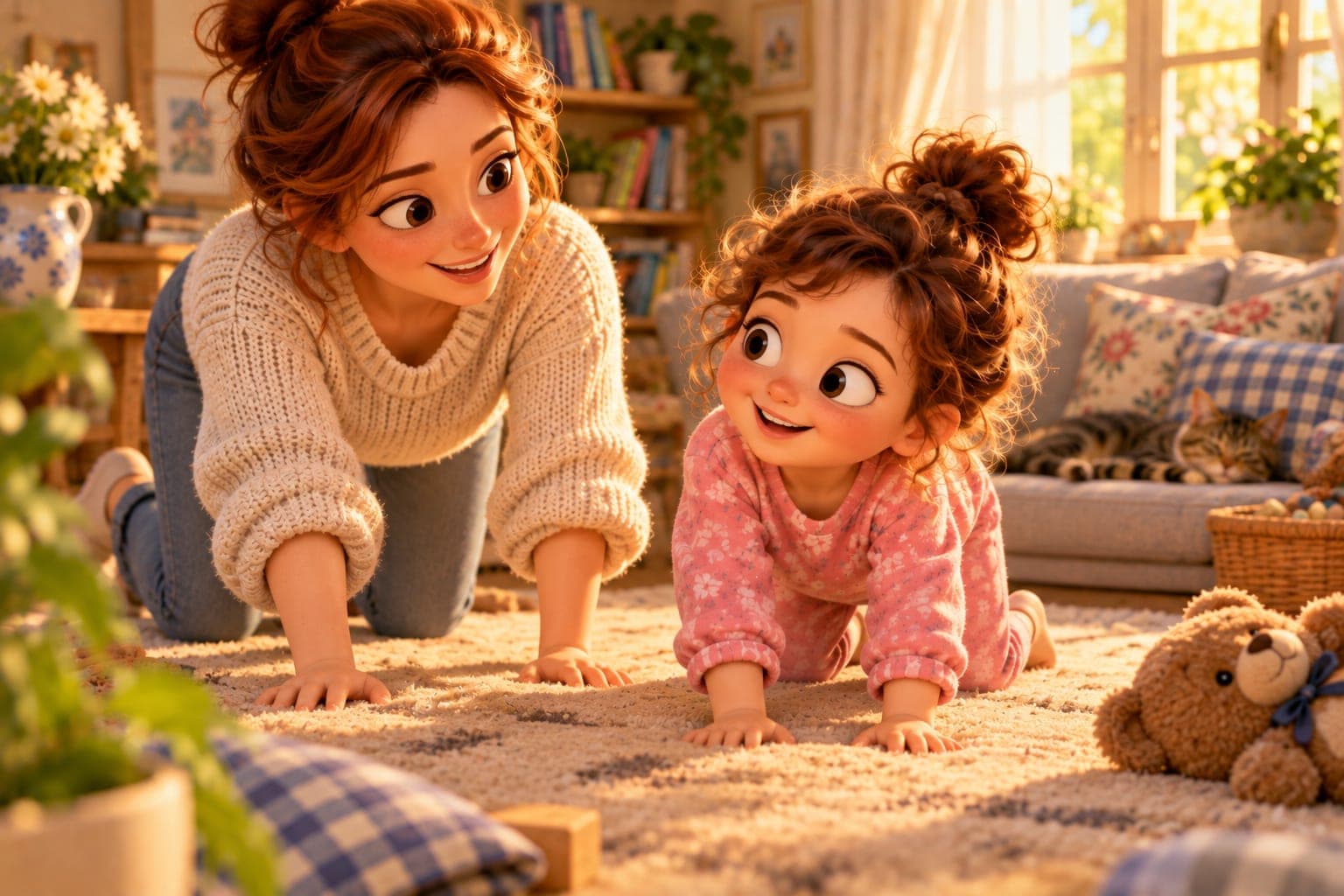
Materials: clear floor space. Time: 5 minutes. Walk like a bear, cat, or duck. This practises coordination and imitation. Easier: use one movement. Harder: switch movements when you call out a new animal.
12. Fast – Slow
Materials: none. Time: 3–5 minutes. Say “fast” or “slow” and let your child change their walking speed. This is a simple at-home version of the opposites play suggested by the CDC. Harder: add “loud–quiet.”
13. Cushion Path
Materials: stable cushions placed on the floor. Time: 5 minutes. Help your child step from one cushion to the next while you stay close. This practises balance. Easier: place cushions close together. Harder: skip one cushion.
Sensory Activities
14. Warm or Cool?
Materials: two bowls with safely warm and cool water. Time: 3 minutes. Let your child touch the water with a hand and describe how it feels. Stay with your child the whole time. Never use hot water.
15. What’s in the Bag?
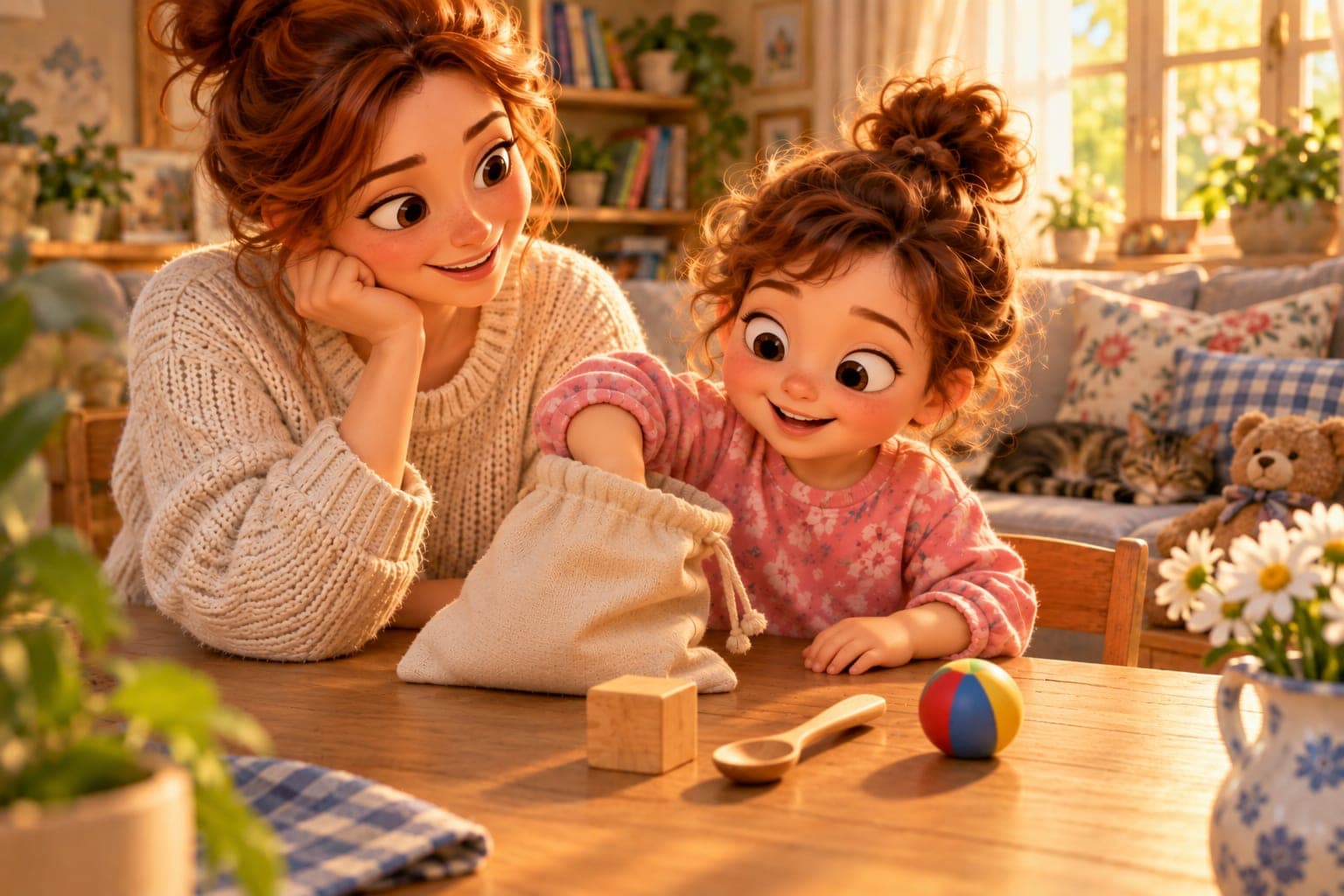
Materials: a fabric bag and 3 large, safe objects. Time: 5 minutes. Ask your child to identify an object by touch. This builds tactile awareness and vocabulary. Easier: use familiar toys. Harder: choose objects with similar shapes.
16. Scoop and Pour
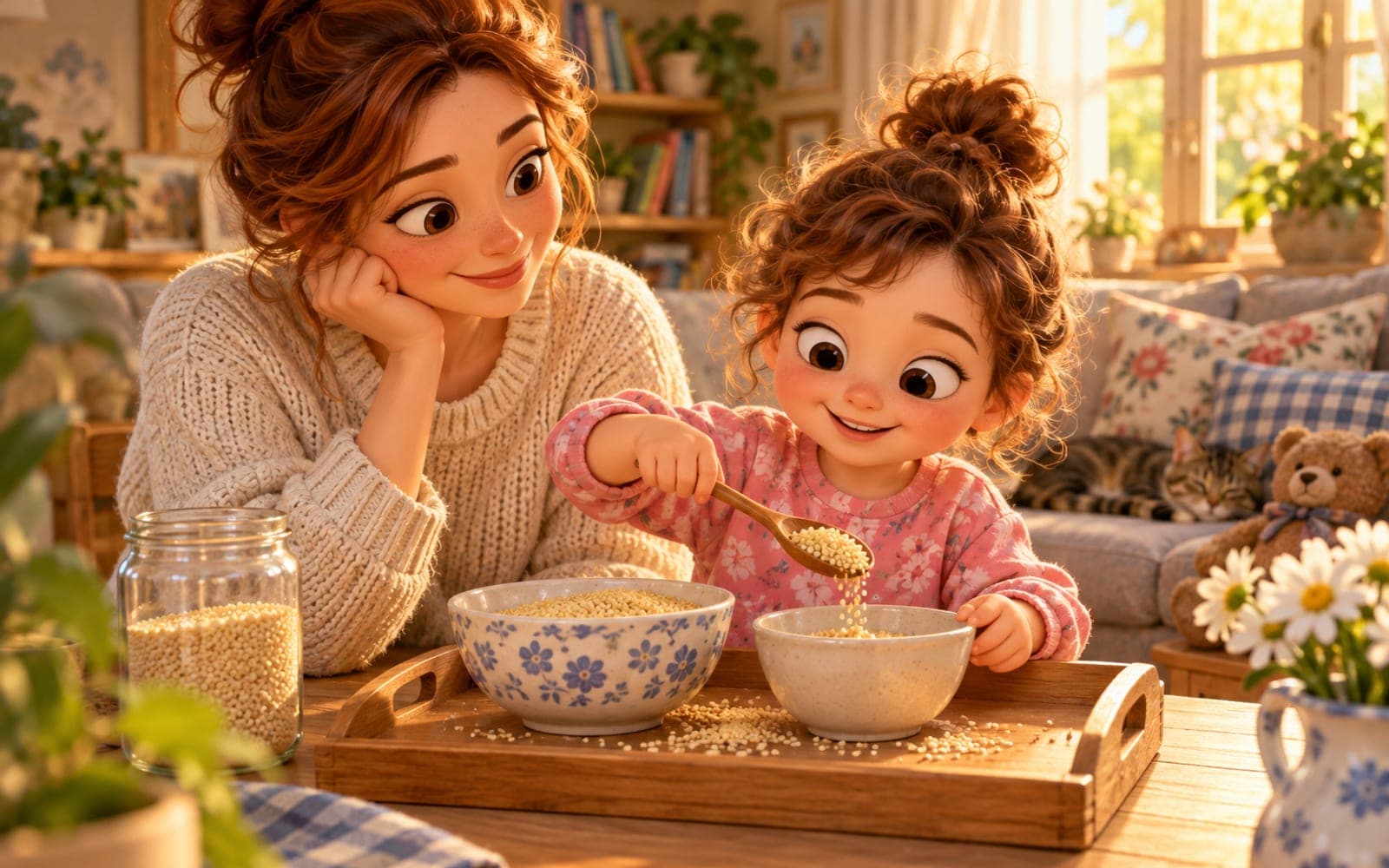
Materials: two bowls, a large spoon, and dry rice or another grain. Time: 5 minutes. Your child moves the material from one bowl to the other. This practises coordination. Supervise throughout; if your child still puts things in their mouth, use large blocks instead of grains.
17. First Maze
Materials: a chunky crayon and a first maze with a wide path worksheet. Time: 3–5 minutes. Trace the route with a finger first. Easier: guide your child’s finger. Harder: let them follow the maze with a crayon independently.
Everyday Life Activities
18. Kitchen Helper
Materials: a bowl, spoon, and washed fruit or vegetables. Time: 5–10 minutes. Your child can stir or wash produce. This builds independence and the ability to follow simple instructions. The adult handles anything sharp, hot, or electric.
19. Sort the Laundry
Materials: clean clothes. Time: 5 minutes. Ask your child to match large socks into pairs or sort items into “small–big.” This practises matching. Easier: two pairs. Harder: sort by two features.
20. Set the Table for the Teddies
Materials: safe plastic cups and plates. Time: 5 minutes. Set a place for two soft toys: one cup and one plate each. This practises counting, sequencing, and pretend play. Harder: add a third toy.
How Can You Compare All 20 Activities Quickly?
No. | Activity | Skill Area | Time |
|---|---|---|---|
1 | What Is Teddy Doing? | language | 3–5 min |
2 | Word Echo | listening | 3 min |
3 | What’s Missing? | memory and language | 5 min |
4 | Block Staircase | counting | 5 min |
5 | Big or Small? | comparing | 3–5 min |
6 | Find One Like Mine | matching | 5 min |
7 | Play Dough | fine motor | 5–7 min |
8 | Crayon Waves | fine motor | 5 min |
9 | Trace the Apple | fine motor | 5 min |
10 | Colour the Farm | fine motor and language | 5–10 min |
11 | Move Like an Animal | movement | 5 min |
12 | Fast–Slow | movement and concepts | 3–5 min |
13 | Cushion Path | balance | 5 min |
14 | Warm or Cool? | sensory | 3 min |
15 | What’s in the Bag? | touch and language | 5 min |
16 | Scoop and Pour | coordination | 5 min |
17 | First Maze | hand-eye coordination | 3–5 min |
18 | Kitchen Helper | independence | 5–10 min |
19 | Sort the Laundry | matching | 5 min |
20 | Set the Table for the Teddies | counting and pretend play | 5 min |
How Can You Make a Simple Weekly Activity Plan?
You do not need to do several learning activities every day. Choose one short activity and stop when your child loses interest.
- Monday: What Is Teddy Doing?
- Tuesday: Play-Dough Rolls.
- Wednesday: Count a Block Staircase.
- Thursday: Move Like an Animal.
- Friday: Colour the Farm.
- Saturday: Kitchen Helper.
- Sunday: your child chooses a favourite activity from the week.
What Is the Adult’s Role During Play?
The adult’s main jobs are to keep the activity safe, show how to begin, and follow the child’s lead. You do not need to correct every mistake or finish the task for them.
Ask short questions, name what your child is doing, and give them time to answer. The CDC encourages adults to play and talk with children and let them solve simple problems with support instead of immediately giving the answer.
How Are These Activities Different From Activities for a 4-Year-Old?
For a 3-year-old, choose larger materials, shorter sessions, simpler rules, and more shared activity with an adult. A 4-year-old can often stay with one play goal for longer and handle activities with more steps.
If your child is ready for more challenging versions, see learning activities for 4-year-olds. There is no need to rush ahead just because an easier activity has become familiar.
What Mistakes Should You Avoid?
- Don’t use tiny objects just because they “exercise the fingers.”
- Don’t leave a 3-year-old alone with water or loose sensory materials.
- Don’t include scissors in these activities.
- Don’t keep an activity going when your child clearly wants to stop.
- Don’t turn play into a test with right and wrong answers.
When Should You Talk to a Paediatrician or Doctor?
These activities are not designed to assess development. However, if you notice in everyday life that your child is not meeting one or more milestones, has lost a skill they previously had, or something else concerns you, the CDC recommends discussing it with a healthcare professional and asking about developmental screening.
Sources
- Centers for Disease Control and Prevention, Milestones by 3 Years – What You Can Do for Your 3-year-old, 2026.
- American Academy of Pediatrics, Choking Prevention for Babies & Children: What Every Parent Needs to Know, accessed 2026.
- American Academy of Pediatrics, Drowning Prevention for Curious Toddlers: What Parents Need to Know, updated 2026.