
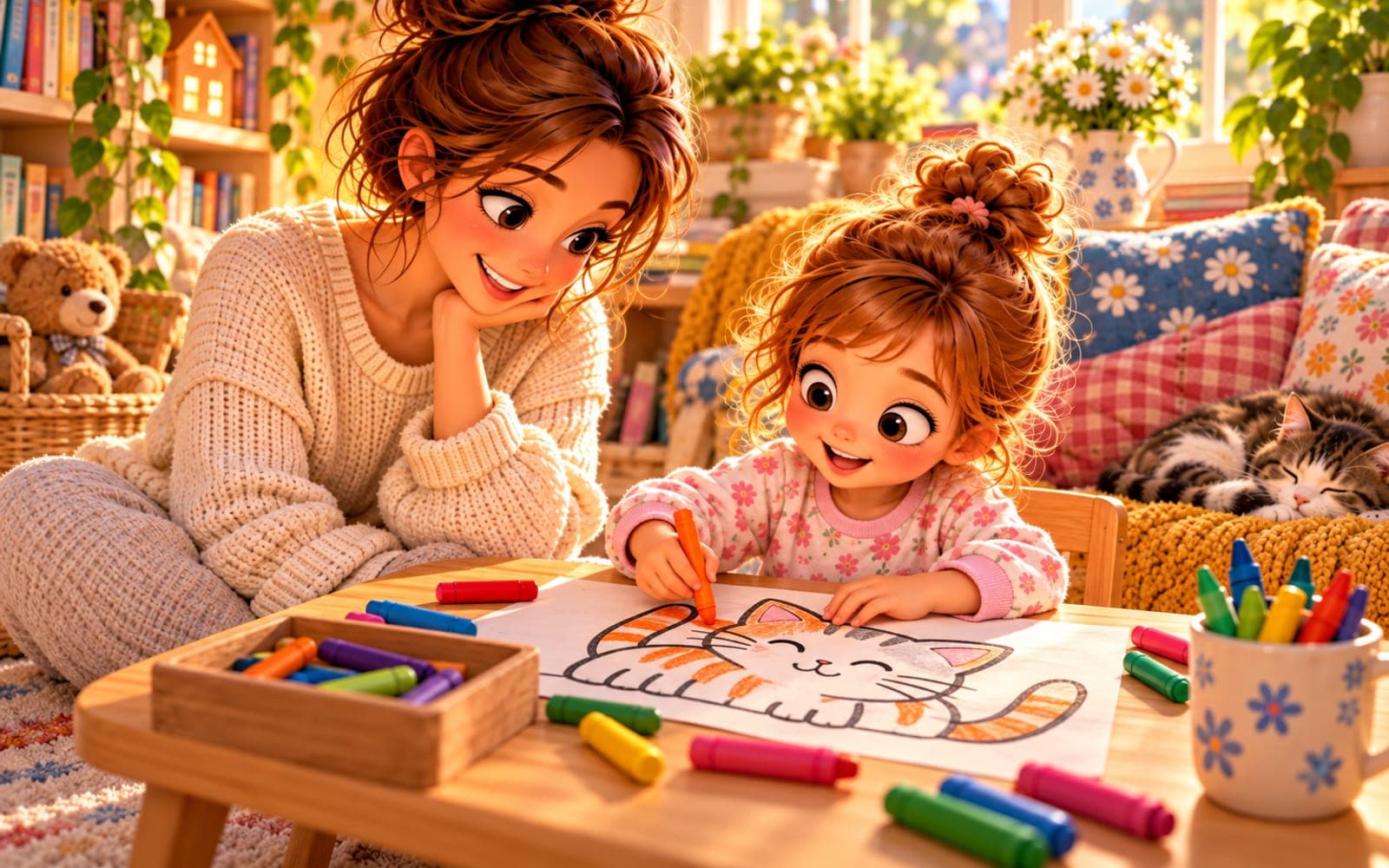
In short: what coloring pages should you choose for a 3-year-old?
For a 3-year-old, choose pages where it is immediately clear what to color. The best starting point is one large picture or 1–3 simple elements.
- choose large areas and thick, clear outlines;
- start with 1–3 elements on the page;
- use familiar themes: animals, vehicles, fruit and toys;
- give your child thick colored pencils or crayons;
- plan for 5–10 minutes and stop when your child loses interest;
- do not correct coloring “outside the lines.”
If you want a variety of simple themes to hand, browse printable coloring pages. With a 3-year-old, simplicity matters more than the number of pages.
What should coloring pages for a 3-year-old look like?
A good coloring page for a 3-year-old has one large, easy-to-read shape and very few details. Your child should be able to recognise the picture without a long explanation.
A large apple, pear, cat, dog, car, ball, teddy bear or single building block is a good place to start. If there are three items on the page, they should be clearly separated. The background can be blank.
A thick outline makes the edge of an area easier to notice. That does not mean a 3-year-old is expected to stay exactly inside it. At this age, children are mainly practising how to guide a drawing tool, change direction and control pressure.
Good picture for a 3-year-old | Picture likely to be too difficult |
|---|---|
1–3 large elements | many small elements and a full background |
thick, continuous outlines | thin lines and tiny patterns |
large areas to color | small areas that require precision |
familiar theme: cat, car, fruit, teddy bear | a complex scene with many characters |
can start coloring straight away | needs a long explanation of what is what |
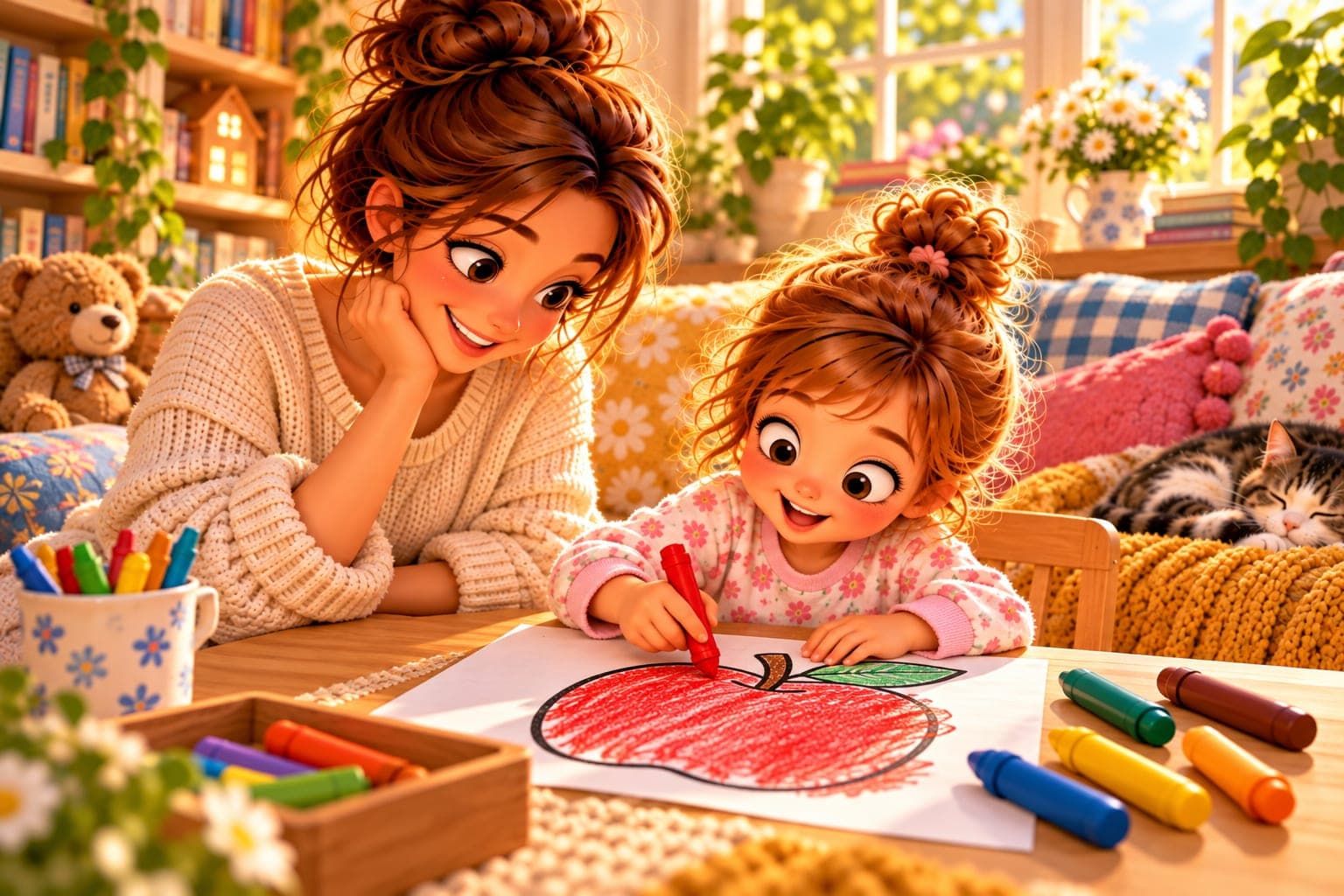
What coloring page themes do 3-year-olds enjoy?
Three-year-olds often prefer pictures they recognise from everyday life. That way, coloring starts with doing and talking rather than wondering, “What is this?”
Simple animal themes work well all year round. You can choose cats, and after a trip to the countryside try farm animals: a cow, hen, pig or horse. After visiting grandparents or a farm, your child can more easily connect the picture with something they have actually seen.
Vehicles also appeal to many 3-year-olds. A simple car with large wheels is easier than a busy street full of signs and people. In the cars category, choose single cars, buses or simple scenes first. A train can be a good choice after a rail journey or a walk near the tracks.
At home, a natural theme is toys: a teddy bear, ball, blocks or doll. In autumn, offer a large apple, pear or pumpkin and talk about fruit from the market. In winter, a snowman, mitten or simple Christmas tree works well. In spring, choose a flower, ladybird or chick, and in summer, ice cream, a ball or a simple beach theme.
The easiest way to choose a theme is to connect it with a recent experience: after a walk, pick a leaf; after a bus ride, choose a vehicle; after baking, choose fruit or a simple kitchen theme.
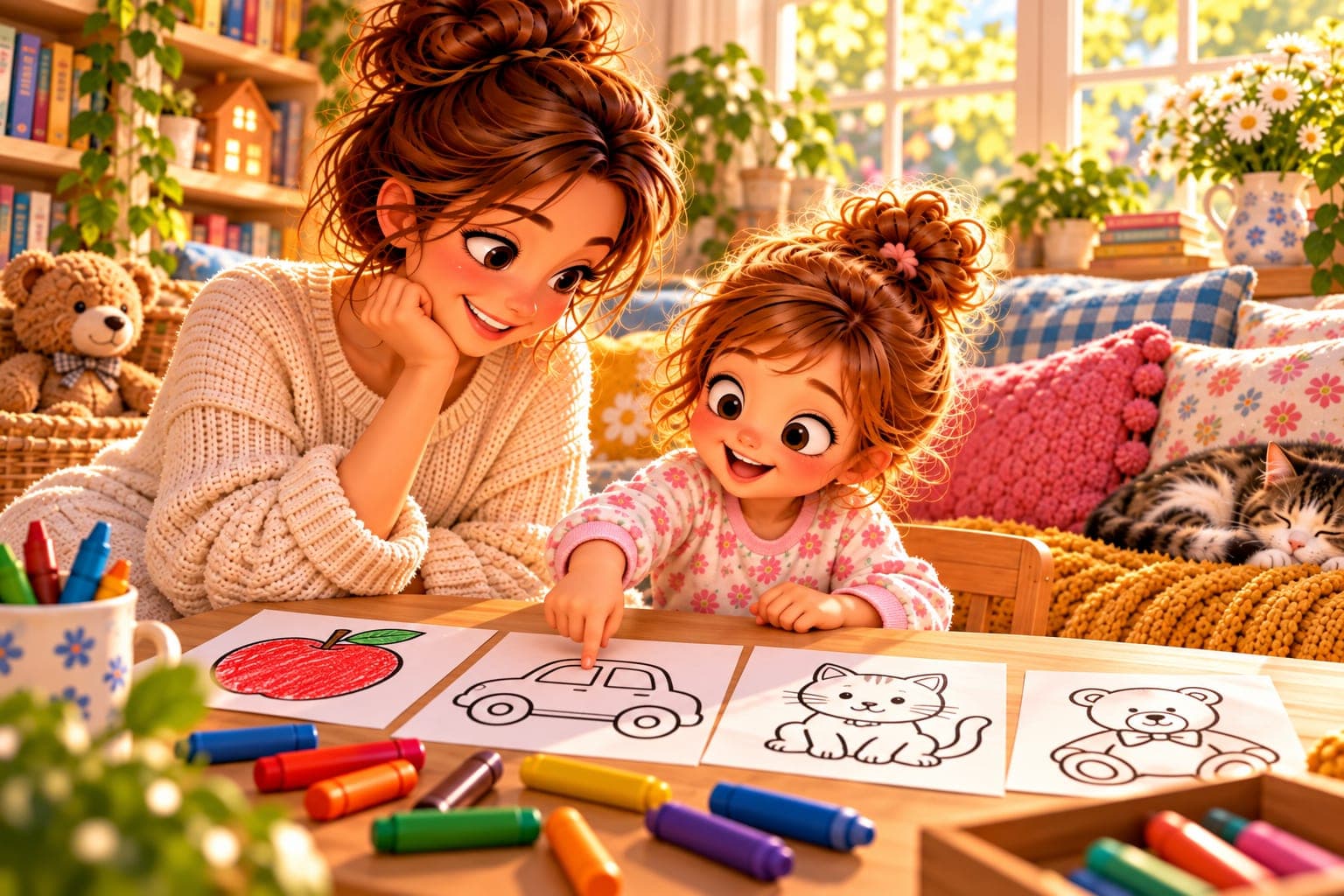
How can you tell when a coloring page is too difficult?
A page that is too difficult can quickly make a child lose interest. The sign is not simply coloring outside the lines, but how your child reacts to the task.
Switch to an easier page when your child:
- looks at it for a long time and does not know where to start;
- makes a few marks and immediately puts the crayon down;
- skips most of the small areas;
- asks an adult to “do it for me”;
- gets upset because the picture seems to need constant correction.
Do not treat this as a skills test. Sometimes a child simply does not like the theme. Offer a choice between two simple pictures and see whether interest returns.
How does a 3-year-old hold a crayon, and should you correct the grip?
At age 3, the way a child holds a crayon is still developing, so there is no need to force an “adult” grip. A whole-hand grip gradually gives way to grips that use the fingers more; some children begin to show a pincer-like pattern and later a more mature three-finger grip.
The best support is comfortable tools and short periods of play. Thick colored pencils, short wax crayons or other tools designed for young children often work well. A tool that is too thin can be harder to hold steadily.
Do not reposition your child’s fingers after every mark. If the grip looks unusual but your child draws freely and does not complain of pain, observe development without pressure.
When buying art materials, check the age guidance, instructions and manufacturer information. Creative sets, including crayons and paints sold as toys, should meet relevant safety requirements and carry the required markings.
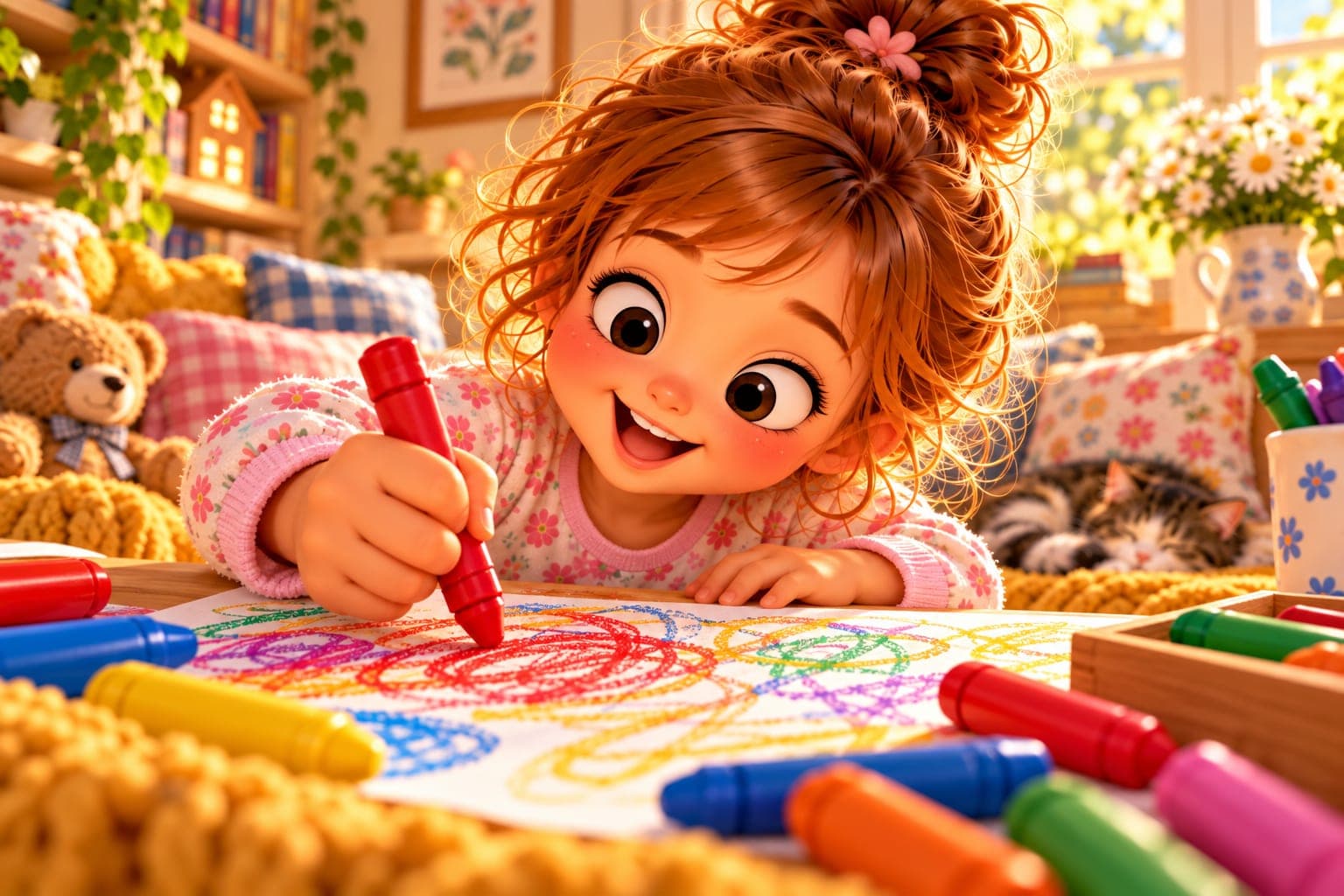
How long should a 3-year-old spend coloring?
To begin with, 5–10 minutes is enough. This is a practical guide for organising play, not a target your child has to meet.
Sit next to your child, offer 2–4 colors and let them begin. If they want to stop after five minutes, finish without pushing them to “complete” the page. If they are still happily coloring, there is no need to stop just because ten minutes have passed.
A short session can look like this:
- choose one simple picture;
- name what you can see in it;
- choose a few crayons;
- color for a few minutes;
- finish before tiredness sets in.
After simple coloring, you can move on to a short activity such as connect the dots: traced fish for a 3-year-old, if your child feels like it.
How can you turn coloring into conversation and learning?
Coloring can create opportunities to talk, but it does not need to become a lesson. A few short questions linked to what your child is doing are enough.
You can say:
- “You chose the red crayon. What else is red?”;
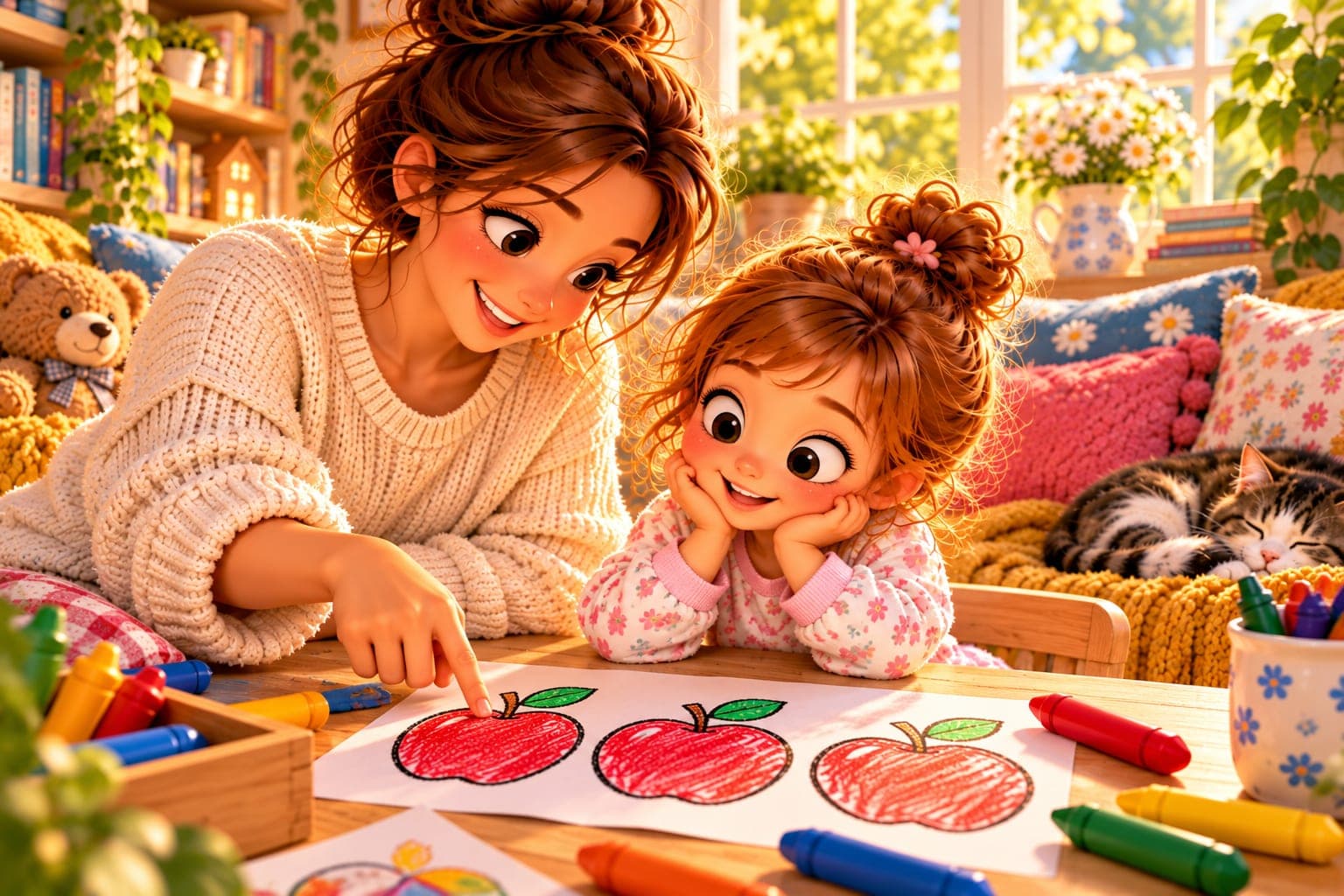
- “There are three apples here. Let’s count: one, two, three”;
- “Which car is the biggest?”;
- “What color will your teddy bear be?”.
Stop counting at three if that is how many items are in the picture. Do not quiz your child on color names. If they call a color by the wrong name, simply use the correct word naturally in your reply.
These conversations can combine hand movement, vocabulary and simple maths ideas. Early-years learning programmes commonly emphasise language, maths, physical development and growing independence. Coloring can be one of many everyday ways to support these areas.
If you are looking for other short activities to do together, also see printable worksheets.
What adult mistakes should you avoid during coloring?
The most common mistake is turning a free activity into an exercise that is judged like schoolwork.
Try to avoid:
- correcting every mark that goes outside the outline;
- insisting on “realistic” colors;
- giving highly detailed pictures “for development”;
- forcing the hand into position and correcting the grip constantly;
- stretching the session when the child is already tired;
- comparing the work with siblings’ pictures or other children’s.
A green cat or purple car is fine. At this age, movement, interest and the feeling of agency — “I chose this and I did it” — matter most.
When should you discuss fine-motor development with a professional?
Occasionally not wanting to color does not mean there is a problem. Children differ in their interests, rate of development and how they use drawing tools.
It is worth talking to a paediatrician, early-years teacher or professional who works with hand development when the difficulty is persistent and also appears in other activities. Pay attention if your child regularly avoids using a crayon, spoon or blocks, tires very quickly, reports pain, or clearly loses movements they were previously able to do.
A consultation is for observation and choosing appropriate support, not for making a diagnosis based on coloring. If you are unsure, collect examples from several weeks rather than judging one piece of work.
You can find more practical advice about everyday activities in the parent guide.
Sources
- Minister Edukacji, Rozporządzenie z 11 marca 2026 r. w sprawie podstawy programowej wychowania przedszkolnego i kształcenia ogólnego dla szkoły podstawowej, Dz.U. 2026 poz. 378.
- Ministerstwo Edukacji Narodowej, Nowe podstawy programowe wychowania przedszkolnego i kształcenia ogólnego dla szkoły podstawowej, 2026.
- UOKiK, ABC Małego Konsumenta – Oznakowanie CE i bezpieczeństwo zabawek, 2025.