
How Do You Choose a Learning Activity for a 5-Year-Old?
A good activity for a 5-year-old is short, has one clear rule, and gives the child room to act independently.
The CDC notes that most 5-year-olds can, among other things, recognise simple rhymes, count to 10, pay attention for 5–10 minutes, follow rules or take turns, and hop on one foot. These are milestones to observe, not a test.
In short:
- choose an activity that matches your child’s energy;
- start with the easier version;
- stop when interest drops;
- alternate table activities, movement, and building;
- also use activities for 5-year-olds.
Which Activities Build Sound Awareness and Phonemic Listening?
These games are based on listening closely to words. You can find more practice in our phonemic awareness activities for 5-year-olds.
1. Rhyme Dominoes
Materials: 8–12 picture cards in rhyming pairs, for example cat–hat, fox–box. Time: 5–8 minutes. Practises: recognising rhymes and listening to word endings. Your child adds a picture whose name rhymes with the previous one. Easier: offer two choices. Harder: make up a rhyme.
2. Two Sound Boxes
Materials: two boxes and 6–8 small objects. Time: 7–10 minutes. Practises: hearing the first sound in a word. Choose two sounds, for example /m/ and /k/, and ask your child to sort objects by the first sound in their names. Easier: three objects for each sound. Harder: explain why each object belongs there.
3. Which Word Sounds Different?
Materials: none. Time: 5 minutes. Practises: comparing how words sound. Say three words, for example “map, moon, cat”; your child points to the one that starts differently. Easier: emphasise the first sound. Harder: swap roles.
How Can You Practise Counting to 10 and Comparing Quantities?
A 5-year-old can count objects, compare groups, and name shapes. You may also find shapes for 5-year-olds useful.
4. Make Exactly 10
Materials: 10 bottle tops and two paper plates. Time: 5–8 minutes. Practises: counting to 10 and splitting a set. Put 6 bottle tops on one plate. Your child puts enough on the second plate to make 10 altogether: 4, because 6 + 4 = 10. Easier: start with 5. Harder: vary the starting number.
5. Which String Has More?
Materials: two strings and 10 clothes pegs. Time: 7 minutes. Practises: comparing quantities. Clip 7 pegs to one string and 4 to the other. The first has 3 more, because 7 − 4 = 3. Easier: just ask, “Which has more?” Harder: let your child make the groups.
6. Number Lift
Materials: cards with the numbers 1–10 arranged vertically. Time: 5–8 minutes. Practises: number order and counting steps. A counter starts on 3 and travels to 8, so it moves 5 spaces, because 8 − 3 = 5. Easier: move 1–2 spaces. Harder: work out the answer before moving.
7. Shapes Under a Cloth
Materials: a paper circle, square, triangle, and rectangle, plus a cloth. Time: 5–7 minutes. Practises: recognising shapes and describing their features. Your child feels one shape under the cloth and guesses what it is. Easier: use a circle and square. Harder: explain the answer using sides and corners.
You can also play Shoal.
How Can You Practise Patterns and Sequences?
Patterns help children notice a rule and predict what comes next. See also patterns and sequences for 5-year-olds.
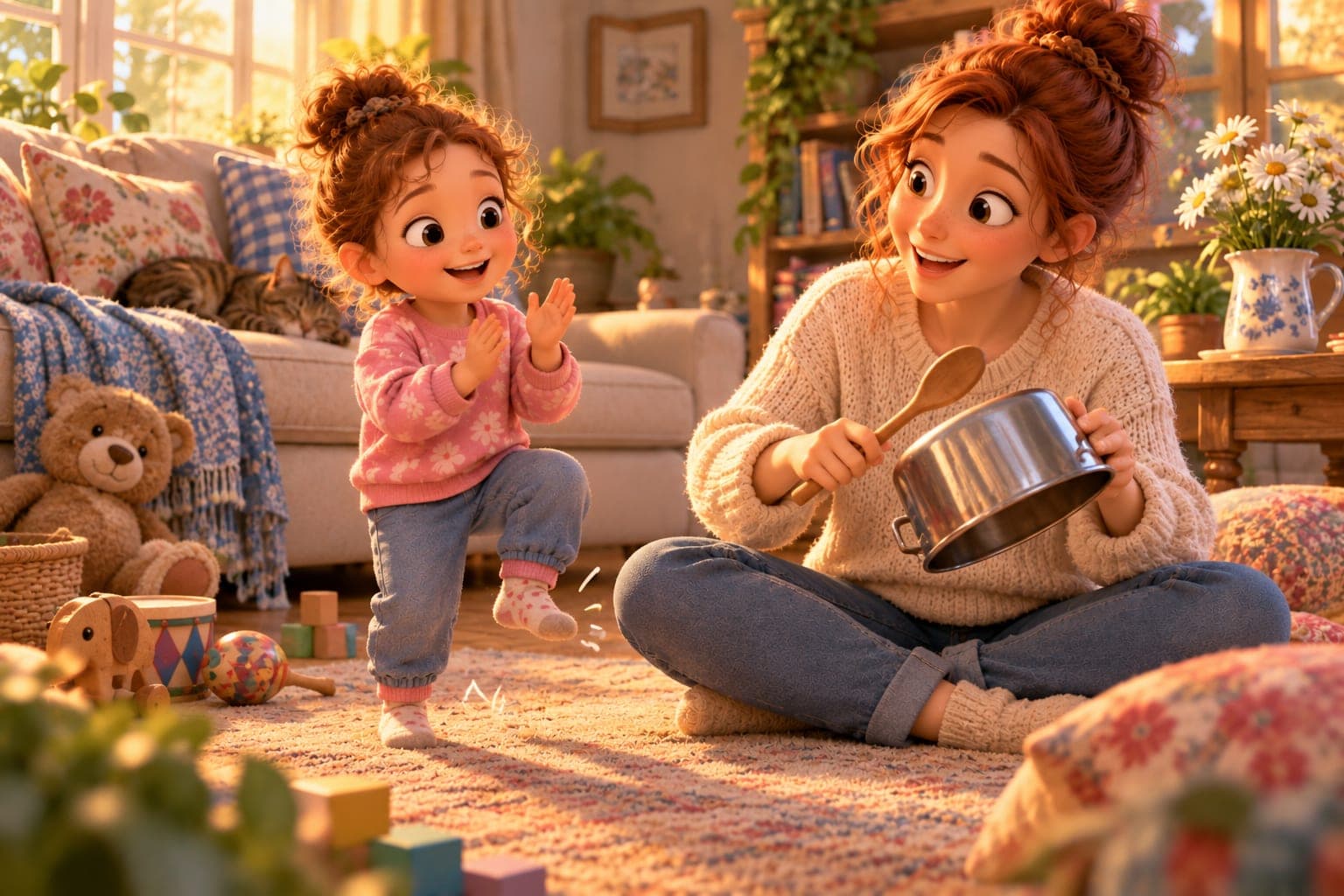
8. Spoon–Clap–Stamp
Materials: a wooden spoon. Time: 5 minutes. Practises: copying a three-part sequence and listening carefully. Make a pattern: tap the spoon–clap–stamp, then repeat it several times. Easier: use two actions. Harder: add a fourth action.
9. Paper Pattern Necklace
Materials: paper circles and squares in two colours, with a string drawn on paper. Time: 8–12 minutes. Practises: continuing a pattern. Make, for example, red circle–blue square–red circle–blue square. Easier: use two elements. Harder: use a three-part pattern.
10. What Comes Next in the Day?
Materials: four pictures of everyday activities. Time: 7–10 minutes. Practises: sequencing and storytelling. Your child puts activities such as waking up, breakfast, a walk, and bedtime in order. Easier: use three cards. Harder: use five cards and tell the story.
How Can You Build Fine Motor and Pre-Writing Skills?
Smooth, controlled movement matters more than a perfect result. You can use triangle tracing patterns for ages 5–6.
11. Line Code
Materials: paper and a chunky crayon. Time: 5–8 minutes. Practises: movement direction and copying. Draw a short code: vertical line, horizontal line, diagonal line. Your child copies it beside yours. Easier: use two marks. Harder: use five marks.
12. Pom-Pom Road
Materials: a large pom-pom, a clothes peg, and a sheet with a wide winding road. Time: 7–10 minutes. Practises: grip and hand-eye coordination. Your child holds the pom-pom with the peg and moves it along the route. Easier: use a straight road. Harder: make the bends narrower.
13. Finish the Other Half
Materials: paper with half of a simple butterfly, house, or robot already drawn. Time: 8–12 minutes. Practises: observation, planning, and precision. Your child draws the missing half. Easier: use a large shape. Harder: include three details.
For a calm finish, try mazes for ages 5–6 or an owl dot-to-dot.
Which Movement Games Work Well for 5-Year-Olds?
Movement can be combined with numbers and simple rules.
14. Aim for the Shape
Materials: a paper circle, square, and triangle, plus a soft rolled-up sock. Time: 7–10 minutes. Practises: coordination and shape recognition. The adult names a shape and the child aims at it from a short distance. Easier: use two shapes. Harder: add a colour.
15. Jumping Number Path 1–5
Materials: five sheets with the numbers 1–5. Time: 5–8 minutes. Practises: hopping on one foot and recognising numerals. Your child picks a number and hops to the matching sheet. Easier: jump with both feet. Harder: do the number of jumps shown on the card.
16. Ball on Command
Materials: a soft ball. Time: 5–10 minutes. Practises: following a rule and waiting for a signal. Agree that “green” means roll the ball and “red” means stop it. Easier: keep it slow. Harder: add a third signal, such as two claps.
Which Creative and Building Activities Can You Do With a 5-Year-Old?
Building creates a problem without one required answer. The adult sets the goal but does not show the solution.
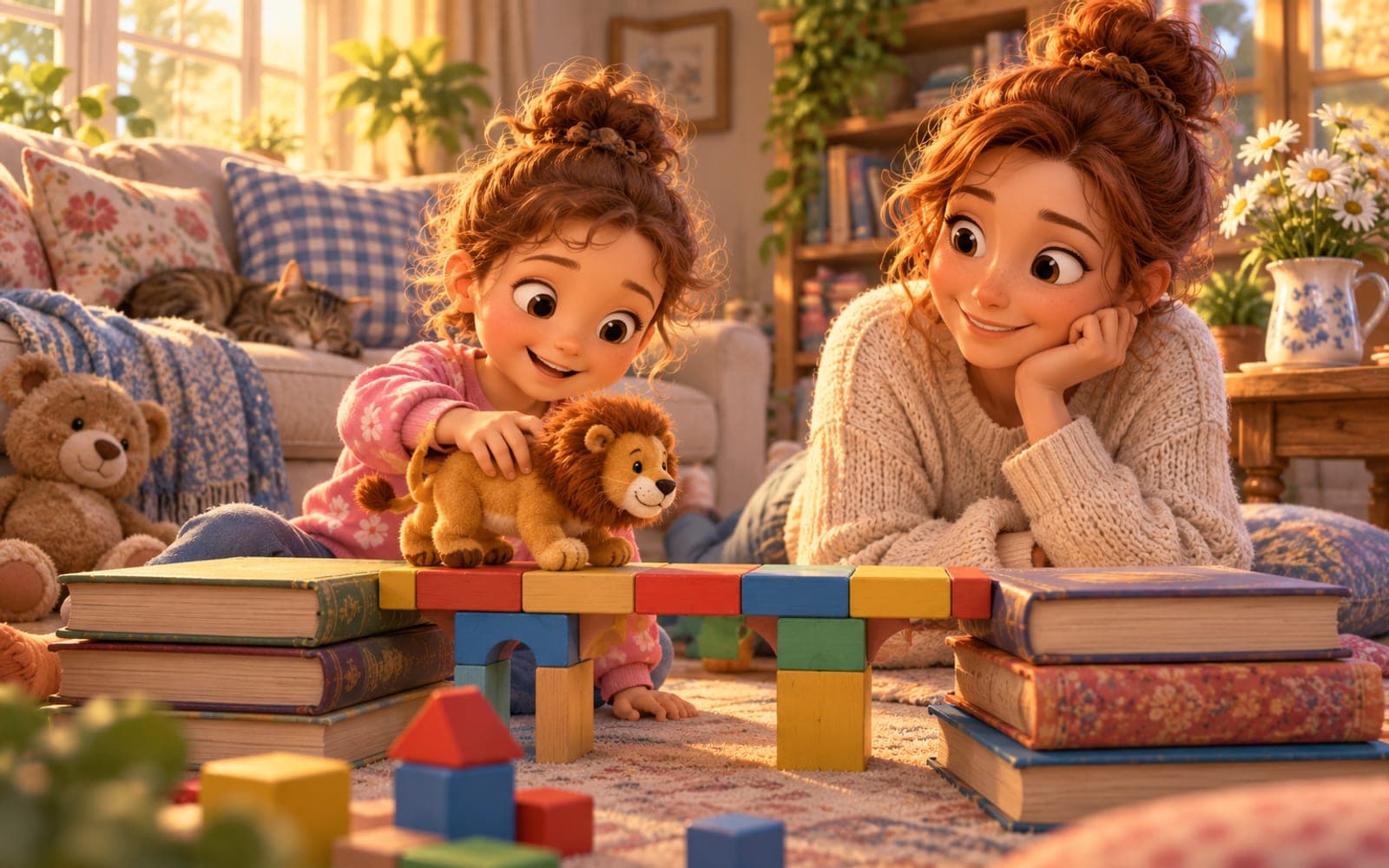
17. Bridge for a Toy
Materials: blocks, pieces of card, and a small soft toy. Time: 10–15 minutes. Practises: planning and testing an idea. Build a bridge across the gap between two books. Easier: use a 5 cm gap. Harder: make it hold two figures.
18. A House With Exactly 12 Blocks
Materials: exactly 12 blocks. Time: 10 minutes. Practises: planning with a limited number of pieces. Your child builds a house using all 12 blocks. Easier: use any number of blocks. Harder: include an entrance and a roof.
19. A City From Paper Shapes
Materials: pre-cut circles, squares, triangles, and rectangles, glue, and paper. Time: 10–15 minutes. Practises: composition and shape recognition. Your child builds houses, vehicles, and trees from the shapes. Easier: show one example house. Harder: use every shape.
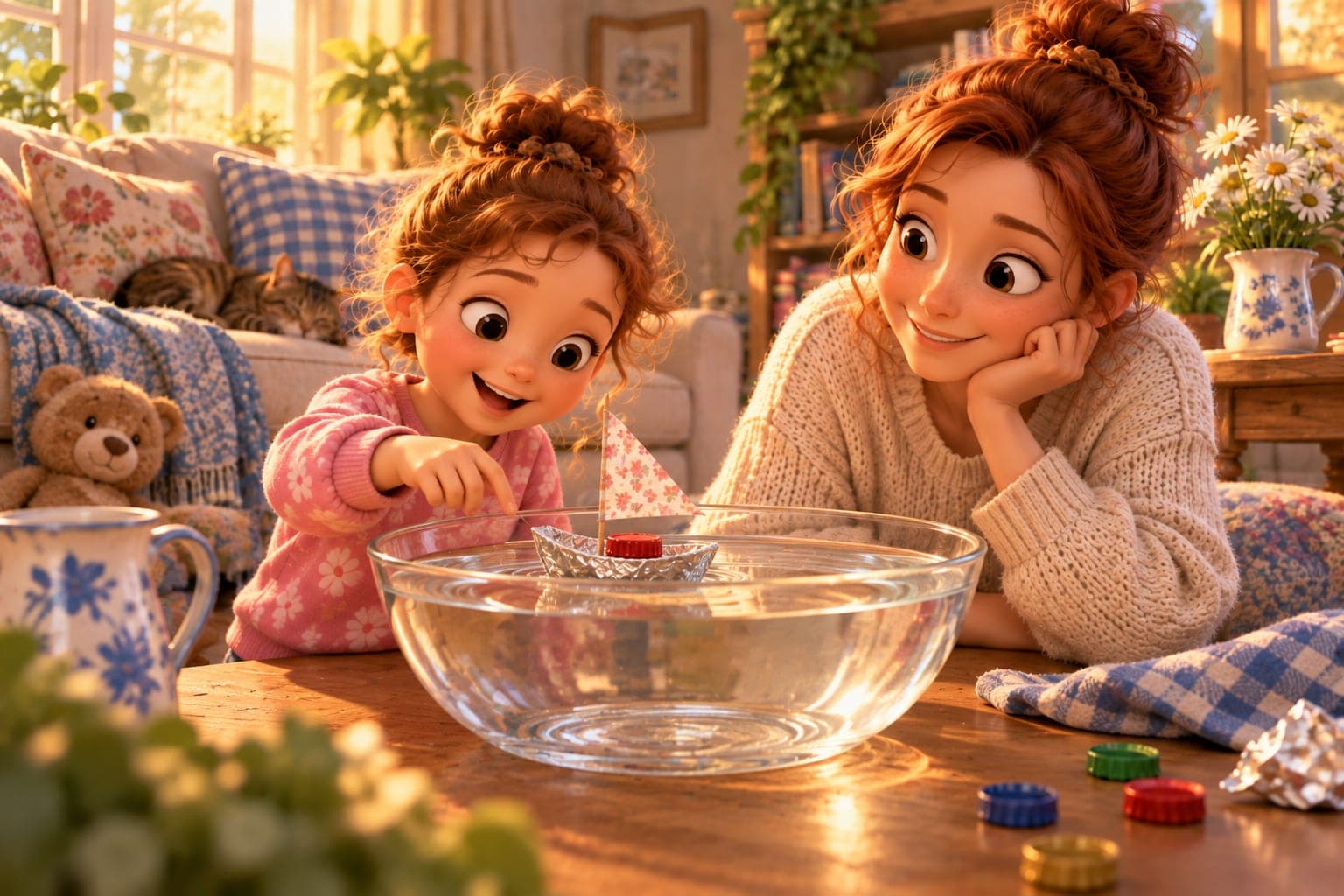
20. A Boat and 10 Bottle Tops
Materials: a bowl of cool water, a piece of aluminium foil, and 10 bottle tops. Time: 10–15 minutes. Practises: predicting, counting, and improving a design. Your child shapes a boat and tests how many bottle tops it can hold. Easier: make a wide boat. Harder: change the shape and compare the result.
How Can You Compare All 20 Activities Quickly?
No. | Activity | Skill Area | Time |
|---|---|---|---|
1 | Rhyme Dominoes | listening | 5–8 min |
2 | Two Sound Boxes | speech sounds | 7–10 min |
3 | Which Word Sounds Different? | speech sounds | 5 min |
4 | Make Exactly 10 | counting | 5–8 min |
5 | Which String Has More? | comparing | 7 min |
6 | Number Lift | numbers | 5–8 min |
7 | Shapes Under a Cloth | shapes | 5–7 min |
8 | Spoon–Clap–Stamp | patterns | 5 min |
9 | Paper Pattern Necklace | sequences | 8–12 min |
10 | What Comes Next in the Day? | sequences | 7–10 min |
11 | Line Code | fine motor | 5–8 min |
12 | Pom-Pom Road | fine motor | 7–10 min |
13 | Finish the Other Half | pre-writing | 8–12 min |
14 | Aim for the Shape | movement | 7–10 min |
15 | Jumping Number Path 1–5 | movement + numbers | 5–8 min |
16 | Ball on Command | movement + rules | 5–10 min |
17 | Bridge for a Toy | building | 10–15 min |
18 | A House With Exactly 12 Blocks | building | 10 min |
19 | A City From Paper Shapes | creative | 10–15 min |
20 | A Boat and 10 Bottle Tops | experiment | 10–15 min |
How Can You Make a Weekly Activity Plan?
One activity a day is enough.
Day | Suggestion |
|---|---|
Monday | rhyme dominoes |
Tuesday | make exactly 10 |
Wednesday | paper pattern necklace |
Thursday | pom-pom road |
Friday | ball on command |
Saturday | bridge for a toy + jumping number path |
Sunday | boat and bottle tops + finish the other half |
See also what a 5-year-old can typically do, activities for 4-year-olds and activities for 6-year-olds.
What Is the Adult’s Role During a 5-Year-Old’s Play?
The adult prepares the materials, explains the rule, and gives the child time to try.
Repeating an activity is useful, and you can change the rule as long as the game stays safe.
How Can You Keep the Activities Safe?
Clear away small pieces straight after use, and when cutting, choose child-safe scissors and supervise your child.
For movement games, remove slippery rugs and sharp objects. For the experiment, use cool water and a stable bowl.
What Mistakes Should You Avoid?
- Don’t turn play into a test.
- Don’t give the answer before your child has had a first try.
- Don’t compare the result with other 5-year-olds.
- Don’t correct every line or every construction.
- Don’t keep going when your child wants to stop.
At age 5, language, early maths, movement, thinking skills, and independence can all be developed through play. Home activities do not need to imitate a classroom.
Sources
- Centers for Disease Control and Prevention, Milestones by 5 Years, 15 May 2026.
- Minister Edukacji, Rozporządzenie z 11 marca 2026 r. w sprawie podstawy programowej wychowania przedszkolnego oraz podstawy programowej kształcenia ogólnego dla szkoły podstawowej, Dz.U. 2026 poz. 378, 2026.