
What can a 3-year-old usually do, in short?
The CDC describes milestones as things most children can do by a certain age, not as an exam to pass on one particular day. Around age 3, many children have longer conversations, ask “who?”, “what?”, “where?” and “why?”, join other children in play, draw a circle after being shown how, and become increasingly independent with eating and dressing.
At home, the best way to support development is through ordinary situations: talking at the table, cooking together, walking, bath time, getting dressed and playing. There is no need to run tests or check a skills list every day.
How does speech and communication develop at age 3?
According to the CDC, most 3-year-olds can have a conversation with at least two back-and-forth exchanges, ask “who?”, “what?”, “where?” or “why?” questions, say their first name and name an action shown in a picture. Their speech is also understandable to others most of the time.
Support this through ordinary conversation. At bath time ask, “What is the duck doing?”, on a walk ask, “Where is the bus going?”, and at dinner give your child time to answer. The CDC also recommends expanding on what a child says by responding with a fuller sentence rather than demanding repetition.
You can also play with individual English words without turning them into a lesson. Ideas are available in English for a 3-year-old.
Do not worry if your child does not tell long stories or pronounce every sound like an adult. The CDC list focuses on communicating and being understood most of the time, not perfect pronunciation.

What does a 3-year-old usually understand, and how do they think?
The CDC lists two specific cognitive milestones at age 3: drawing a circle after being shown how and avoiding touching a hot object after a warning. Its suggested activities also encourage counting everyday things together, matching similar objects and giving simple two- or three-step directions.
In the kitchen say, “Take the spoon and put it on the table.” On a walk, count steps or red cars. In a book, look for two matching animals. The simple game What's Missing? lets you practise memory without requiring reading.
Do not worry if your 3-year-old cannot count accurately to a particular number or mixes up colour names. The CDC does not list those as required milestones at age 3.
How do movement and hand skills develop at age 3?
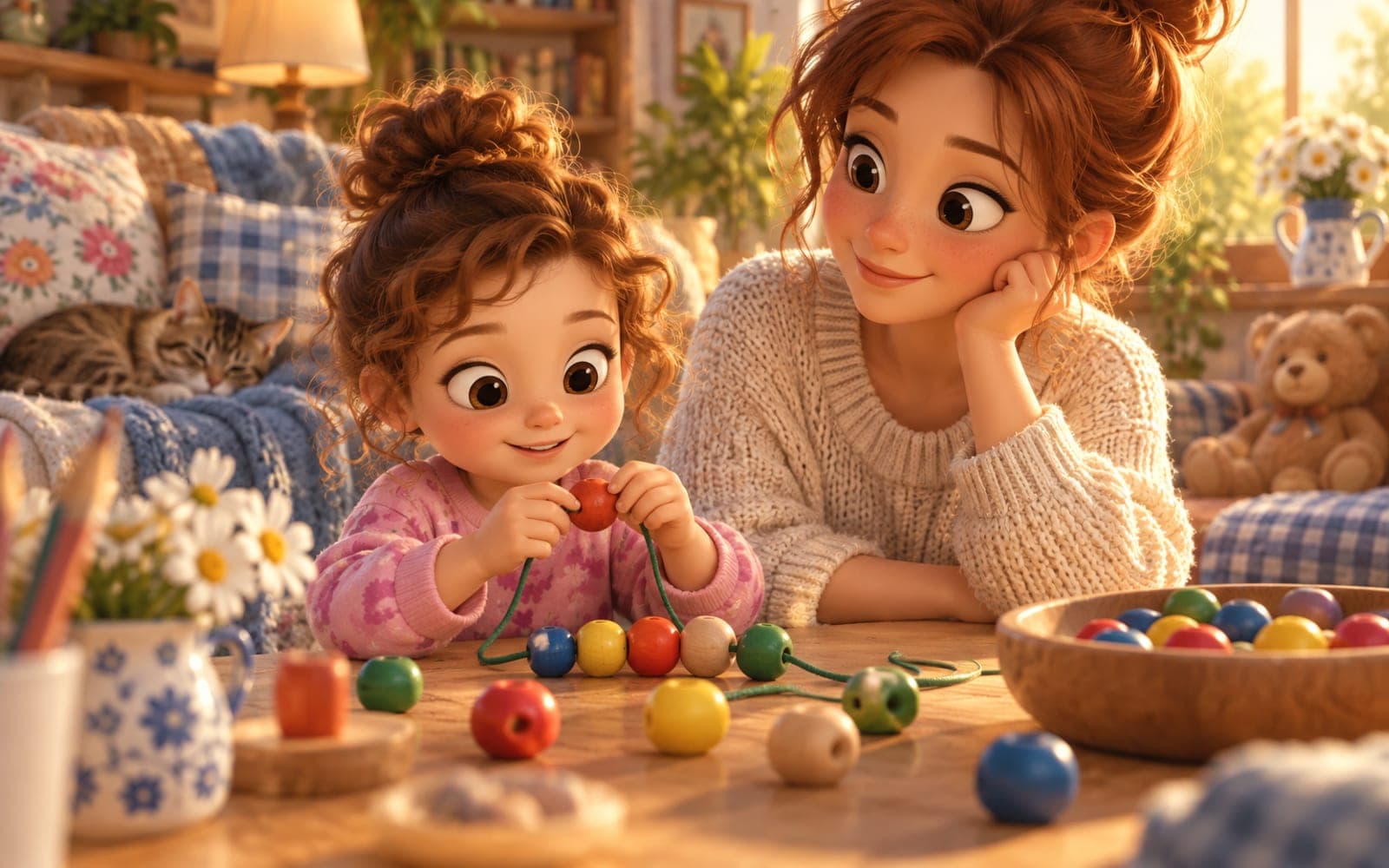
The current CDC list for age 3 includes three concrete motor examples: stringing items such as large beads or pasta, putting on some clothes, and using a fork. These show how important ordinary activities are for coordinating the hands and eyes.
Give your child thick crayons, modelling clay, large beads and paper. For a short table activity, try simple lines for ages 3–4, a very easy fish dot-to-dot or a first maze with a wide path.
Colouring can also exercise the hand if the picture is not too detailed. Guidance on choosing pages is available in colouring pages for a 3-year-old.
Do not worry if the drawing does not yet look like a recognisable object. The CDC milestone is drawing a circle after being shown how, not producing detailed pictures.
How much independence can you expect from a 3-year-old?
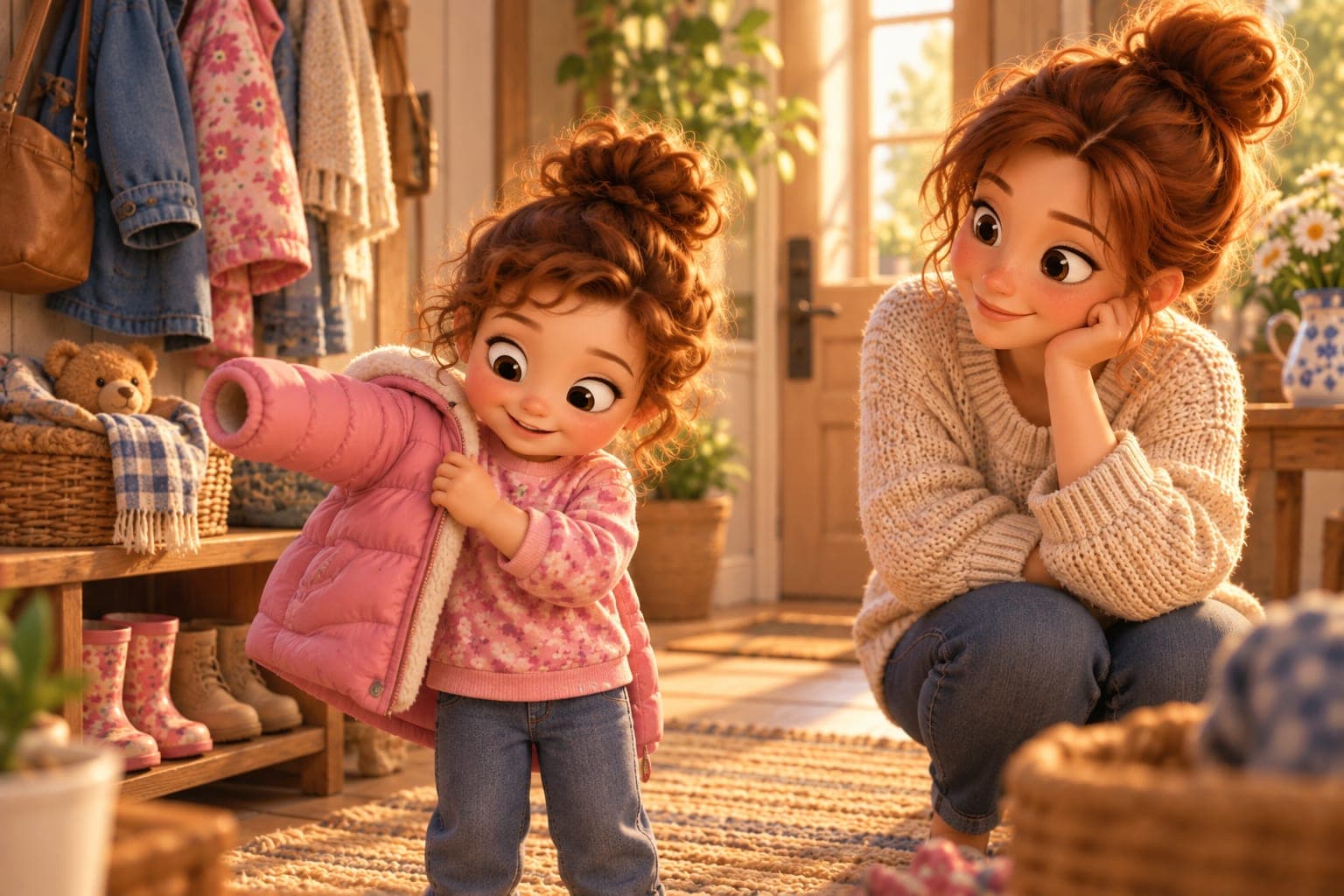
The CDC says most 3-year-olds use a fork and can put on some clothes, such as loose trousers or a jacket. It is a good time to offer small tasks without correcting every movement.
At meals, let your child use a fork even if it takes longer. When going out, give them time to try putting on a jacket. The CDC also encourages helping with food preparation, such as washing fruit and vegetables or stirring ingredients.
Toileting needs particular care when comparing children. The current CDC “Milestones by 3 Years” list does not include independent toileting as a milestone for age 3. Do not use toilet readiness as a developmental test or a reason to shame a child.
Do not worry if your child still needs help with more complicated clothing, cutlery or hygiene tasks. Independence grows in stages.
How does a 3-year-old manage emotions and other children?
The CDC says most 3-year-olds notice other children and join them to play. It also includes calming down within about 10 minutes after separation from a caregiver, for example when staying at childcare.
You can help your child name feelings: “I can see you're angry because the tower fell down.” The CDC recommends talking about feelings and suggesting simple calming strategies such as taking a deep breath, hugging a favourite toy or moving to a quiet place.
Do not worry if your child does not cooperate perfectly with others all the time. Joining play does not yet mean mature cooperation in every situation.

How can you support a 3-year-old's development in everyday life?
Area | Example of what may be emerging | How to support it |
|---|---|---|
speech | asks “who?”, “what?”, “where?”, “why?” | talk during meals and bath time |
communication | at least two back-and-forth exchanges in conversation | wait for an answer and expand on your child's sentence |
thinking | draws a circle after being shown how | draw large circles and simple shapes together |
hand skills | strings large items | beads, pasta, modelling clay |
independence | uses a fork, puts on some clothes | allow time for an independent attempt |
emotions and relationships | notices other children and joins play | arrange short, relaxed play opportunities and name emotions |
Early-years guidance supports language, physical, cognitive, social and personal development as well as growing independence. It does not create a separate list of “norms every 3-year-old must meet”.
What might a week of 5-minute activities look like?
Monday — picture talk: look through a book and ask: “What is it doing?”, “Where is it?”, “What happens next?”.
Tuesday — hand skills: spend 5 minutes threading large pasta pieces or making balls from modelling clay.
Wednesday — walk: count a few steps, look for matching signs or compare “big–small”.
Thursday — independence: let your child help wash a piece of fruit, stir ingredients or try putting on a loose item of clothing.
Friday — emotions: use figures to act out a scene in which “the teddy got angry”. Ask what might help.
Weekend — child's choice: return to the favourite activity. Do not increase the level just because “it's time to move on”.
As your child approaches the next stage, you can look at resources for 4-year-olds and the guide what can a 4-year-old usually do.
What mistakes should you avoid when observing development?
- Do not compare your child with siblings or a friend's child.
- Do not turn a milestone list into a daily test.
- Do not force a skill just to “pass” an age checklist.
- Do not judge development from one difficult day.
- Do not ignore loss of a skill your child previously had.
The CDC states that its milestone lists do not replace standardised developmental screening. Milestones are there to support observation and conversations with healthcare professionals.
When should you talk to a paediatrician?
Talk to a paediatrician if your child is not meeting one or more CDC milestones, has lost a skill they previously had, or you are simply concerned about development. The CDC advises not to wait, but to discuss concerns with a doctor and ask about developmental screening.
Do not try to diagnose a condition yourself from one behaviour. What matters is the wider picture of how your child functions and professional assessment when needed.
Sources
- Centers for Disease Control and Prevention, Milestones by 3 Years, 2026.
- Minister Edukacji, Rozporządzenie z 11 marca 2026 r. w sprawie podstawy programowej wychowania przedszkolnego oraz szkoły podstawowej, Dz.U. 2026 poz. 378, 2026.