
In Short: How Do You Move From Words to Simple Sentences?
Do not add lots of new vocabulary at once. Take words your child already knows and place them into 2–3 repeatable sentence patterns.
- Instead of only “cat”, practise “This is a cat” – use it while pointing to or revealing a cat picture.
- Instead of only “apple”, use “I like apples” – let your child choose foods or pictures they like.
- Instead of only “jump”, say “I can jump” – then do the action together.
- Repeat the same pattern in several games, not only with flashcards.
- Leave room for your child to answer with a gesture or one word if they are not ready to say the whole sentence yet.
- Keep sessions short and frequent. For a 6-year-old, 15 minutes is enough for one small session.
If you need to step back to vocabulary first, see our guides to English for 3-year-olds, English for 4-year-olds and English for 5-year-olds.
Which Sentence Patterns Should You Teach a 6-Year-Old First?
Choose a few short structures that can be reused in many everyday situations. Your child does not need grammar labels or explanations of verb tenses.
Sentence Pattern | Use | Example | Activity |
|---|---|---|---|
I like… | talking about preferences | I like bananas. | child chooses a picture they like |
I can… | talking about abilities | I can jump. | do the action and say the sentence |
I have got… | talking about something you have | I have got a red car. | describe an object held in the hand |
This is… | naming something | This is a dog. | reveal picture cards |
Can I have…? | asking for something | Can I have an apple, please? | pretend shop or kitchen |
Where is…? | asking about location | Where is the teddy bear? | hide objects |
The British Council also lists phrases such as “Can I have…?”, “Where is…?” and “I like…” as useful language for English practice at home.
How Do You Practise “I Like”, “I Can” and “I Have Got”?
Connect each pattern with a real action. That way, a child learning English as an additional language links the whole phrase to its purpose instead of translating every word.
For “I like…”, let your child choose a picture and say “I like cats” or “I like pizza”. For “I can…”, add movement: “I can jump”, “I can run”, “I can dance”. For “I have got…”, hold a toy and say “I have got a blue car”. “Have got” is a correct, common structure in British English.

How Can You Turn Sentence Patterns Into Games?
A game should create a reason to use the sentence without feeling like a quiz. Practise one pattern for several days in different situations.
In What’s Missing? name the objects in English and, when one disappears, ask “Where is the apple?”. You can use animal colouring pages in the same way: “Where is the lion?” and “This is the lion.” The pictures work well as prompts for spoken English.
How Can You Use Role-Play in English?
Role-play gives the sentence a real purpose. Your child says “Can I have…?” because they want an object in the game, not simply because an adult told them to repeat it.
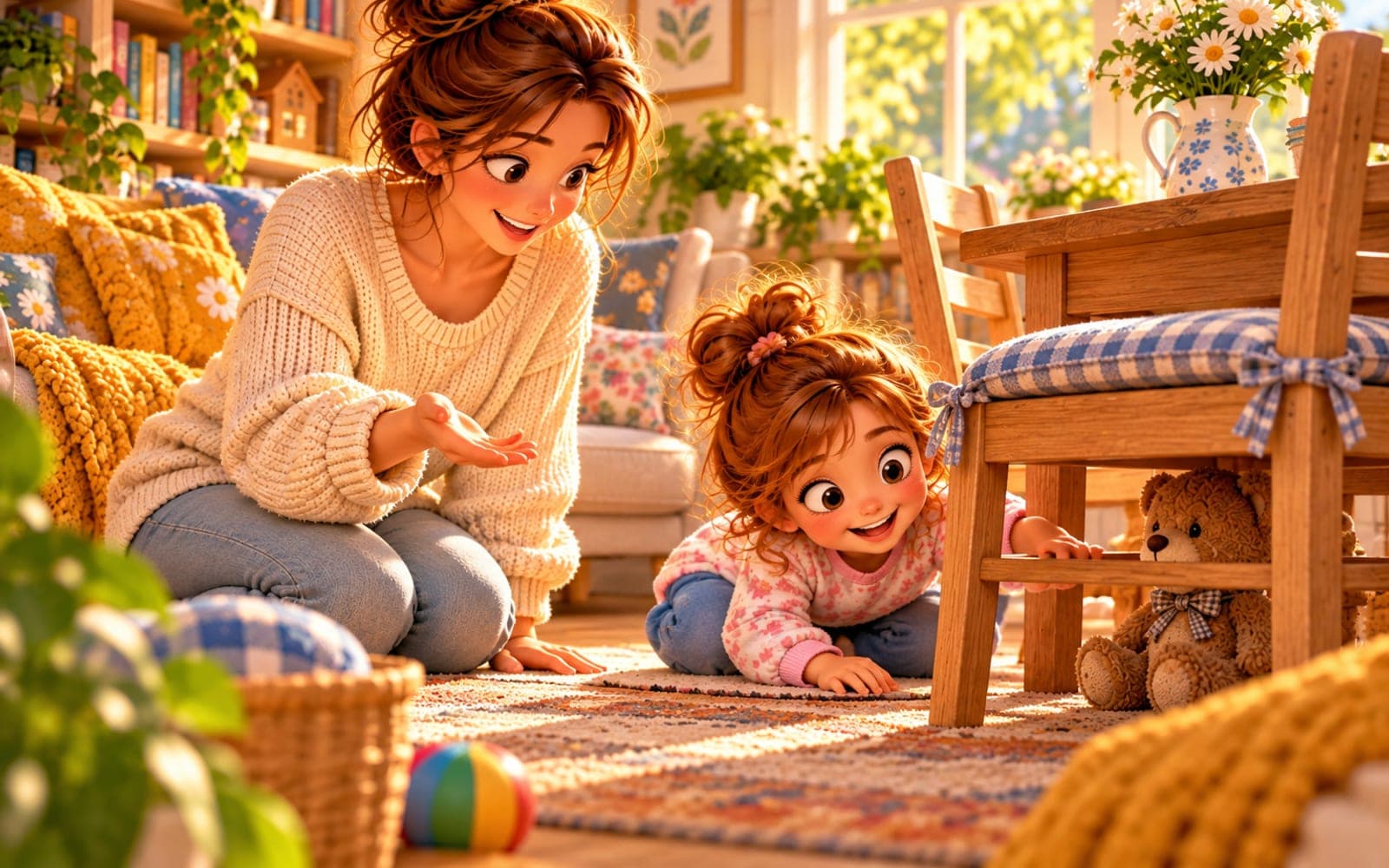
Shop: “Can I have a banana, please?” – the child asks the shopkeeper for an item. Kitchen: “Can I have some water, please?” – the child makes a simple request. Hide-and-seek: “Where is the teddy bear?” – give a clue such as “It’s under the chair.” These everyday situations match the kind of home language practice recommended by the British Council.

Do Songs Help Children Build Sentences?
Yes, especially songs and rhymes with a repeated pattern. Your child hears the same structure many times, and the melody helps make its rhythm memorable.
Choose a song where only one element changes, such as the action. Afterwards, an adult says “I can jump” and the child makes a new sentence such as “I can clap”. The British Council recommends songs and rhymes even for children who are not yet reading in English.
Should a 6-Year-Old Already Read in English?
A child learning English as an additional language can begin recognising a few short, familiar written words without pressure to read independently. The aim is to connect a familiar written form with a known meaning, not to test spelling.
Label three familiar pictures “cat”, “dog” and “car”, then match the words to the pictures. If print makes pronunciation harder or your child starts guessing, go back to listening and speaking.
How Can You Practise “Go Up” and “Turn Left” With a Maze?
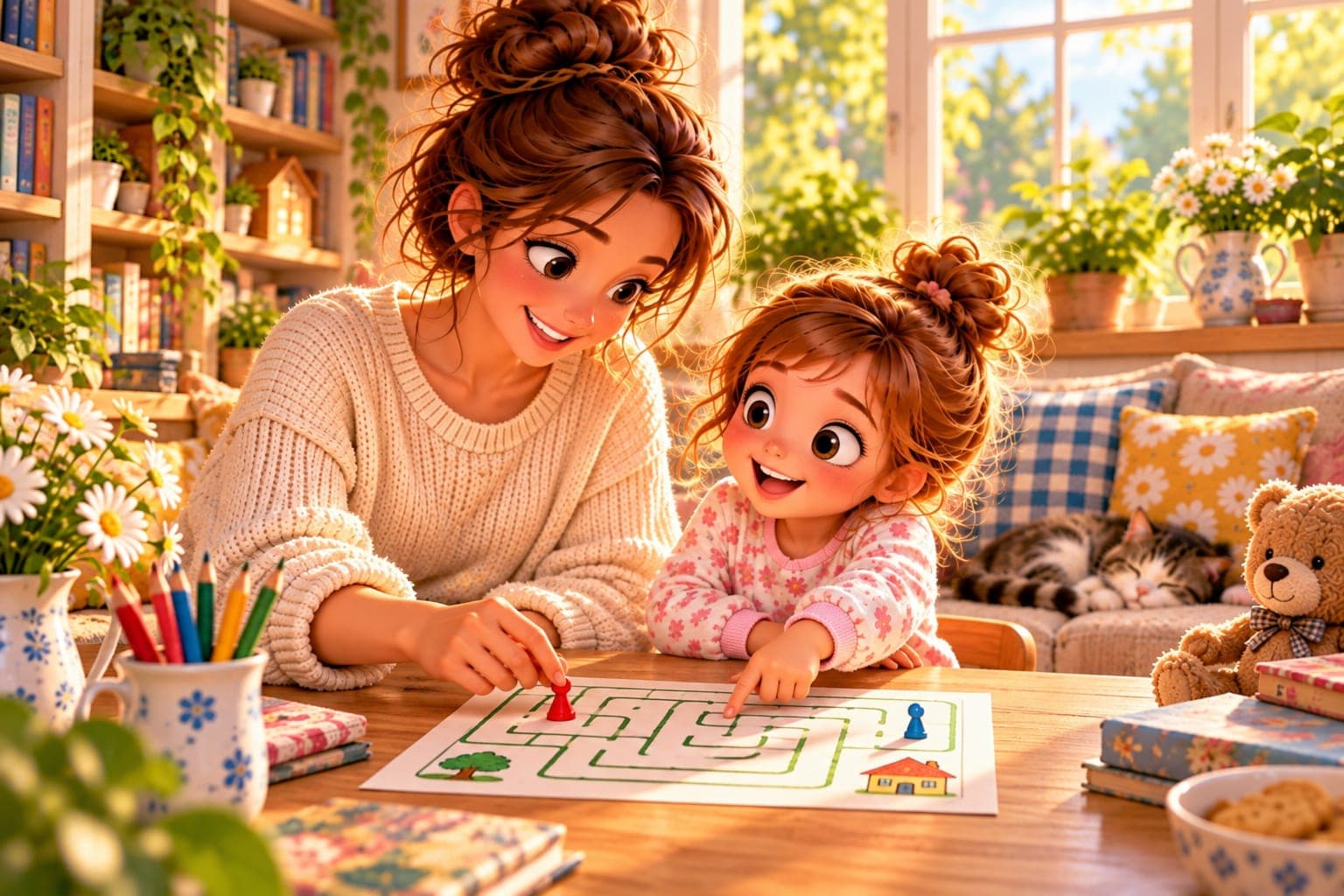
A maze can become a board for simple direction phrases. The maze generator provides the visual route, while you give the directions in English.
Start with 3–4 commands:
- “Go up” – move towards the top of the page.
- “Go down” – move towards the bottom of the page.
- “Turn left” – change direction to the left.
- “Turn right” – change direction to the right.
The adult moves a counter according to the child’s instructions, then you swap roles. First make these four commands familiar before adding more.
What Could a 4-Week Plan of 15-Minute Sessions Look Like?
This is a repeatable plan, not a programme your child has to pass.
Week 1 – I like… / This is…
- 5 minutes: review 5–6 familiar words;
- 5 minutes: choose pictures and make “I like…” sentences;
- 5 minutes: reveal pictures and say “This is…”.
Week 2 – I can… / I have got…
- 5 minutes: movement with “I can…”;
- 5 minutes: hold toys and use “I have got…”;
- 5 minutes: a short song or rhyme.
Week 3 – Can I have…? / Where is…?
- 5 minutes: pretend shop or kitchen;
- 5 minutes: hide-and-seek with objects;
- 5 minutes: review two earlier patterns.
Week 4 – Directions and Combining Patterns
- 5 minutes: maze with “go up / turn left”;
- 5 minutes: mini role-play using 2–3 sentence patterns;
- 5 minutes: a favourite game, song, or picture activity.
For more examples, see the 15 minutes of English a day plan, plus other materials in the for 6-year-olds section.
What Mistakes Should You Avoid?
Problems often start when a parent turns every conversation into correction. A 6-year-old needs many safe attempts.
- Do not correct every error while your child is speaking. More often, simply reply using the correct form naturally.
- Do not translate every sentence word by word. Link the phrase with a gesture, object, picture, and situation instead.
- Do not introduce six new sentence structures in one day.
- Do not demand a full spoken answer every time. Pointing or giving one word can be a useful stage.
When Should You Slow Down or Change the Approach?
Slow down if your child stops joining in willingly, repeats sentences mechanically without understanding, or becomes anxious about every answer. Return to a simpler pattern and a familiar game.
Do not compare the number of sentences your child can say with other children. If you also have broader concerns about speech or language understanding in your child’s strongest language, discuss them with their teacher, doctor, or a speech and language professional.