
How do you quickly choose an activity for a 4-year-old?
Match the activity to your child’s energy. A four-year-old does not need a home “lesson” — they need a short task, movement, conversation, and room to do things independently.
- Lots of energy: choose movement.
- Want to sit at a table: try pre-writing practice, a maze, or coloring.
- Want to talk: try sounds, rhymes, and storytelling.
- If your child asks to do it “again,” repeat the activity instead of making it harder right away.
- Finish after 5–15 minutes, or sooner if interest drops.
At this age, play, hands-on experience, movement, language, early number ideas, and independence matter more than formal lessons at home.
Which activities practice counting and shapes?
These four activities help a four-year-old count real objects, compare groups, and recognize simple shapes.
1. Match the socks
Materials: 6–10 socks. Time: 5–8 minutes. Builds: matching pairs, counting, comparing. Spread out the socks and ask your child to find matching pairs, then count them. Easier: use three very different pairs. Harder: ask how many socks there are altogether and which color appears most often.
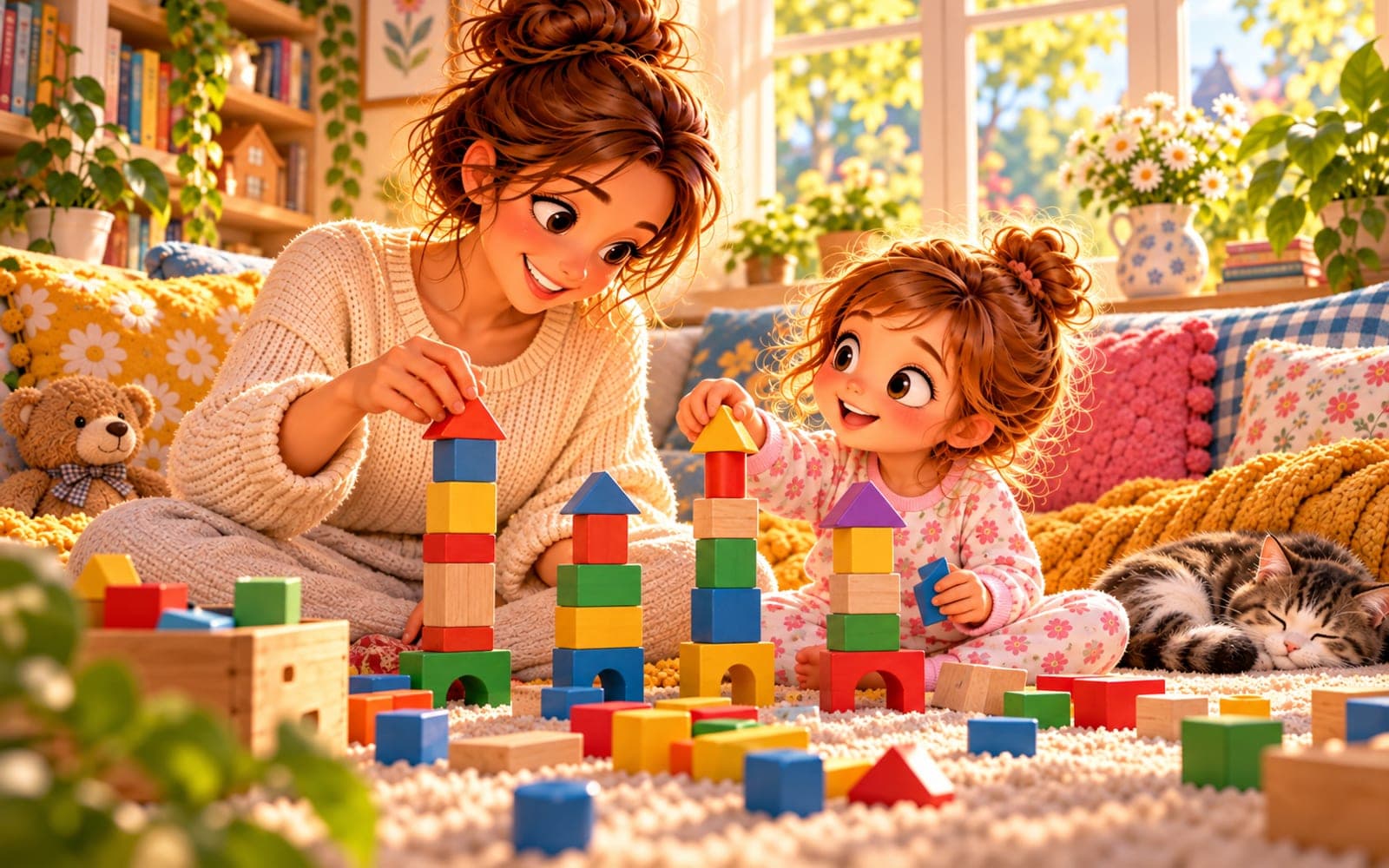
2. Block towers
Materials: blocks. Time: 7–10 minutes. Builds: counting, comparing height, and the ideas of “more” and “less.” Build towers with 2, 3, 4, and 5 blocks. Easier: your child copies your tower. Harder: say only the number of blocks without showing a model.
3. Shape hunt
Materials: objects around the room. Time: 5–10 minutes. Builds: circles, squares, rectangles, and sorting. Look around the home for objects that resemble a chosen shape. Easier: look only for circles. Harder: sort what you find by two features, such as shape and color.
4. Toss and count
Materials: a basket or bowl and rolled-up socks. Time: 5–8 minutes. Builds: counting to 5–10 and hand-eye coordination. After five throws, count how many went in. Easier: place the basket close by. Harder: compare the scores from two rounds and decide which had more hits.

Which activities build speech and listening?
At this age, talking, listening, and playing with sounds are more important than formal reading instruction. You can do these three activities without any worksheets.
5. What made that sound?
Materials: a spoon, paper, a cup of water, keys. Time: 5 minutes. Builds: listening attention and naming. Your child closes their eyes while you make one sound, then guesses what made it. Easier: show all the objects first. Harder: play a sequence of two sounds for your child to copy.
6. Finish the rhyme
Materials: nothing extra. Time: 5–7 minutes. Builds: phonological awareness and vocabulary. Start with easy pairs such as cat–hat or log–frog. Easier: give two answers to choose from. Harder: let your child invent silly or made-up words as long as they rhyme.
7. Tell me what you see
Materials: any picture or animal coloring pages. Time: 8–12 minutes. Builds: sentence building, vocabulary, and sequencing. Ask: “Who is here?”, “What are they doing?”, “What might happen next?”. Easier: ask questions with two choices. Harder: ask for a three-sentence story.
How can you build hand control and pre-writing skills through play?
Pre-writing skills include the hand control needed for drawing and, later, handwriting. For a four-year-old, large movements, molding, grasping, and simple tracing paths are more useful than long pencil drills.
8. Pegs on a box
Materials: clothespins or pegs and a box or bowl. Time: 5–8 minutes. Builds: finger strength and grip. Your child clips the pegs around the edge of the container. Easier: use large, light pegs. Harder: clip them in a repeating color pattern.
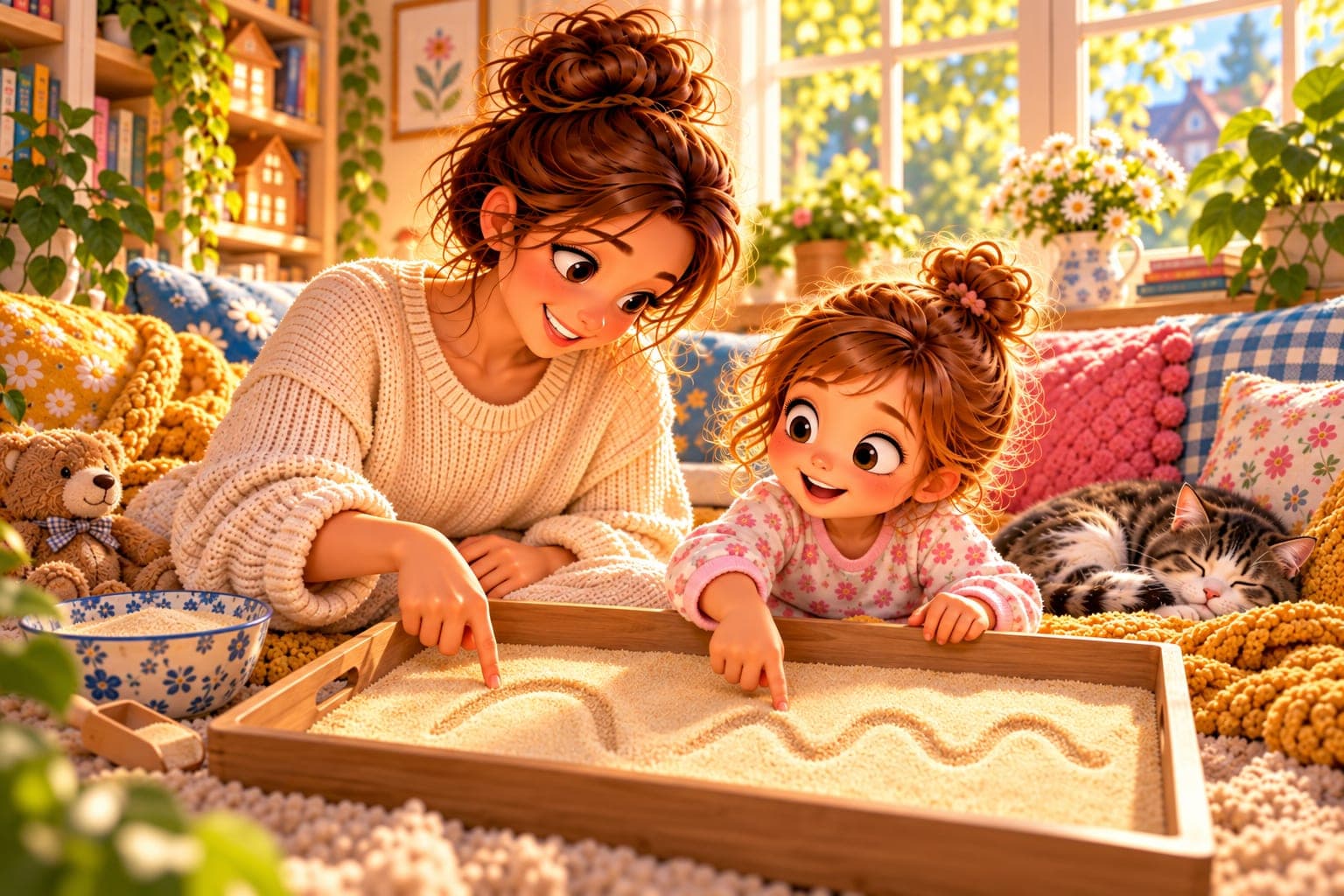
9. Finger paths in flour
Materials: a tray and a thin layer of flour or another safe, dry sensory material. Time: 7–10 minutes. Builds: smooth hand movement and following a pattern. Draw waves, circles, and gentle curves with a finger. Easier: your child traces over your path. Harder: they copy the pattern from memory.
10. Valley tracing lines
Materials: a crayon and the gentle curve tracing sheet for 4-year-olds. Time: 5–10 minutes. Builds: line control and pressure control. Trace the pattern with a finger first, then with a crayon. Easier: complete just one row. Harder: try to recreate a similar pattern on blank paper.
Which movement games are good for a 4-year-old?
Movement can be combined with listening to directions, spatial awareness, and body control. You only need a few safe household items.
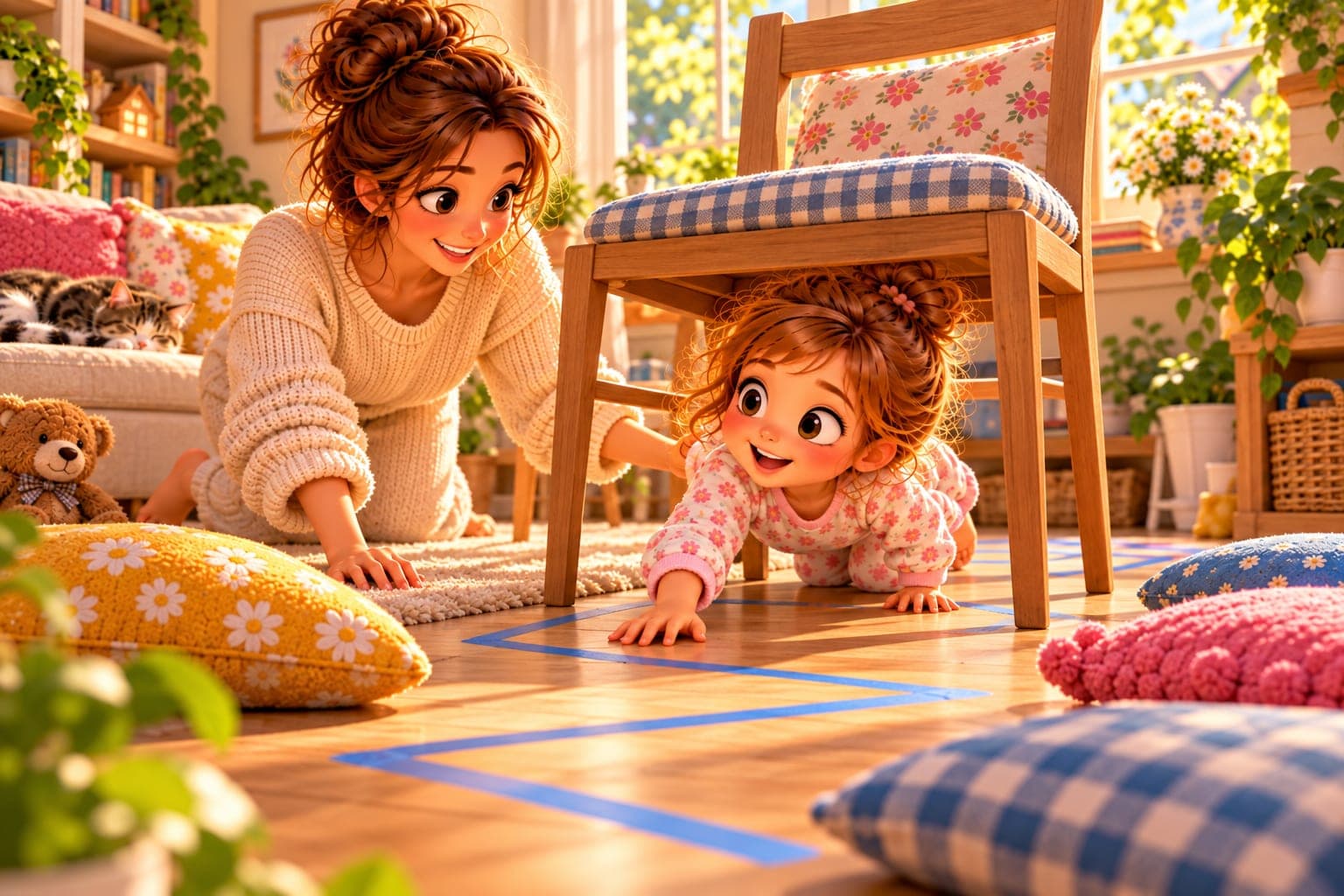
11. Indoor obstacle course
Materials: cushions, a chair, painter’s tape. Time: 10–15 minutes. Builds: balance, movement planning, and spatial awareness. Make a simple route: walk along a line, go around a cushion, crawl under a chair. Easier: use three obstacles. Harder: let your child arrange the order and explain the rules.
12. Freeze dance
Materials: music. Time: 5–8 minutes. Builds: stopping movement and responding to a signal. Dance together, then freeze when the music stops. Easier: leave long gaps between stops. Harder: call out a pose when the music stops, such as “one leg up.”
13. Animal walks
Materials: open floor space. Time: 5–10 minutes. Builds: gross motor skills, imitation, and imagination. Hop like a frog, walk like a bear, sneak like a cat. Easier: demonstrate each movement with your child. Harder: let your child choose an animal and invent how it moves.
How can you practice logic and memory with a 4-year-old?
The best logic activities for a four-year-old use only a few items and one clear rule. The goal is not speed, but noticing differences, remembering, and explaining a choice.
14. What disappeared?
Materials: 4–5 small toys. Time: 5–8 minutes. Builds: visual memory and naming. Your child looks at the objects, closes their eyes, and you hide one. You can also use the “What disappeared?” game, which does not require reading. Easier: start with three objects. Harder: hide two.
15. Which one does not belong?
Materials: four objects, such as three spoons and one block. Time: 5 minutes. Builds: sorting and explaining reasons. Your child picks the item that does not belong and says why. Easier: use very obvious differences. Harder: make a set where two different explanations could both make sense.
16. Block pattern
Materials: blocks in two or three colors. Time: 7–10 minutes. Builds: spotting rules and working memory. Make a red–yellow–red–yellow pattern and ask your child to continue it. Easier: use two colors. Harder: use a three-part sequence, such as red–red–blue.

Which calm activities work well at the end of the day?
A calm activity does not have to mean sitting still for a long time. For a four-year-old, 5–12 minutes with a page may be plenty.
17. Simple maze
Materials: a crayon and two simple mazes for 4-year-olds. Time: 5–8 minutes. Builds: route planning and hand control. Trace the route with a finger first. Easier: pause at every turn. Harder: complete the route with a crayon without lifting your hand.
18. Dot-to-dot car
Materials: a crayon and the car tracing sheet for 4-year-olds. Time: 7–10 minutes. Builds: sequencing, counting, and precision. Easier: the parent points to the next dot. Harder: after connecting the dots, your child adds a road, garage, or signs.
19. Choice-based coloring
Materials: crayons and animal coloring pages. Time: 8–12 minutes. Builds: hand control, decision-making, and conversation. Your child chooses the picture and colors. Easier: choose an illustration with large areas. Harder: ask your child to tell a short story about the animal while coloring.
20. Quiet paper puzzle
Materials: a sheet with a simple picture, child-safe scissors, glue. Time: 10–15 minutes. Builds: planning, matching, and using both hands together. An adult can cut the picture into 3–4 large pieces, and the child puts it back together and glues it down. Easier: use two large pieces. Harder: use five or six pieces with straight edges.
How can you quickly compare all 20 activities?
This table helps you choose an activity quickly.
No. | Activity | Area | Time |
|---|---|---|---|
1 | Match the socks | counting and shapes | 5–8 min |
2 | Block towers | counting and shapes | 7–10 min |
3 | Shape hunt | counting and shapes | 5–10 min |
4 | Toss and count | counting and shapes | 5–8 min |
5 | What made that sound? | speech and listening | 5 min |
6 | Finish the rhyme | speech and listening | 5–7 min |
7 | Tell me what you see | speech and listening | 8–12 min |
8 | Pegs on a box | hand and pre-writing skills | 5–8 min |
9 | Finger paths in flour | hand and pre-writing skills | 7–10 min |
10 | Valley tracing lines | hand and pre-writing skills | 5–10 min |
11 | Indoor obstacle course | movement and body control | 10–15 min |
12 | Freeze dance | movement and body control | 5–8 min |
13 | Animal walks | movement and body control | 5–10 min |
14 | What disappeared? | logic and memory | 5–8 min |
15 | Which one does not belong? | logic and memory | 5 min |
16 | Block pattern | logic and memory | 7–10 min |
17 | Simple maze | calm activities | 5–8 min |
18 | Dot-to-dot car | calm activities | 7–10 min |
19 | Choice-based coloring | calm activities | 8–12 min |
20 | Quiet paper puzzle | calm activities | 10–15 min |
How can you build a simple weekly activity plan?
You do not need to use all 20 ideas. One short activity a day is enough, or two on a slower day.
Day | Suggestion |
|---|---|
Monday | match the socks + freeze dance |
Tuesday | what made that sound? + valley tracing lines |
Wednesday | obstacle course |
Thursday | what disappeared? + maze |
Friday | block towers |
Saturday | dot-to-dot car + coloring |
Sunday | tell me what you see or repeat a favorite activity from the week |
You can find more materials for similar activities in printable resources and in educational games. For a four-year-old, choose activities that do not require reading instructions independently.
What is the adult’s role during play?
The adult creates a safe setup, demonstrates the rule, and gives the child room to try independently. Avoid correcting every movement or turning play into a test.
Help with questions such as “What comes next?” or “Which one matches?”. If your child asks for help, show the first step. Safely changing the rules is also part of learning.
What should you remember about safety?
Materials for a four-year-old should always match the child’s abilities, and play should be supervised.
- Small objects: buttons, beads, bottle caps, and tiny blocks can be dangerous if swallowed. Use them only with direct supervision; if there are younger siblings, larger objects are a safer choice.
- Scissors: use child-safe scissors with rounded tips and adult supervision. If your child is just starting, the adult can cut while the child assembles the pieces.
- Obstacle course: remove slippery rugs, sharp edges, and unstable chairs. Do not set up obstacles that require jumping from a height.
- Flour and sensory materials: do not use them if your child puts materials in their mouth or has an allergy to the product.
What mistakes should you avoid during educational play?
The most common mistake is putting too much pressure on the “result.”
- Do not keep the activity going once your child has lost interest.
- Do not compare the result with other four-year-olds.
- Do not expect perfect coloring inside the lines or an exact copy of a pattern.
- Do not build the whole day around worksheets. Movement, conversation, and free play matter just as much.
- Do not give the answer immediately. Allow a few seconds for trying and thinking.
When should you talk to a professional?
One difficulty during play does not define a child’s development. If you have ongoing concerns about speech, understanding simple directions, coordination, or taking part in everyday activities, talk with your child’s early-years teacher or pediatrician. They can suggest an appropriate professional if needed.
Sources
- Minister Edukacji, Rozporządzenie z 11 marca 2026 r. w sprawie podstawy programowej wychowania przedszkolnego, Dz.U. 2026 poz. 378, in force from 1 September 2026.
- Ministerstwo Edukacji Narodowej, Nowe podstawy programowe wychowania przedszkolnego i kształcenia ogólnego, 12 March 2026.
- Ośrodek Rozwoju Edukacji, Wychowanie przedszkolne. Podstawa programowa w Reformie26. Kompas Jutra. Poradnik, 2026.