
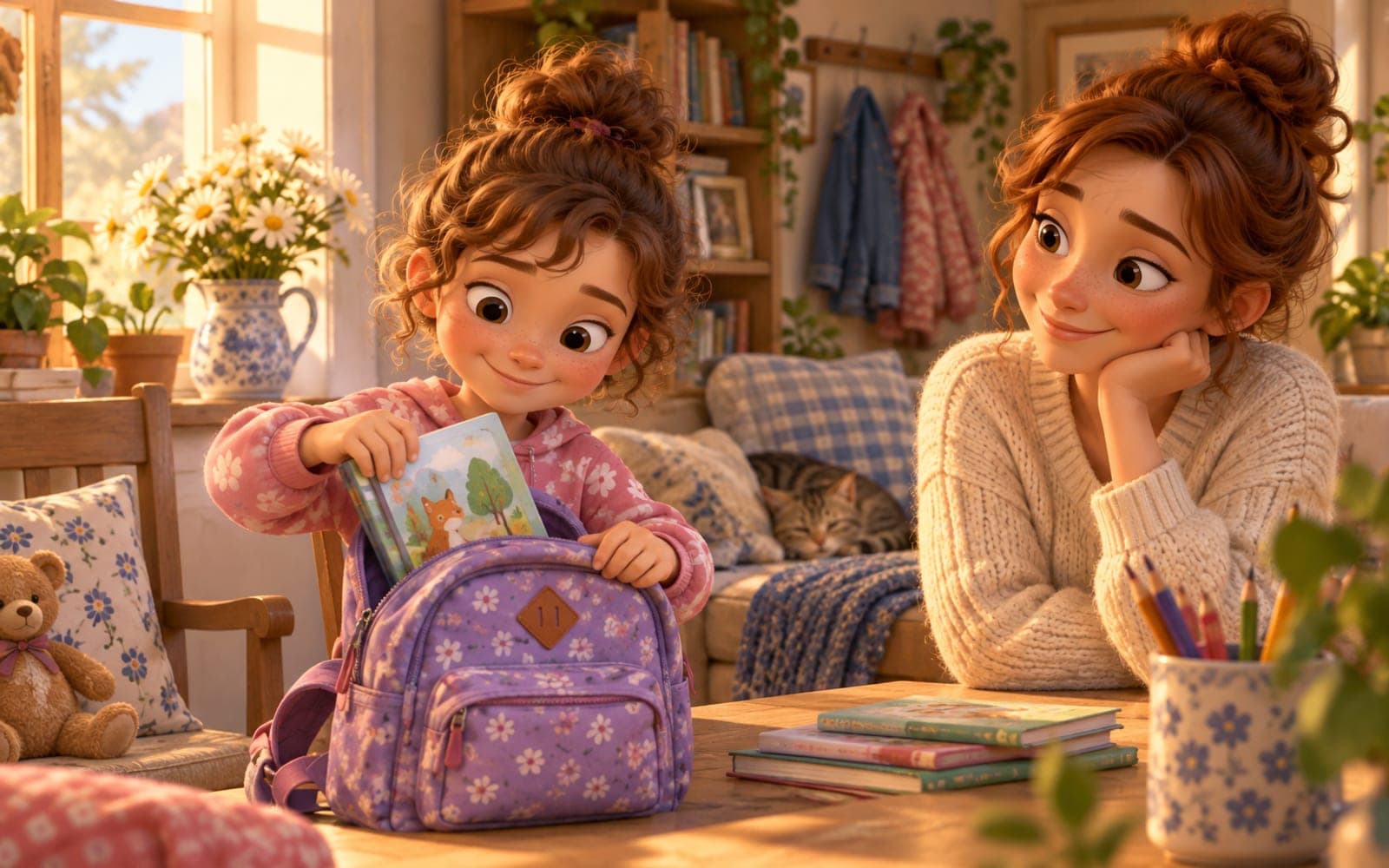
In Short: What Is Worth Supporting at Age 6?
A 6-year-old does not need to have mastered the next year’s schoolwork in advance. Across English-speaking school systems, expectations differ, but useful foundations include independence, cooperation, communication, sound awareness, early reading and writing, mathematical thinking, and physical coordination.
At home, focus especially on:
- organising simple tasks independently;
- recognising emotions, cooperating, and asking for help;
- listening, telling stories, and playing with speech sounds;
- showing interest in letters and attempting to read;
- hand control and drawing shapes freely;
- counting, adding, and subtracting with real objects;
- understanding space, time, and body position;
- daily movement.
If you want to look separately at school readiness at home, see our guide to school readiness – how to explore it at home. This article is not a test. It shows areas you can support calmly at age 6.
Area | Example Skill | How to Support It at Home |
|---|---|---|
Independence and organisation | tidies the activity space and keeps going when a task is difficult | packing a school bag, putting supplies away |
Emotions and relationships | talks about emotions, works with others, looks for a way to solve a conflict | role-play and asking, “What could you do?” |
Speaking and listening | listens, tells stories, and blends and segments speech sounds | “What sound does it start with?”, rhyming games |
Reading | attempts to read words and short texts independently | blending simple words, matching labels to pictures |
Writing and hand skills | draws curves, waves, ovals, and attempts writing | tracing patterns through play, drawing paths |
Maths | counts, adds, and subtracts using fingers or real objects | blocks, buttons, pretend shop |
Movement | develops coordination, balance, and precise movement | ball games, obstacle courses, jumping |
How Can You Support Independence and Organisation at Age 6?
At this age, the goal is less about “independent studying” and more about organising simple actions. Useful skills include planning what to do, tidying the activity space, persisting when something is difficult, and managing everyday self-care tasks independently.
Good activities at home include:
- laying out clothes for the morning;
- putting crayons and scissors away after play;
- packing needed items using a short picture checklist;
- doing a simple task in sequence: choose – do – check – put away.
Five-minute game: “tidy-up mission.” Give your child three things to do, for example put away a book, place crayons in the box, and get a sheet of paper ready. Then ask them to tell you what they did, in order.
You can find more materials for this age in our activities for 6-year-olds section.
How Can You Support Emotions and Relationships in a Group?
At age 6, it is useful to practise working with others, following agreed rules, talking about emotions, handling simple conflicts with support, and asking for help in difficult situations.
You can practise with short role-play situations at home:
- “Someone took your crayon. What could you say?”
- “A friend is sad. What could you do?”
- “You don’t know what to do. Who could you ask for help?”
Five minutes is enough for one situation. Do not look for one “perfect” answer. What matters is that your child can name the problem and think of a safe response.
How Can You Build Speaking, Listening, and Phonemic Awareness?
Before and during the early school years, it is useful to strengthen careful listening, storytelling, and awareness of speech sounds. Helpful activities include taking turns in conversation, talking about pictures, making rhymes, and blending or segmenting simple words into sounds.
You can play:
- “What sound do you hear at the start of cat?”;
- blend a simple word from sounds, for example c-a-t;
- find words that start with the same sound;
- make up rhymes, including silly or nonsense ones.
For more practice, use letters and sounds for 6-year-olds.
Does a 6-Year-Old Need to Read Fluently?
No. Reading expectations differ between school systems, but fluency should not be treated as a universal entry requirement at age 6. What matters is building confidence with sounds, words, short texts, and meaning.
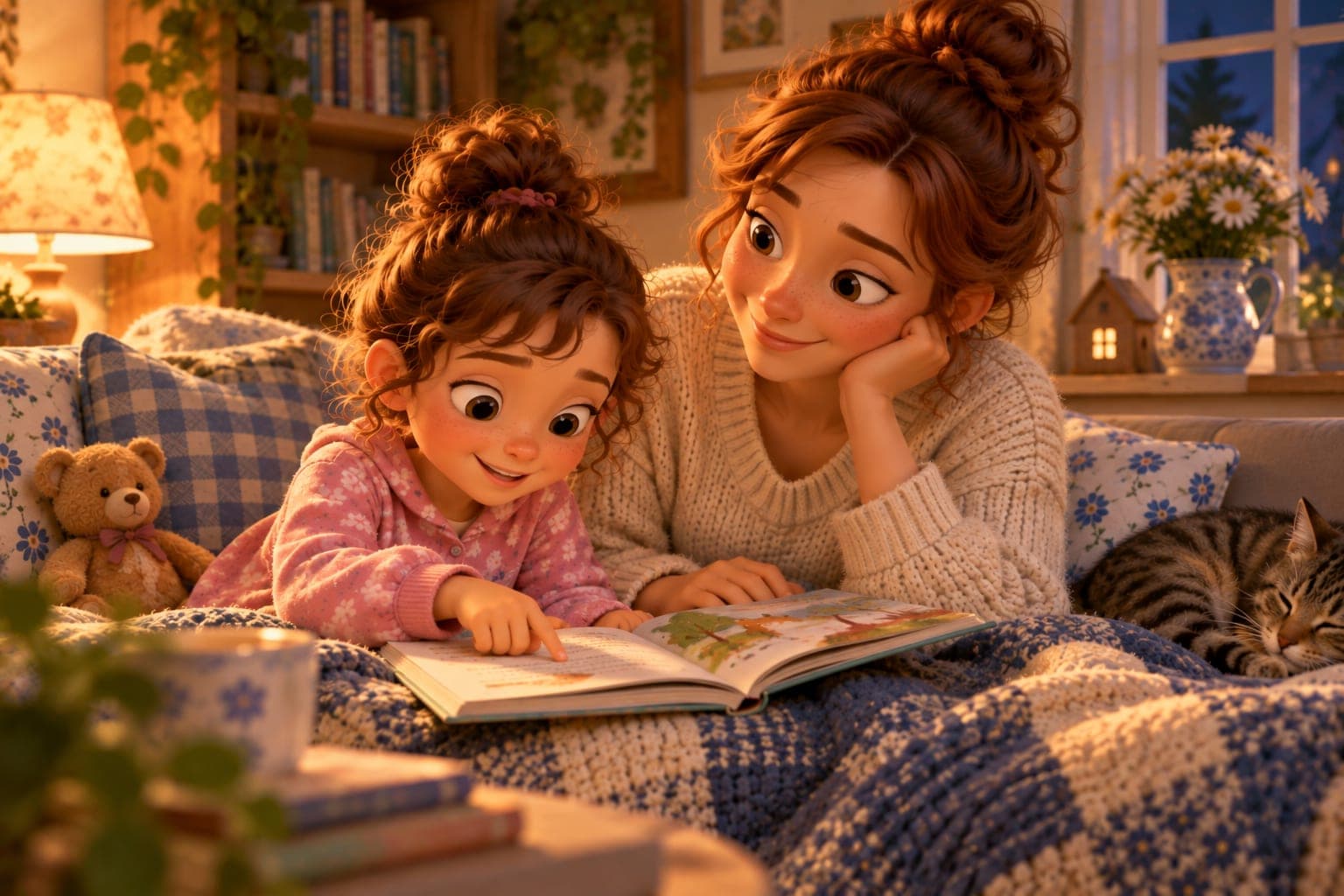
At home, support curiosity about print:
- read short labels together;
- look for familiar letters in product names;
- blend simple words;
- let your child make a guess and self-correct without pressure.
If your child is ready, you can use early reading practice for 6-year-olds.
Five-minute game: choose three simple English words linked to the room, for example “cat”, “bed”, “cup”. Your child tries to read them, then matches them to a picture or object.
How Can You Prepare the Hand for Writing?
At age 6, hand control matters more than beautiful handwriting. Useful practice includes drawing curves, loops, waves, ovals, and zigzags, attempting letters and words, holding a writing tool comfortably, and learning to control pressure.
Helpful activities include:
- drawing large patterns on paper;
- moulding and squeezing modelling dough;
- cutting;
- building small constructions;
- guiding a crayon around bends without focusing on speed.
For more examples, see how to prepare a child’s hand for writing.
How Can You Develop Mathematical Thinking?
Early maths should be hands-on. At age 6, useful practice includes counting within a comfortable range, comparing quantities and sizes, adding and subtracting with fingers or objects, using position words, and talking about time.
In practice:
- add blocks up to 10;
- take two away from five buttons and check how many are left;
- place objects “above”, “below”, “next to”, and “behind”;
- talk about what happened yesterday, what is happening today, and what will happen tomorrow.
You can use adding to 10 with objects, spatial awareness and times of day and clocks.
How Important Is Movement at Age 6?
Movement is part of development, not an extra added after “real learning.” Children build coordination, balance, strength, agility, and movement precision, while learning to take part in activities safely.
Five-minute activities:
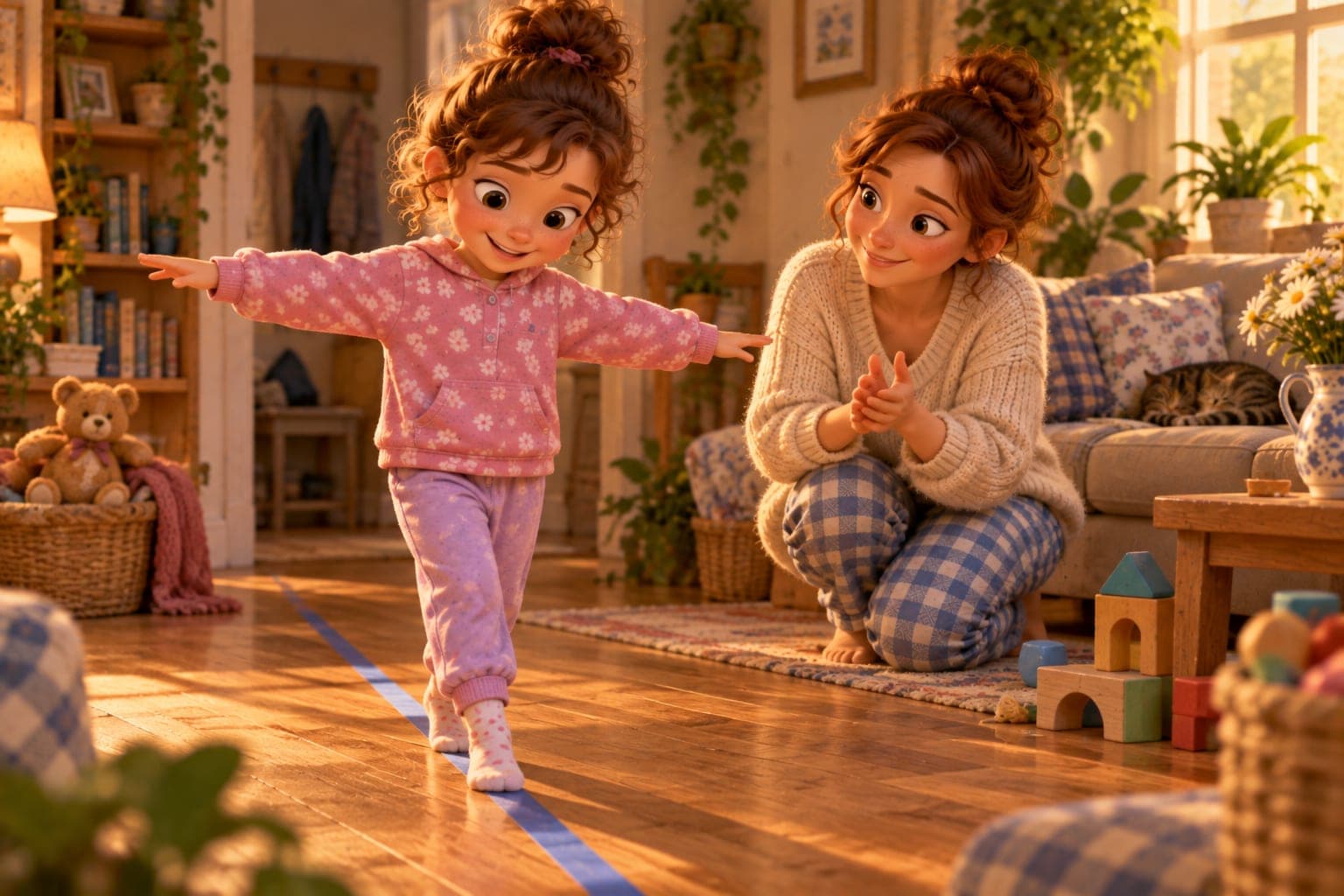
- walk along a line of tape on the floor;
- throw and catch a ball;
- jump with both feet between three points;
- make a simple course: crawl under a chair, go around a cushion, then walk backwards to the start.
You can find more short ideas in learning activities for 6-year-olds.
What Does a 6-Year-Old Not Need to Have Mastered?
A 6-year-old does not need to have completed the next year’s school curriculum in advance. There is no universal requirement across English-speaking systems for fluent reading or long, polished written sentences at this age. The priority is building the foundations for further learning.
There is no need to race over:
- reading speed;
- perfect handwriting;
- counting “as far as possible”;
- sitting with workbook tasks for long periods.
Curiosity, willingness to try, persistence, knowing how to ask for help, and being able to cooperate are more useful.
If you want to compare an earlier stage of development, see what a 5-year-old can typically do.
When Should You Talk to a Teacher or Another Professional?
Start by talking to your child’s teacher if several areas concern you at the same time or you see persistent difficulties in everyday functioning. A teacher sees your child in a group and can compare how they manage across different situations.
It is especially worth asking for a conversation if your child consistently has significant difficulty communicating needs, cooperating, understanding simple instructions, managing basic self-care, or taking part in everyday movement activities.
If the teacher also sees clear and persistent difficulties, discuss what additional support is available locally and whether a developmental, educational, or healthcare consultation would be useful. Do not try to diagnose your child from a single task at home.
Sources
- Minister Edukacji, Rozporządzenie z 11 marca 2026 r. w sprawie podstawy programowej wychowania przedszkolnego oraz podstawy programowej kształcenia ogólnego dla szkoły podstawowej, Dz.U. 2026 poz. 378, 2026.
- Ministerstwo Edukacji Narodowej, Nowe podstawy programowe wychowania przedszkolnego i kształcenia ogólnego dla szkoły podstawowej, 2026.