
What can a 5-year-old usually do according to the CDC?
The CDC describes milestones as skills most children can do by a certain age. The age-5 list covers social behaviour, speech and communication, thinking and movement. It is not a scorecard for a child and does not replace professional developmental assessment.
In short, notice whether your child:
- tells a simple story with at least two events and answers questions about a story that was read;
- has a conversation with more than three back-and-forth exchanges and recognises simple rhymes;
- counts to 10, names some numbers from 1 to 5, uses words about time and can pay attention for 5–10 minutes during an activity;
- writes some letters in their name and names some letters;
- follows rules or takes turns, does simple chores, buttons some buttons and hops on one foot.
For everyday practice, you can choose activities for 5-year-olds, but do not try to cover everything at once. One short activity a day is enough for calm observation.
How does speech and communication develop at age 5?
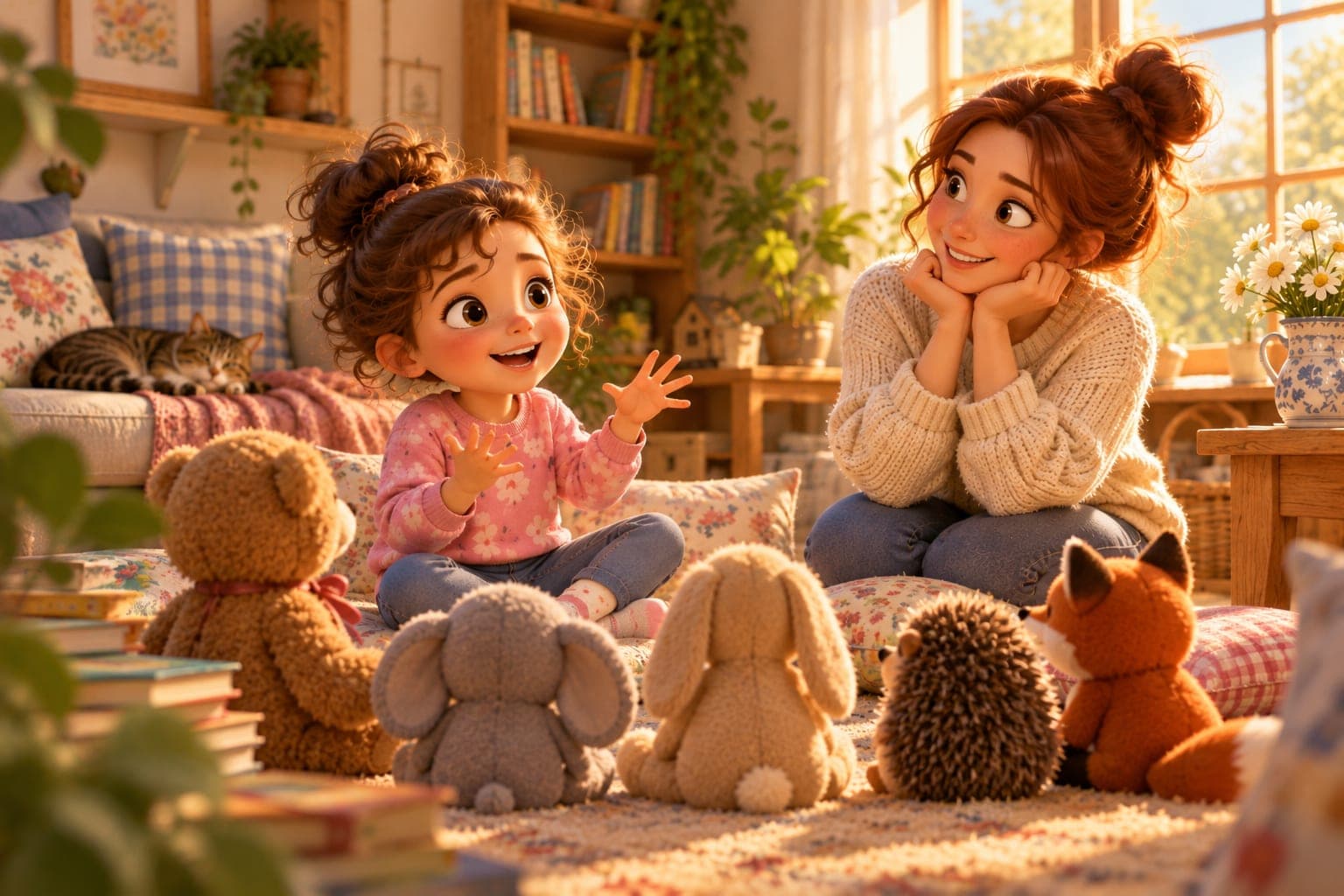
According to the CDC, a 5-year-old can tell a story they heard or made up with at least two events, answer simple questions about a book or story, keep a conversation going for more than three back-and-forth exchanges, and use or recognise simple rhymes.
At home, you can support these skills without turning them into a “lesson”:
- after a short story, ask: “What happened first?” and “What happened next?”;
- play with rhymes for simple words;
- at dinner, start a conversation and give your child room to keep it going with questions and their own answers.
For sound games, try phonemic awareness for a 5-year-old. If your child enjoys languages, you can also use simple activities from English for a 5-year-old.
What can a 5-year-old do in thinking, counting and attention?
The CDC list for 5-year-olds includes specific skills: counting to 10, naming some numbers from 1 to 5, using words such as “yesterday”, “tomorrow”, “morning” and “night”, paying attention for 5–10 minutes during an activity, writing some letters in their name and naming some letters.
Three short games work well:
- Counting on the move: count to 10 while climbing stairs or passing blocks. You can use activities for counting to 10.
- What happened earlier?: use “yesterday”, “today”, “tomorrow”, “morning” and “evening” while planning the day.
- Letters from the name: your child can find letters from their name on packaging, paper or a sign and try writing a few of them.
For variety, try patterns and sequences and tasks on comparing: more and fewer. These are practice materials, not extra items on the CDC list.
What can a 5-year-old do with their hands and whole body?
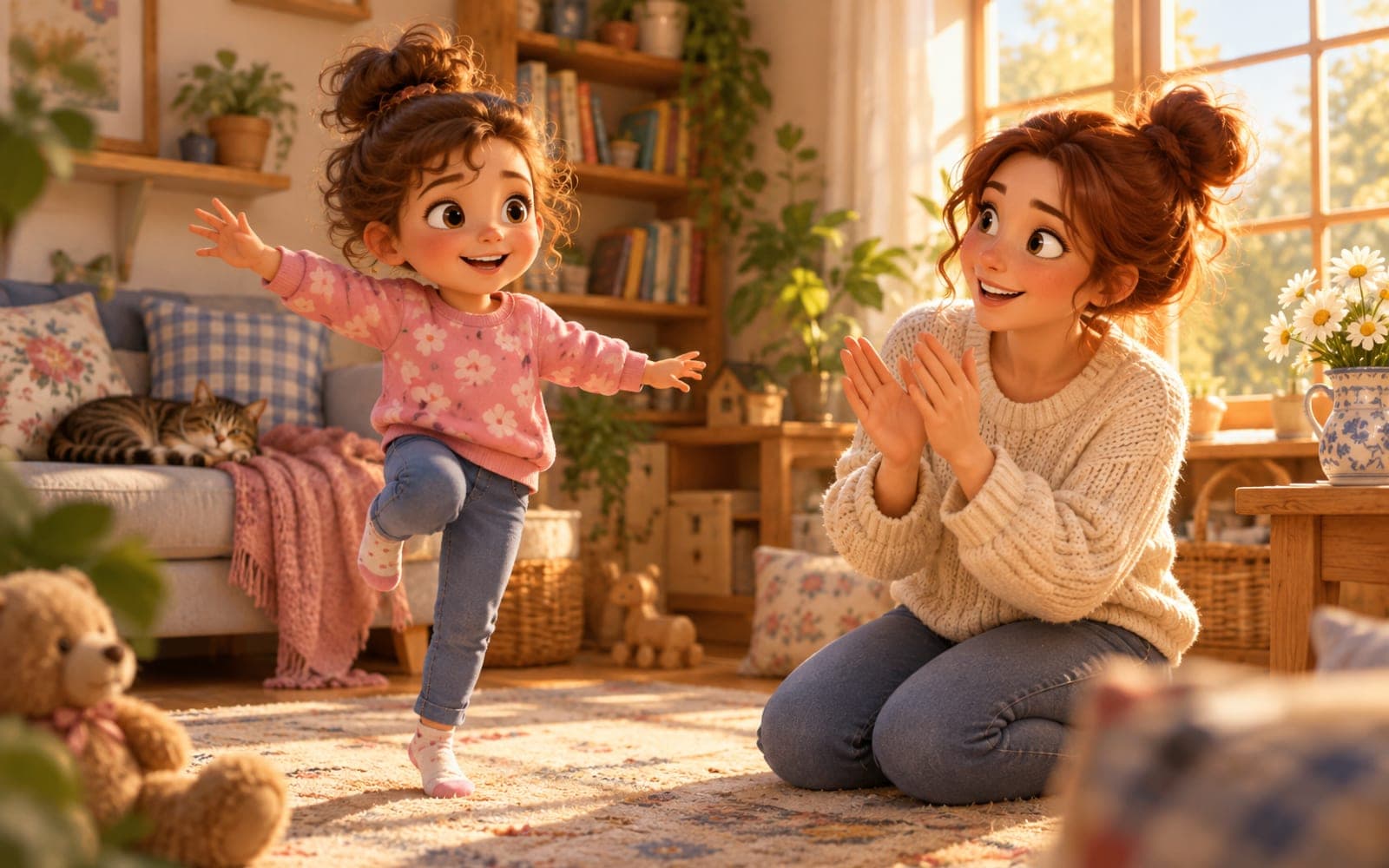
In the movement area, the CDC lists two milestones for age 5: buttoning some buttons and hopping on one foot. Both are easy to notice during an ordinary day.
You can offer:
- buttoning a shirt, cardigan or an old item of clothing;
- an “islands” game, with several one-foot hops between marked spots;
- drawing and following lines as extra hand play.
For calm hand practice, you can use pre-writing and graphomotor activities for a 5-year-old or colouring pages for a 5-year-old. Remember that the CDC does not list colouring or tracing pre-writing patterns as separate age-5 milestones.
What does independence look like at age 5?
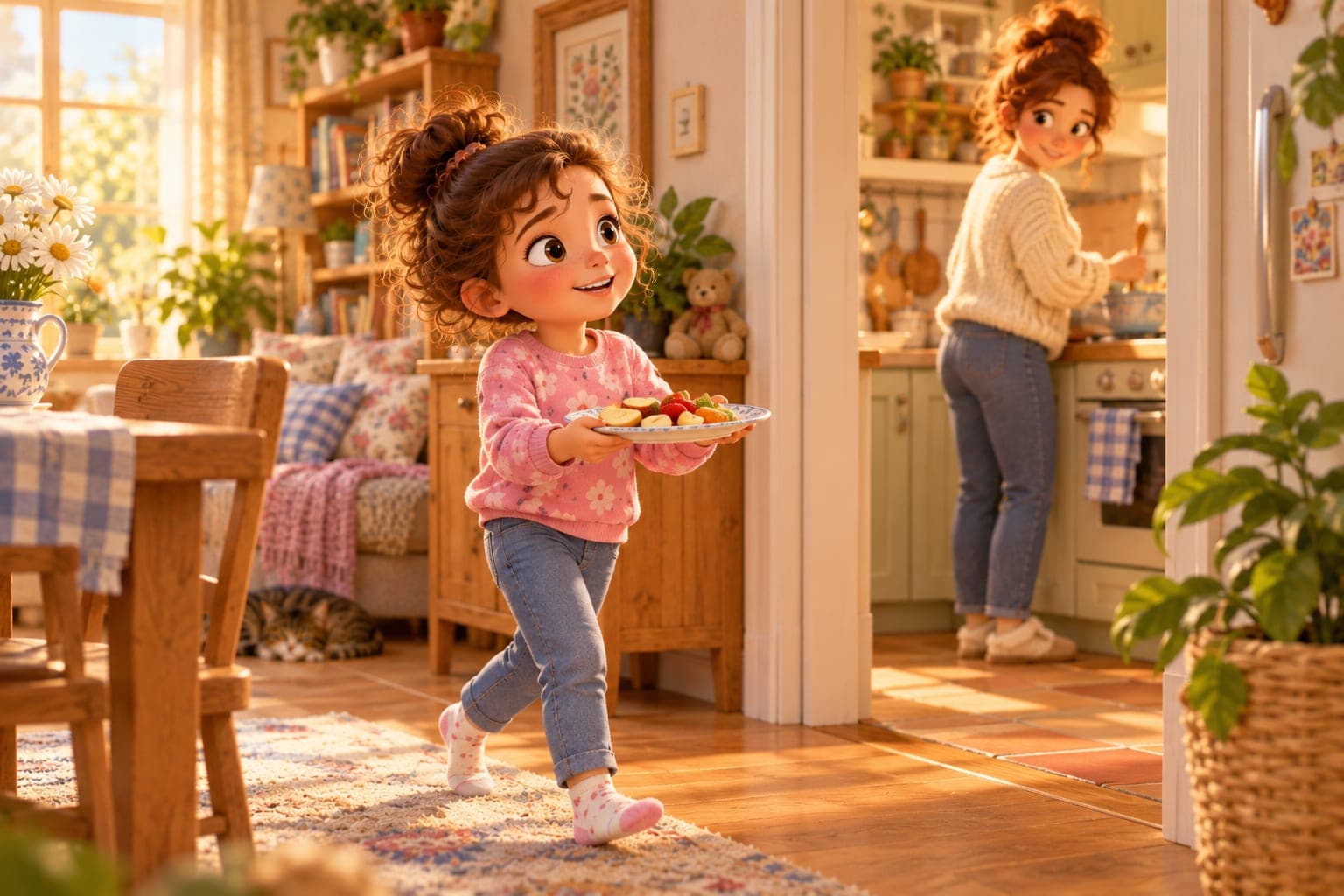
The CDC includes doing simple household chores, such as matching socks or clearing dishes from the table after eating. These are good opportunities to observe independence without setting up a special task.
Two simple activities:
- Sock pairs: after laundry, your child finds matching socks and puts them together.
- Table helper: after a meal, your child carries a light cup, napkin or plate to its usual place.
The goal is not speed or perfect tidiness. Give your child time and do not take over halfway through.
How do emotions, rules and social behaviour develop?
The CDC age-5 list includes three social skills: following rules or taking turns when playing with other children, singing, dancing or acting for an adult, and doing simple household chores.
At home, you can try:
- a short board game with alternating turns;
- putting on a small show, dance or song for family members;
- agreeing on one simple play rule together, for example “everyone gets one turn”.
Do not judge temperament. Give your child a chance to show the skill in a familiar situation.
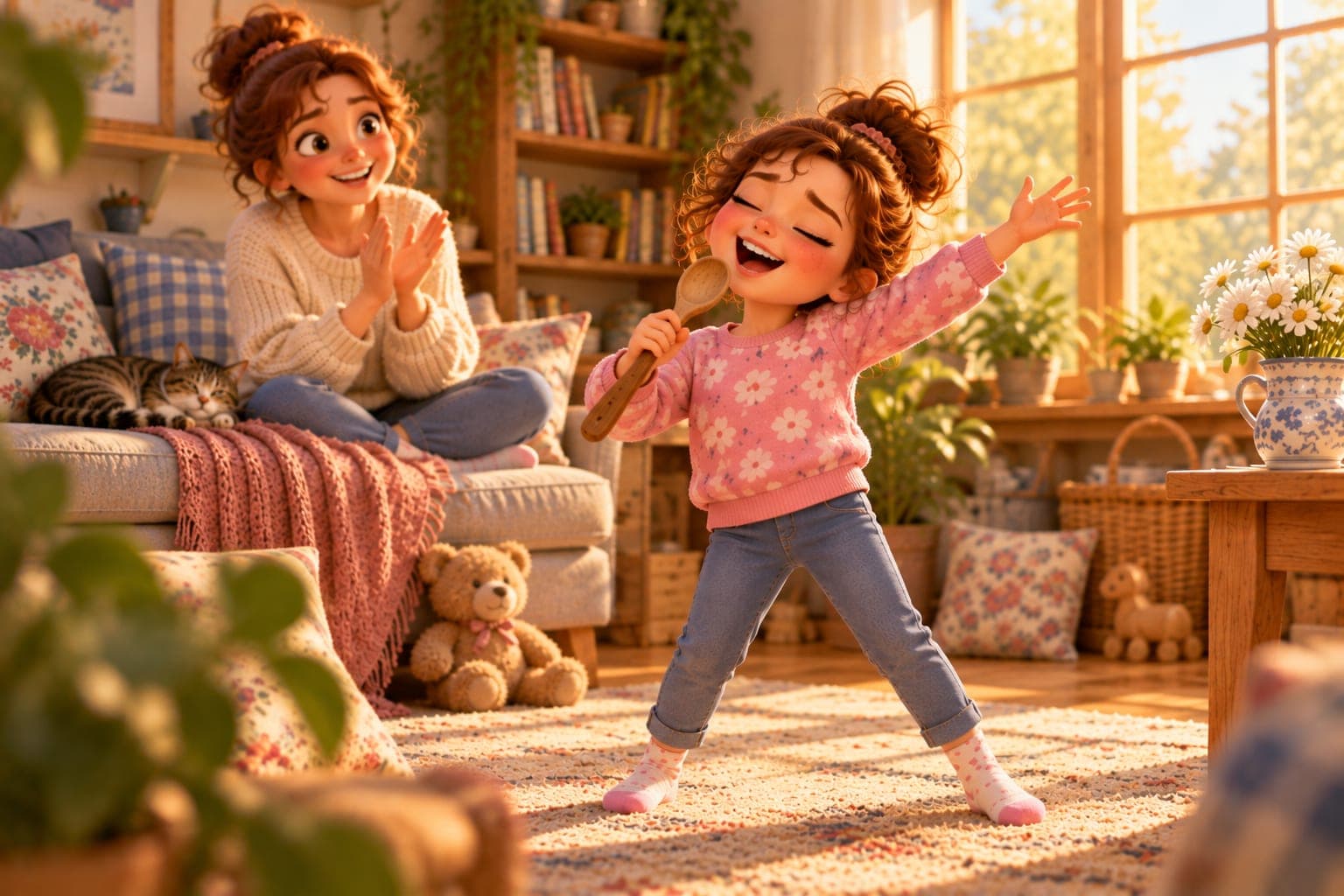
Table: area, skill and activity
Area | Skill from the CDC age-5 list | Simple activity at home |
|---|---|---|
Speech | Tells a story with at least two events | “What happened first, and what happened next?” after reading |
Speech | Answers simple questions about a story | Two questions after a short book |
Speech | Has a conversation with more than three back-and-forth exchanges | Conversation during a meal |
Speech | Uses or recognises simple rhymes | Finding words that rhyme |
Thinking | Counts to 10 | Counting blocks or stairs |
Thinking | Names some numbers from 1–5 | Pointing to numerals on cards |
Thinking | Uses words about time | Daily plan: morning, evening, tomorrow |
Attention | Pays attention for 5–10 minutes during an activity | Puzzle, reading or an art activity |
Letters | Writes some letters in their name | Signing their own drawing |
Social | Follows rules or takes turns | Simple board game |
Independence | Does a simple household chore | Matching socks |
Movement | Buttons some buttons | Playing with a shirt or cardigan |
Movement | Hops on one foot | Hopping between “islands” |
How can you observe a 5-year-old for a week without testing?
For one week, write down only brief observations from natural situations. Do not give points or compare the result with other children.
Mini-list: “I will observe for a week”:
- During conversation, does my child manage several back-and-forth exchanges?
- After reading, do they answer simple questions?
- Can they tell two connected events?
- Do they count to 10 during play?
- Do they recognise some numerals from 1 to 5?
- Do they use words such as “yesterday”, “tomorrow”, “morning” or “evening”?
- Can they stay with a familiar activity for about 5–10 minutes?
- Do they try to write letters from their name?
- Do they wait for their turn in a simple game?
- Can they button some buttons and hop on one foot?
If you do not see a skill on one day, come back to it later. The CDC's online checklist suggests observing for another week or two when you are unsure about a particular milestone.
How is a 5-year-old different from a 4-year-old?
Between ages 4 and 5, the milestones being observed become more complex. At age 5, the CDC looks at, among other things, a story with at least two events, a conversation with more than three exchanges, counting to 10, writing some letters from the child's name, paying attention for 5–10 minutes and hopping on one foot.
This does not mean every child moves from one level to another exactly on their birthday. To compare the two stages, also see what can a 4-year-old usually do.
What mistakes should you avoid when supporting a 5-year-old?
The most common mistake is turning observation into an exam. The list is meant to help you notice everyday skills, not create pressure.
Avoid:
- quizzing your child on every item in one day;
- correcting every letter and every answer;
- comparing with siblings or peers;
- assuming skills that the CDC does not include on the age-5 milestone list;
- treating worksheets as more important than conversation, play and everyday activities.
Early-years curriculum guidance describes broad areas of learning and development. It is not a medical milestone list for a specific age, so it should not be confused with the CDC checklist.
When should you talk to a paediatrician?
The CDC recommends acting early if your child is not meeting one or more milestones, has lost skills they previously had, or you have other concerns about development. Talk to a paediatrician, describe concrete observations and ask about developmental screening.
The list itself is not diagnostic. If concerns remain after an assessment, the CDC recommends discussing referral to a specialist who can look more closely at your child's development.
Sources
- Centers for Disease Control and Prevention, Milestones by 5 Years, updated 15 May 2026.
- Dziennik Ustaw RP, Rozporządzenie Ministra Edukacji z dnia 11 marca 2026 r. w sprawie podstawy programowej wychowania przedszkolnego oraz podstawy programowej kształcenia ogólnego dla szkoły podstawowej, Dz.U. 2026 poz. 378, published 20 March 2026.