

What Should You Do First When a Preschool-Age Child Gets Angry?
First stop any behaviour that could hurt someone and use fewer words. If your child runs toward danger, hits, kicks, bites, or throws hard objects, move them to a safer place or calmly block the unsafe behaviour.
In the first moments, do not ask, “Why are you doing this?”. A highly upset child may not be able to answer. Keep your words short: “I’m here. I won’t let you hit.” Slow your own breathing and lower your voice.
In short:
- make the child and surroundings safe;
- do not shout or get into an argument;
- use one of the five strategies below;
- after your child is calm, return to what happened;
- notice what usually happens before the outburst.
How Do You Calm an Angry Child? 5 Simple Strategies
Adapt these strategies to your child and the situation. No single approach will work every time. During intense anger, it is usually better to choose one simple action than offer several options at once.
1. Calm Presence and Short Sentences
Stay nearby, but do not bombard your child with questions. Your presence should communicate safety rather than start a negotiation.
Say: “I’m right here. I’ll wait with you,” or “I won’t let you hit. I’ll help you stop.”
Avoid: shouting, shaming, lectures, and phrases such as “Stop being angry right now.” Also avoid promising a reward simply to make the outburst end immediately.
2. Name the Feeling Without Judging
When your child can listen a little, name what they are probably feeling. Naming an emotion does not mean accepting every behaviour.
Say: “I can see you’re really angry because we have to leave now,” or “You wanted to stay at the playground longer. That’s hard.”
Avoid: “There’s nothing to cry about,” “You’re such an angry child,” or guessing motives such as “You’re doing this on purpose.” You can accept the feeling while still stopping hitting or throwing.
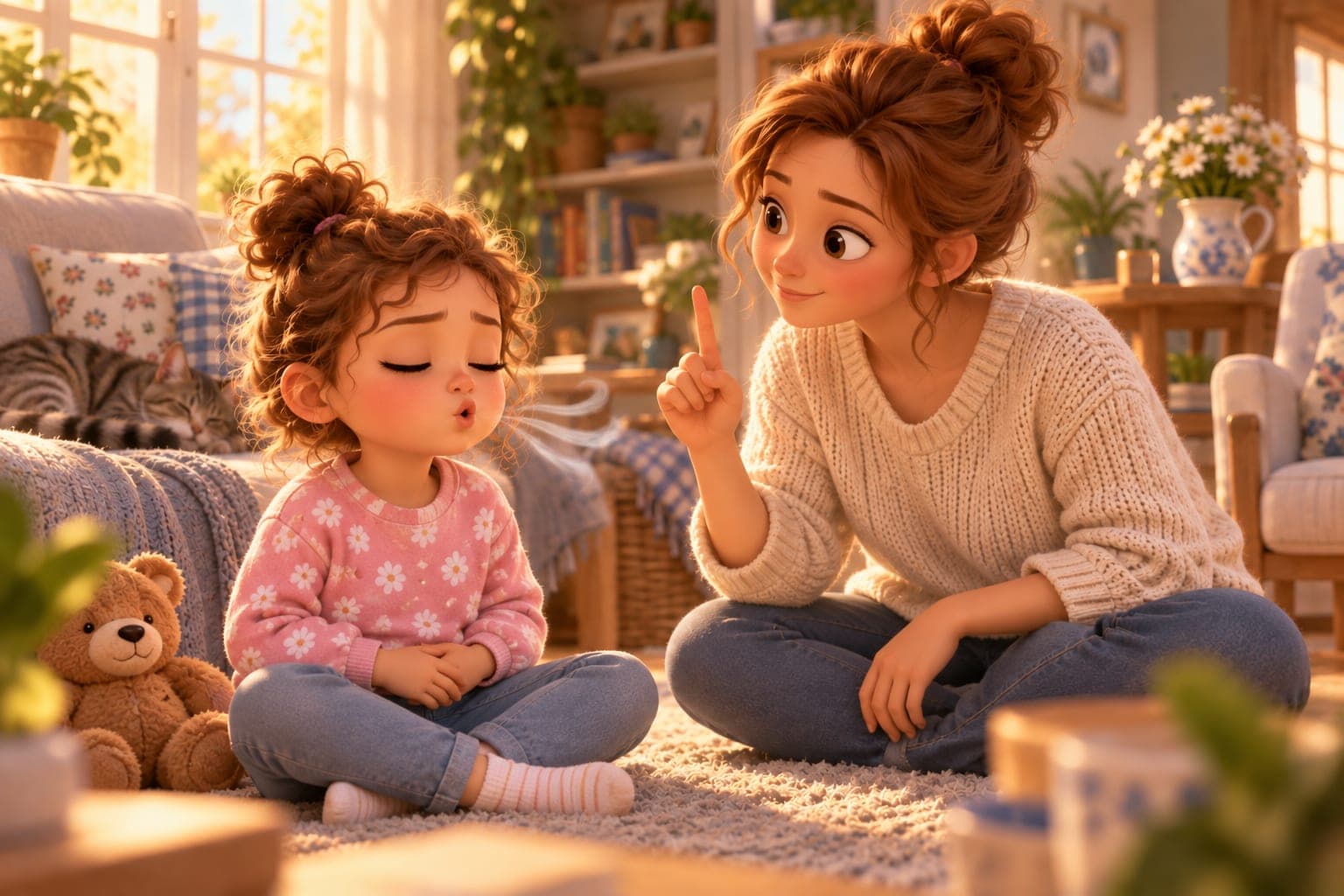
3. “Smell the Flower, Blow Out the Candle” Breathing
Offer breathing as a playful invitation, not an order. Show it yourself: breathe in gently through the nose as if smelling a flower, then breathe out longer through the mouth as if blowing out a candle.
Say: “Shall we do one breath together? Smell the flower… and blow out the candle.”
Avoid: repeatedly saying “calm down and breathe” if your child refuses. At the peak of anger, the exercise may be too hard. Return to calm presence and try later.
4. A Calm-Down Space That Is Not a Punishment
Set up a quiet place in advance with a cushion, soft toy, or book. Your child can go there with you or alone when they need fewer sensations. It should not be a punishment corner.
Say: “Would you like to sit with me on the cushion or stay here?” or “You can take Teddy and have a rest.”
Avoid: locking your child away, sending them there angrily as punishment, or threatening, “You’re going to the corner because you’re naughty.” The space should be associated with getting calm again.
5. Movement or Safe Pressure
Some children find it easier to release tension through movement. You can offer squeezing a cushion, pressing both hands firmly against a wall, a few jumps, or a hug—but only if your child wants it.
Say: “Would you like to squeeze the cushion or do five jumps?” or “I can give you a hug if you want.”
Avoid: wrestling, forced hugs, and encouraging your child to hit people or damage things. If movement makes them more activated, return to a quieter option.
What Should You Do After the Anger Has Passed?
Save the conversation for a time when your child can listen and respond again. You do not need a long interrogation. Three steps are enough: name what happened, restate the boundary, and plan one simple alternative.
You might say: “You were angry because we turned the cartoon off. It’s okay to be angry, but we don’t hit. Next time you can say: one more minute, or I’m angry.”
If something was spilled or knocked over, or someone was hit, help your child repair the situation. They can tidy up with you, bring a tissue or toy, or apologise later. Repair should teach responsibility, not humiliation.
Match expectations about everyday skills to your child’s age. Our guides on what a 3-year-old can typically do and what a 4-year-old can typically do may help.
How Can You Reduce Angry Outbursts in Preschool-Age Children?
You cannot prevent every angry moment, but you can reduce situations that are especially difficult for your child. Watch for hunger, tiredness, rushing, and sudden endings to play.
It helps to:
- give advance warning: “We’re leaving in five minutes”;
- offer two simple choices: “Do you want the green top or the navy one?”;
- keep meals and sleep reasonably regular;
- allow some transition time between activities;
- practise naming emotions and solving small problems while your child is calm.
For everyday self-regulation practice, you can also use learning through play, movement and talk. If difficult moments often happen when cartoons or games end, see our tips on screen time for children.
What Calm Activities Can You Offer After Your Child Settles?
After an outburst, you do not need to return immediately to a demanding task. If your child wants to, offer something simple that does not require competition or quick answers.
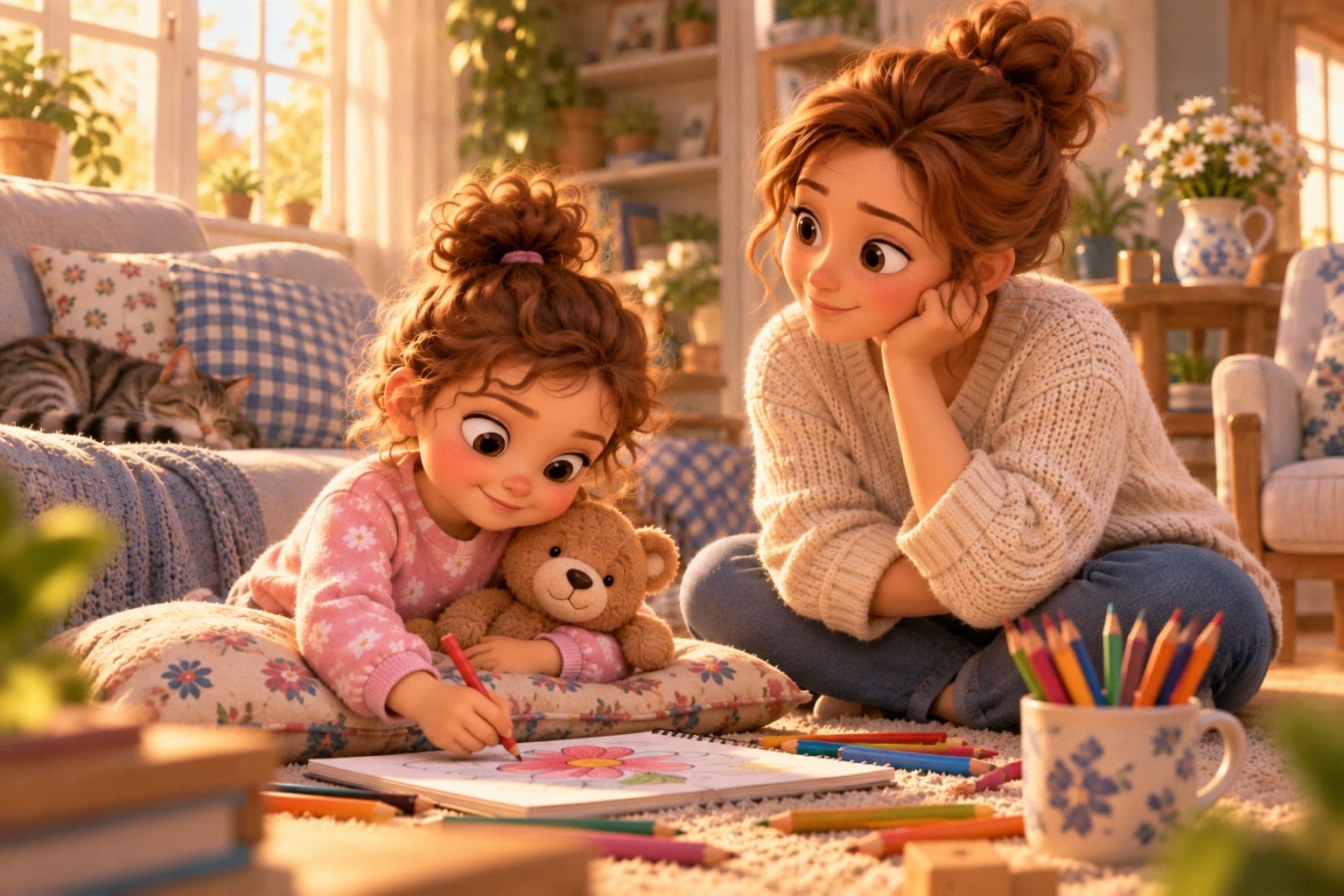
You could choose colouring pages for children, try a first simple maze for ages 3–4 or trace wave patterns for ages 3–4. These are options for after your child has calmed, not a way to distract them from the emotion at its peak.
What Mistakes Should You Avoid During a Tantrum?
A common mistake is trying to win the argument while your child is highly upset.
- Do not shout over your child.
- Do not shame them or compare them with other children.
- Do not demand an immediate apology.
- Do not change every boundary simply because your child starts shouting.
- Do not ignore hitting, biting, kicking, or other behaviour that threatens safety.
When Should You Talk to a Doctor or Child Psychologist About Tantrums?
Talk to your child’s doctor if their behaviour genuinely worries you, especially when outbursts are very frequent or long, involve self-injury, serious aggression toward others, or make it difficult to keep everyone safe. Seek support too if anger clearly interferes with everyday life at home or in childcare or preschool settings.
A consultation does not automatically mean a diagnosis. A doctor can help consider your child’s development, family situation, and whether further support from a child psychologist or another professional would be useful. The American Academy of Pediatrics encourages parents to discuss behavioural concerns with their child’s doctor.
Sources
- American Academy of Pediatrics / HealthyChildren.org, Top Tips for Surviving Tantrums, updated 2021.
- Centers for Disease Control and Prevention, Positive Parenting Tips: Preschoolers (3–5 years old), updated 2026.