
What Is the “One Task → Movement → Talk” Method?
Learning through play does not require three separate activities. Choose one task—a worksheet, game, or picture—and add a short movement plus one question or mini-story.
The pattern is simple:
- Task: your child does one specific thing, for example completes a maze.
- Movement: they recreate the same idea with their whole body, for example walking along a tape path on the floor.
- Talk: they describe what they did, predict the next step, or answer a question.
The point is not to make learning longer. The whole activity can take 8–15 minutes. If your child has had enough after the first or second stage, stop there.
The American Academy of Pediatrics describes play as an important part of language, thinking, social, and physical development. The same kind of activity can naturally combine language, early maths, movement, thinking, and social skills.
How Can You Turn a Maze Into Learning Through Play?
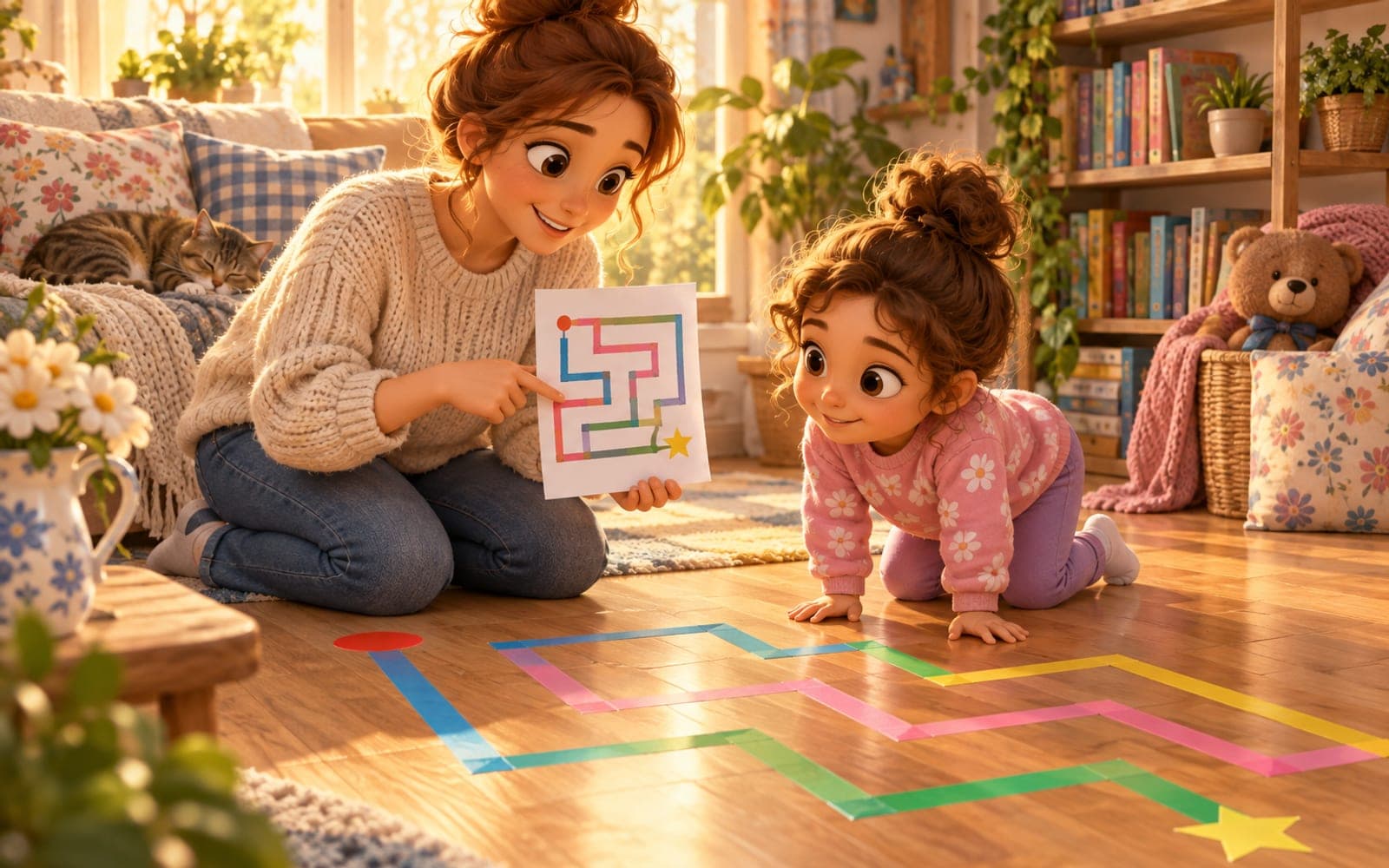
1. Turn the Maze Into a Route – Ages 3–4, 10 Minutes
Task: start with a first maze for ages 3–4. Your child traces the route with a finger and then with a chunky crayon.
Movement: make a wide path on the floor with masking tape. Your child walks from start to finish without stepping off the route.
Talk: ask: “Where were we going?”, “Where did you have to turn?”, “What could be beside the path?”. This practises spatial awareness, movement control, and storytelling.
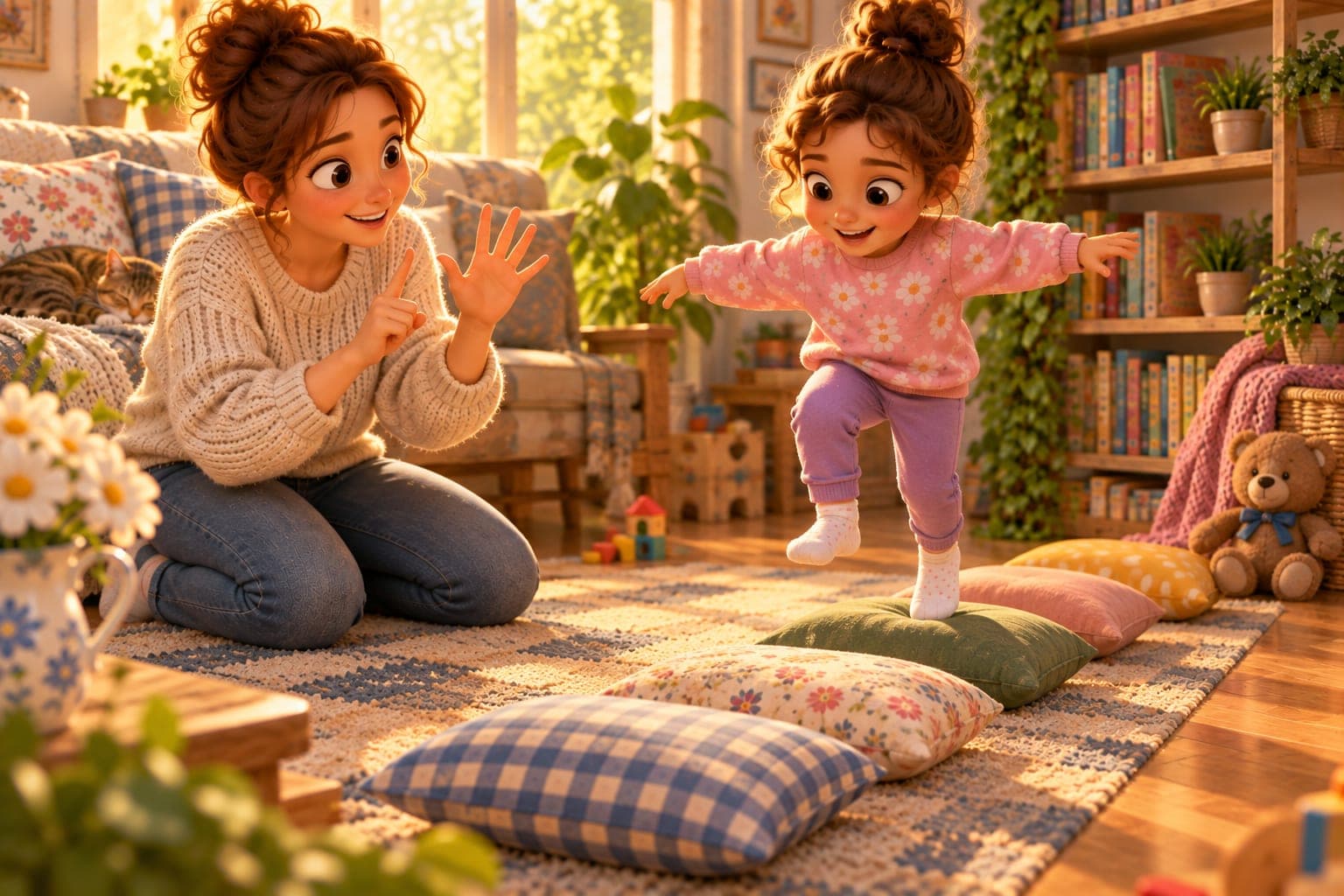
2. Two Mazes and a Route Choice – Ages 5–6, 12 Minutes
Task: use two medium mazes for ages 5–6. Your child chooses one and finds the exit.
Movement: make two possible “routes” around the room using cushions or sheets of paper. One is straighter; the other has more turns.
Talk: ask which route your child chose and why. Harder: your child explains the route to an adult without pointing.
How Can You Combine a Picture and Drawing With Movement?
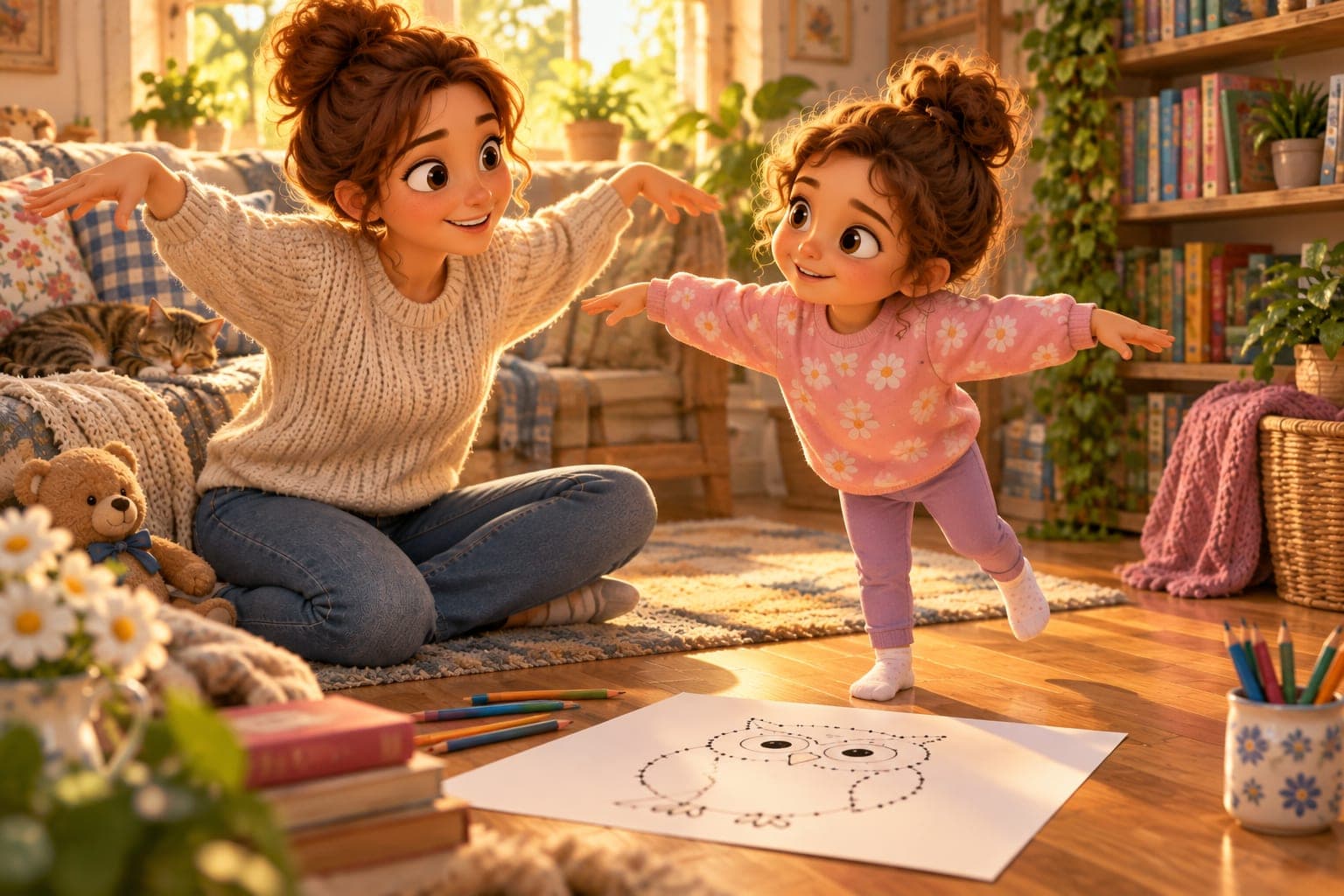
3. Owl Dot-to-Dot and a Flight Around the Room – Ages 5–6, 10 Minutes
Task: your child completes the owl dot-to-dot for ages 5–6.
Movement: when finished, your child becomes an owl: arms out like wings, “flying” slowly and stopping at an agreed “tree.”
Talk: talk about where the owl could fly and what it might see at night. This practises hand control, coordination, and building spoken sentences.
4. Farm: Colour, Move and Tell a Story – Ages 3–4, 10 Minutes
Task: choose a farm animal colouring page. Your child colours only one or two parts.
Movement: copy how the chosen animals move, such as a duck, cat, or horse.
Talk: ask: “Who lives on the farm?”, “What does it eat?”, “Where is it going?”. For a 3-year-old, a one-sentence answer is enough.
How Can You Combine an Educational Game With Movement and Talk?
5. What’s Missing? – Whole-Body Memory, Ages 3–4, 8 Minutes
Task: play What’s Missing?. Stop the series when your child starts guessing randomly.
Movement: after each round, your child uses movement to show the missing object or animal, if it can be acted out.
Talk: ask: “How did you know?”, “What was next to it?”. This practises visual memory, attention, and naming relationships.
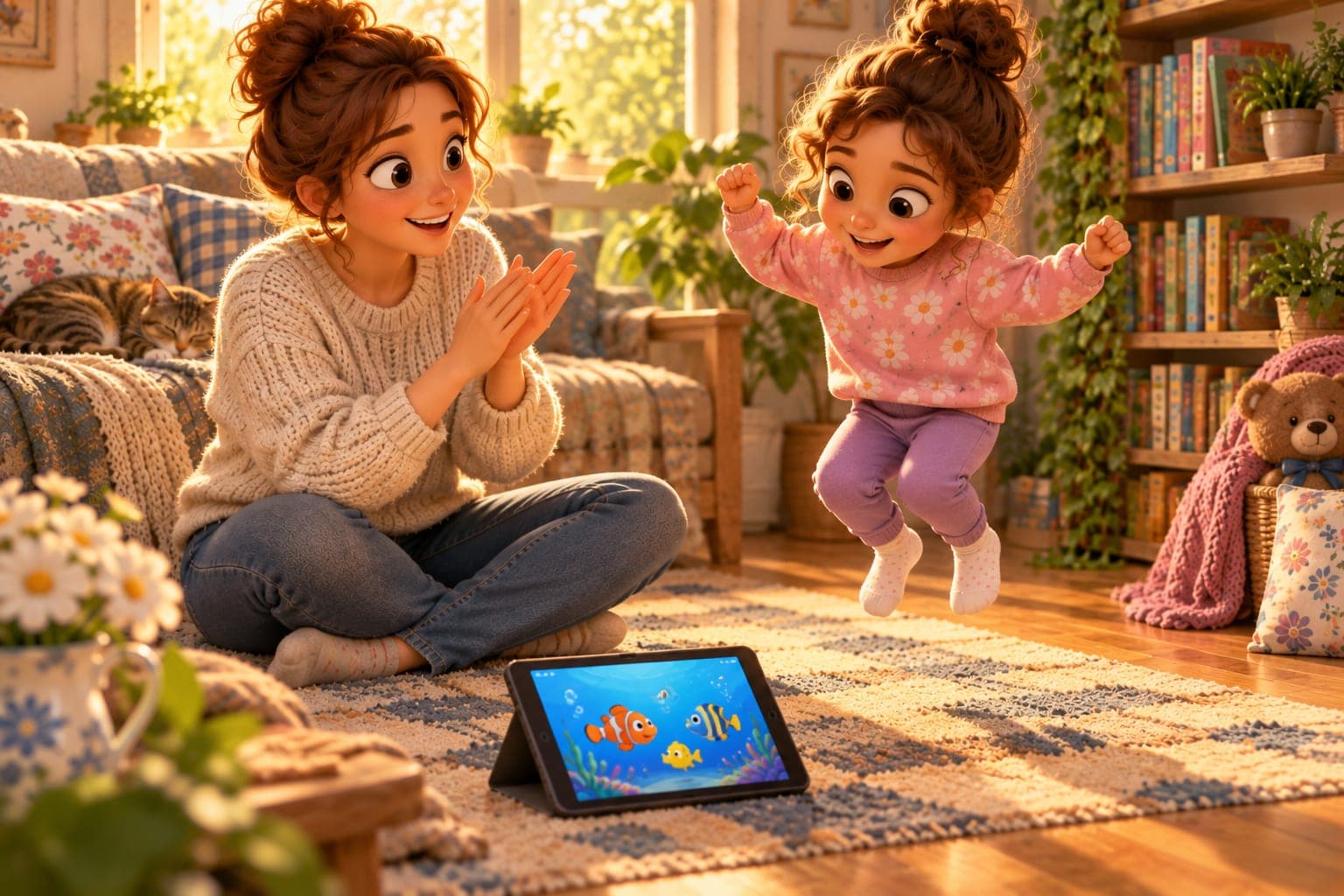
6. Shoal: Count With Movement – Ages 5–6, 10 Minutes
Task: play a round of Shoal. Your child counts the creatures in the shoals and catches the one with the number of creatures shown by Labugen.
Movement: after catching a shoal, your child does as many jumps or “fin movements” as there were creatures in that shoal.
Talk: ask: “How many were there?”, “How did you count?”, “Which shoal had more?”. This practises counting and comparing quantities.
For more on choosing games themselves, see our guide to educational games for children.
How Can You Make Maths Active for a Preschool-Age Child?
7. Move a Pattern From the Page Into the Body – Ages 5–6, 10 Minutes
Task: choose a simple activity from patterns and sequences for 5-year-olds.
Movement: turn pattern elements into actions, for example clap – stamp – clap – stamp. Then your child continues the sequence without looking at the page.
Talk: ask: “What came after the stamp?”, “How could we make the pattern harder?”. This practises noticing regularity and remembering a sequence.
8. Count Steps Around the Room – Ages 3–4, 8 Minutes
Task: place three or four large objects on the table. Count them together.
Movement: do the same number of steps, jumps, or claps.
Talk: ask: “Which had more: blocks or steps?”, “What happens if we add one?”. Do not require your child to write numerals.
If you want more short ideas for younger children, see learning activities for 3-year-olds.
How Can You Combine Storytelling With a Task for an Older Preschool-Age Child?
9. One Task, Three Endings – Ages 5–6, 12–15 Minutes
Task: choose any picture, maze, or short activity your child already knows.
Movement: your child acts out three parts of the story, for example climbing a hill, jumping over a puddle, and hiding.
Talk: make up three endings: funny, calm, and surprising. The same task becomes a starting point for language, movement, and imagination.
For 5-year-olds, you can extend this method with more complex activities from our guide to learning activities for 5-year-olds.
How Can You Quickly Match the Task, Movement, and Talk?
Task | Movement | Talk | What It Practises |
|---|---|---|---|
simple maze | walk along tape | “Where does the path lead?” | spatial awareness, language |
two mazes | choose a route | explain the choice | planning |
owl dot-to-dot | “fly” around the room | a story about the owl | hand skills, imagination |
farm colouring page | animal movements | questions about the farm | vocabulary, movement |
What’s Missing? | act out the missing item | “What was next to it?” | memory |
round of Shoal | as many jumps or “fin movements” as there were creatures | “How many were there? How did you count? Which shoal had more?” | counting and comparing quantities |
pattern and sequence | clapping and stamping | predict what comes next | maths |
count objects | same number of steps | more–less | number and comparison |
picture or worksheet | act out the story | three endings | narrative |
How Do You Adjust the Difficulty for Ages 3–6?
For a 3–4-year-old, choose one short task, one type of movement, and one question. The adult can demonstrate the first example and help with words.
For a 5–6-year-old, you can add choice, planning, and questions such as “why?” or “what happens next?”. Do not make every part harder at the same time. If the worksheet is challenging, keep the movement and conversation simple.
The best sign that the level is right is that your child understands what to do but still needs a moment to think. If frustration rises quickly, simplify one stage.
What Should You Avoid During Learning Through Play?
- Don’t turn the conversation into a quiz. One interesting question is enough.
- Don’t add five goals at once. One worksheet does not need to practise counting, letters, colours, and a foreign language all at once.
- Don’t correct every movement. Movement is there to bring the task to life, not to look perfect.
- Don’t drag the activity out. It is better to stop after 10 minutes while your child still wants to do it again.
- Don’t use movement as a reward for finishing the worksheet. All three parts belong to one activity.
When Does This Method Not Work?
If your child still does not want to return to the task after you add movement and conversation, the issue may be difficulty, tiredness, or simply lack of interest in the material. Change the worksheet or theme instead of increasing pressure.
If you are concerned about your child’s overall speech, movement, understanding of instructions, or everyday functioning, discuss what you are seeing with their teacher or doctor. One unsuccessful play session is not enough to draw conclusions about development.
Sources
- American Academy of Pediatrics, The Power of Play: How Fun and Games Help Children Thrive, HealthyChildren.org.
- Minister Edukacji, Rozporządzenie z 11 marca 2026 r. w sprawie podstawy programowej wychowania przedszkolnego oraz szkoły podstawowej, Dz.U. 2026 poz. 378, 2026.