
Pterodaustro on a Pink Salt Flat
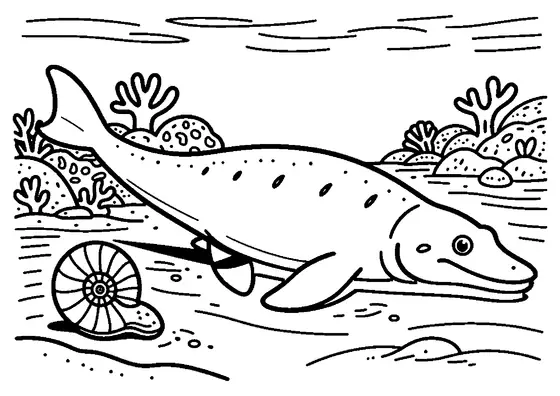
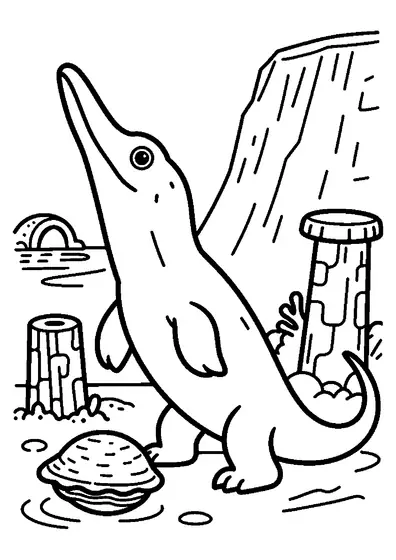
A Pterodaustro wades through shallow salt flat pools surrounded by crusty salt plates and a bank of shells.

A4 format (landscape), black outlines on a white background · for home and classroom use
All coloring pages: Flying and Sea Reptile Coloring Pages
Similar coloring pages: Flying and Sea Reptile Coloring Pages



What else can you print? Free, no account needed
Custom Name Coloring Pages
Enter your child's name to generate a custom coloring page featuring large outline letters to color and decorate.
Open generator →Connect the Dots Generator
Eight connect-the-dots pictures across three difficulty levels. Features faint outline guides for younger children and dots only for older kids.
Open generator →Printables
Worksheets, tracing lines, mazes and dot-to-dots in A4.
Browse printables →
A Filter-Feeding Reptile on Saline Flats
Pterodaustro was a highly specialized pterosaur that inhabited shallow, salty lagoons and evaporative salt basins. Its upward-curved beak contained hundreds of needle-like bristle teeth designed to filter tiny organisms from shallow water. The surrounding environment features vast crusts of salt, calm evaporative pools, and accumulated shell deposits.
Why Salt Flats Turn Pink
Salt flats and saline lakes often exhibit a pink or reddish color due to microscopic algae and salt-loving bacteria called halophiles. These organisms produce colorful pigments to protect themselves from intense sunlight in harsh, salty conditions. Modern animals like flamingos feed on small crustaceans living in these pink waters, taking on similar pink hues.
Realistic Colors of Salt Basins and Pterodaustro
- Pterodaustro body: Light pinkish gray or pale cream
- Curved bristle beak: Muted horn yellow or brown
- Salt crust plates: Sparkling white or pale rose pink
- Shallow salt pools: Soft pink, magenta, or sky blue
- Shell bank deposits: Off-white, ivory, or pale peach