
Plesiosaur in a Sponge Garden
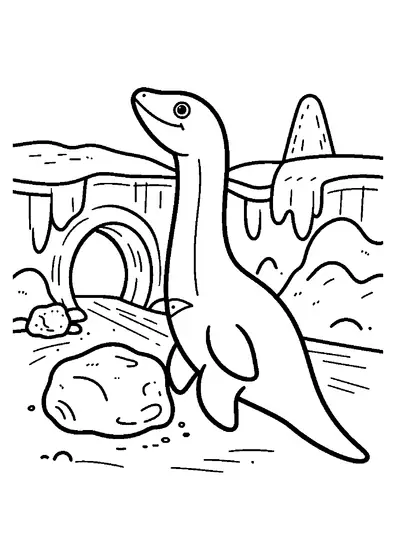
An ancient long-necked marine reptile glides above a tranquil underwater landscape filled with prehistoric sponges and rounded rocks.

A4 format (landscape), black outlines on a white background · for home and classroom use
All coloring pages: Flying and Sea Reptile Coloring Pages
Similar coloring pages: Flying and Sea Reptile Coloring Pages




What else can you print? Free, no account needed
Custom Name Coloring Pages
Enter your child's name to generate a custom coloring page featuring large outline letters to color and decorate.
Open generator →Connect the Dots Generator
Eight connect-the-dots pictures across three difficulty levels. Features faint outline guides for younger children and dots only for older kids.
Open generator →Printables
Worksheets, tracing lines, mazes and dot-to-dots in A4.
Browse printables →
The Plesiosaur Swimming Above a Sponge Garden
Prehistoric oceans provided a rich marine environment where long-necked plesiosaurs glided over diverse seafloor landscapes. These underwater areas often featured ancient sea sponges resting alongside weathered rocks, creating a calm marine habitat deep below the surface of prehistoric waters.
Fascinating Facts About Ancient Marine Sponges
Sea sponges are among the oldest known forms of animal life on Earth, thriving in prehistoric oceans millions of years before dinosaurs walked the land. Unlike plants, sponges feed by pumping water through their porous bodies to capture microscopic nutrients, playing a key role in maintaining clear ocean environments.
Realistic Colors of the Marine Reptile and Seafloor
- Plesiosaur body: dark slate gray or deep olive green with a lighter underbelly
- Plesiosaur flippers: dark gray or muted teal tone
- Prehistoric sponges: earthy brown, dull yellow, or muted rust orange
- Seafloor rocks: deep gray, brownish tan, or dark olive green