
Pterodaustro with a Curved Beak
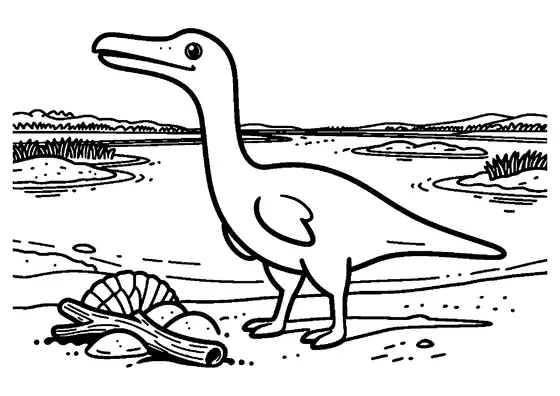
A Pterodaustro stands in profile with an elongated neck and a remarkably curved jaw shape.

A4 format (portrait), black outlines on a white background · for home and classroom use
All coloring pages: Flying and Sea Reptile Coloring Pages
Similar coloring pages: Flying and Sea Reptile Coloring Pages


What else can you print? Free, no account needed
Custom Name Coloring Pages
Enter your child's name to generate a custom coloring page featuring large outline letters to color and decorate.
Open generator →Connect the Dots Generator
Eight connect-the-dots pictures across three difficulty levels. Features faint outline guides for younger children and dots only for older kids.
Open generator →Printables
Worksheets, tracing lines, mazes and dot-to-dots in A4.
Browse printables →
Pterodaustro in Profile
A solitary Pterodaustro stands upright in a side view, highlighting its slender neck and folded wings. Its upper and lower jaws curve distinctly upward, forming a specialized beak structure.
Unique Feeding Habits of Pterodaustro
Pterodaustro lived around shallow saline lakes, filtering tiny crustaceans from water in a manner similar to modern flamingos. Its lower jaw contained over a thousand bristle-like teeth that acted as a sieve to trap microscopic organisms.
Real Colors of Pterodaustro
- Curved beak: pale pinkish tan or muted orange-brown
- Slender neck: soft pink or light grayish beige
- Folded wings: dusty brown or slate gray skin membrane
- Lower body and legs: light gray or pale yellow-tan