
Mosasaurus over a Coral Reef
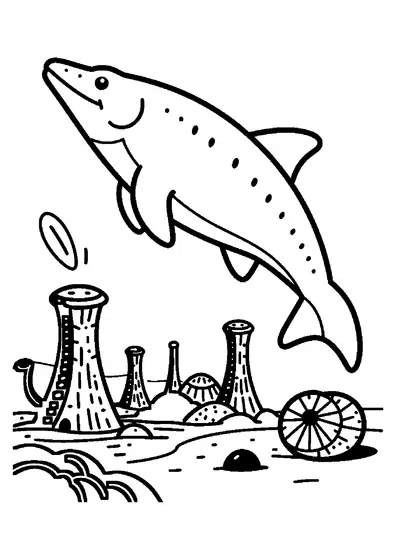
A powerful marine predator glides across a shallow ocean shelf filled with massive coral formations and sandy sea beds.

A4 format (landscape), black outlines on a white background · for home and classroom use
All coloring pages: Flying and Sea Reptile Coloring Pages
Similar coloring pages: Flying and Sea Reptile Coloring Pages



What else can you print? Free, no account needed
Custom Name Coloring Pages
Enter your child's name to generate a custom coloring page featuring large outline letters to color and decorate.
Open generator →Connect the Dots Generator
Eight connect-the-dots pictures across three difficulty levels. Features faint outline guides for younger children and dots only for older kids.
Open generator →Printables
Worksheets, tracing lines, mazes and dot-to-dots in A4.
Browse printables →
Mosasaurus Gliding Above Coral Reef Formations
The scene depicts a formidable Mosasaurus swimming over a shallow reef shelf. Prominent coral growths, an elevated rock step, and a wide sandy seabed shape the surrounding underwater landscape.
Life Along Prehistoric Coral Reefs
Prehistoric coral reefs served as vibrant biodiversity hotspots that attracted large apex predators seeking easy prey. Mosasaurus used its streamlined body and strong tail paddle to cruise efficiently over shallow marine terraces. Although reef environments contained complex rock ledges, large mosasaurs could easily navigate open waters directly above the coral canopy.
Real-World Colors of Mosasaurus and Coral Shelves
- Mosasaurus scales: dark grayish green or deep navy along the top, fading to light gray underneath
- Reef corals: muted orange, yellow-brown, pinkish tan, or soft lavender tones
- Sandy seabed: warm cream, beige, and pale sand yellow
- Submerged rock step: gray, brownish green, and dark brown rock textures