
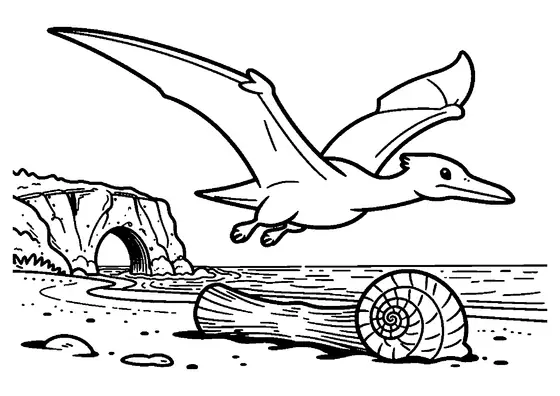
Pteranodon over a Chalk Cliff
A prehistoric flying reptile glides through coastal air currents high above white shoreline precipices and coastal rocks.

A4 format (landscape), black outlines on a white background · for home and classroom use
All coloring pages: Flying and Sea Reptile Coloring Pages
Similar coloring pages: Flying and Sea Reptile Coloring Pages



What else can you print? Free, no account needed
Custom Name Coloring Pages
Enter your child's name to generate a custom coloring page featuring large outline letters to color and decorate.
Open generator →Connect the Dots Generator
Eight connect-the-dots pictures across three difficulty levels. Features faint outline guides for younger children and dots only for older kids.
Open generator →Printables
Worksheets, tracing lines, mazes and dot-to-dots in A4.
Browse printables →
A Pteranodon Flying Above Coastal Cliffs
A large Pteranodon soars through the sky high above a rocky seashore lined with dramatic chalk cliffs. Perched along the elevated rocky shoreline sits a coastal nest overlooking the ocean below. The expansive scene portrays the open airspace where prehistoric flying reptiles hunted for sea life.
Ancient Life of Airborne Reptiles
Pteranodons lived during the Late Cretaceous period along the Western Interior Seaway of North America. These massive pterosaurs lacked teeth and relied on ocean updrafts near coastal cliffs to launch their long, narrow wings into gliding flight.
Natural Tones of Prehistoric Coastlines
- Pteranodon wing membranes: Muted leather brown, tan, or deep olive green
- Pteranodon head crest: Dull yellow, orange, or dark brownish red
- Chalk cliff face: Bright white, pale gray, or ivory stone
- Rocky seashore: Dark granite gray, charcoal, and damp brown pebbles
- Nest structure: Dried pale brown twigs and interwoven vegetation