
Mosasaurus by an Underwater Rockslide
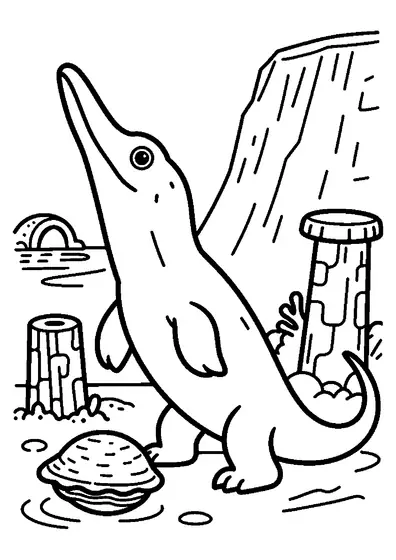
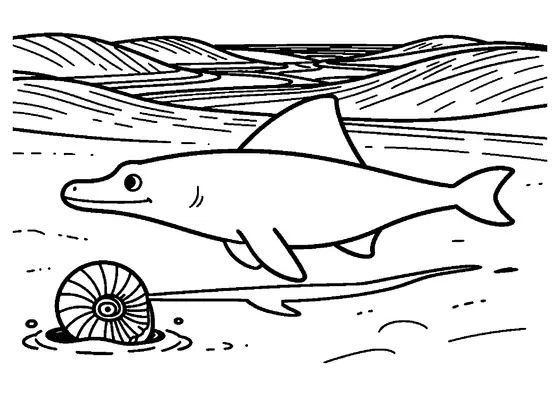
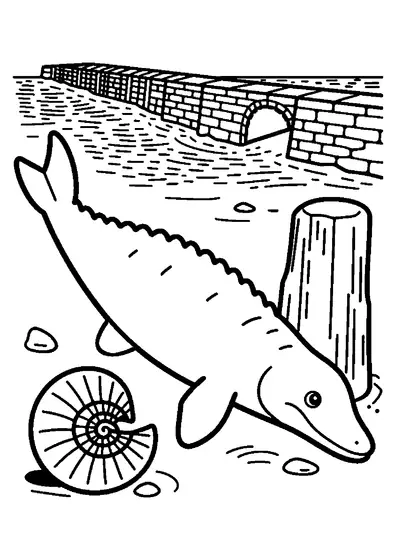
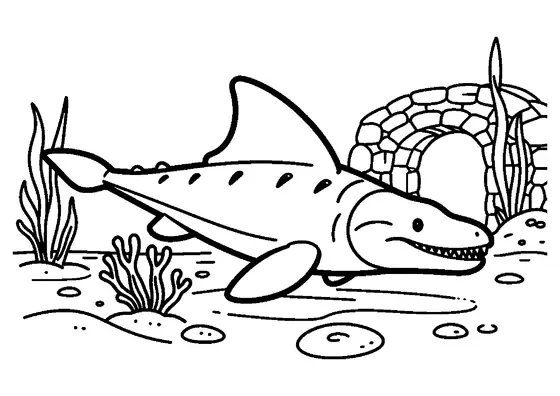
A massive prehistoric marine predator glides over a wide expanse of fallen stones near an ancient ocean cliff.

A4 format (landscape), black outlines on a white background · for home and classroom use
All coloring pages: Flying and Sea Reptile Coloring Pages
Similar coloring pages: Flying and Sea Reptile Coloring Pages


What else can you print? Free, no account needed
Custom Name Coloring Pages
Enter your child's name to generate a custom coloring page featuring large outline letters to color and decorate.
Open generator →Connect the Dots Generator
Eight connect-the-dots pictures across three difficulty levels. Features faint outline guides for younger children and dots only for older kids.
Open generator →Printables
Worksheets, tracing lines, mazes and dot-to-dots in A4.
Browse printables →
Mosasaurus Crossing an Underwater Rockslide
A mosasaurus travels across an expansive underwater rockslide situated at the base of a submerged cliff side. The scene features large scattered boulders, gently rippling sand beds, an ancient ammonite shell, and a waterlogged fallen tree trunk on the seafloor.
Geological Facts About Submerged Rockslides
Submarine rockslides occur along steep underwater slopes when tectonic movements or wave pressure cause cliff edges to collapse. Over time, submerged tree trunks and heavy rock piles create unique ecosystems that attract large ocean predators.
Authentic Colors of the Mosasaurus and Ocean Bed
- Mosasaurus skin: dark slate, navy blue, or olive-green with lighter throat scales
- Cliff rocks and boulders: dark charcoal, brownish-gray, or dull earthy tones
- Sand layers: golden tan, pale beige, or soft light gray
- Fossil ammonite shell: rusty brown, cream, or dark gray
- Fallen trunk: dark timber brown or saturated mossy black