
Pteranodon at the Edge of a Sandstone Cliff
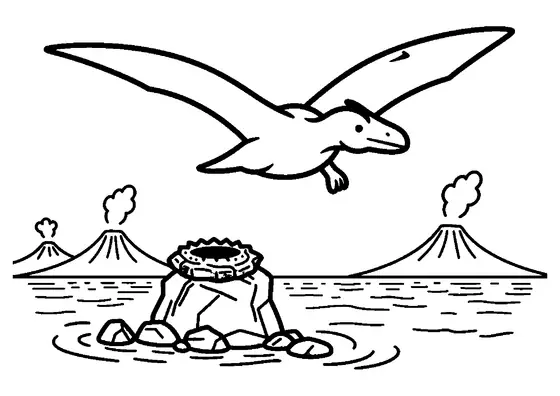
This page shows a large-crested Pteranodon perched on a coastal sandstone rock near a nest with a single egg.

A4 format (portrait), black outlines on a white background · for home and classroom use
All coloring pages: Flying and Sea Reptile Coloring Pages
Similar coloring pages: Flying and Sea Reptile Coloring Pages


What else can you print? Free, no account needed
Custom Name Coloring Pages
Enter your child's name to generate a custom coloring page featuring large outline letters to color and decorate.
Open generator →Connect the Dots Generator
Eight connect-the-dots pictures across three difficulty levels. Features faint outline guides for younger children and dots only for older kids.
Open generator →Printables
Worksheets, tracing lines, mazes and dot-to-dots in A4.
Browse printables →
Pteranodon on a Sandstone Cliff
A large-crested Pteranodon rests on a rocky outcrop along a high sandstone cliff. Beside the flying reptile sits a simple nest holding a single dinosaur egg, overlooking the open sky.
Facts About Pteranodon Nesting and Cliffs
Pteranodons often inhabited coastal cliffs where updrafts of ocean wind made it easier for their long wings to take off into the air. Nesting on high rock ledges kept their eggs safe from land-bound predators that could not climb steep sandstone walls.
Natural Colors of Pteranodon and Cliff Landscapes
- Pteranodon skin: grayish-brown or tan skin suitable for blending into coastal rocks
- Head crest: bright reddish-orange or yellow shade, often used for display
- Egg shell: off-white or pale beige color typical of prehistoric reptile eggs
- Sandstone cliff: warm ochre, reddish-brown, or pale golden yellow earth tones
- Nesting rock: dark gray or weathered brown stone tone