
Ichthyosaur by Underwater Dunes
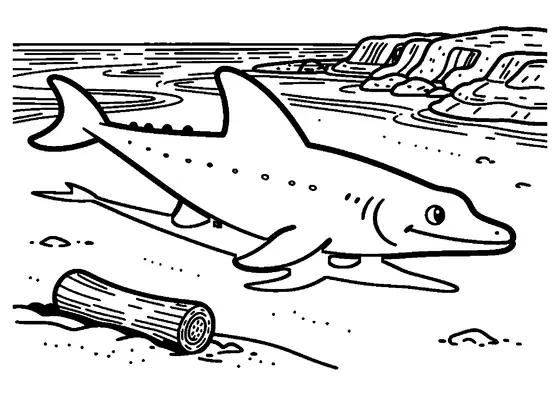
A sleek ichthyosaur glides low over rolling seafloor dunes near an ancient ammonite shell and a submerged fallen log.

A4 format (landscape), black outlines on a white background · for home and classroom use
All coloring pages: Flying and Sea Reptile Coloring Pages
Similar coloring pages: Flying and Sea Reptile Coloring Pages


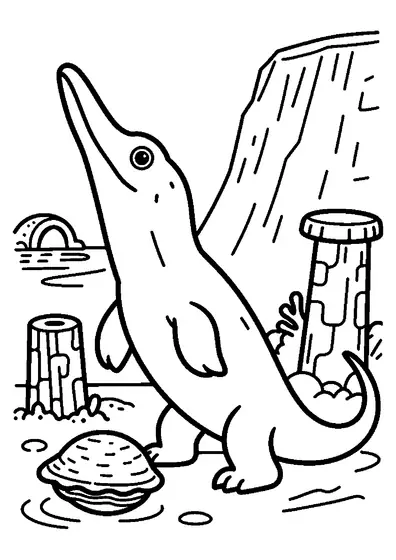

What else can you print? Free, no account needed
Custom Name Coloring Pages
Enter your child's name to generate a custom coloring page featuring large outline letters to color and decorate.
Open generator →Connect the Dots Generator
Eight connect-the-dots pictures across three difficulty levels. Features faint outline guides for younger children and dots only for older kids.
Open generator →Printables
Worksheets, tracing lines, mazes and dot-to-dots in A4.
Browse printables →
The Ichthyosaur Swimming Over Submerged Sand Dunes
Cruising close to the sea floor, an ichthyosaur moves over smooth underwater dunes shaped by active ocean currents. Near the sandy mounds, a coiled ammonite shell rests beside a waterlogged wooden log that settled into the seabed sediment.
How Underwater Sand Dunes are Formed by Ocean Currents
Submarine sand dunes form on shallow continental shelves where strong tide currents continuously push loose sediment across the seafloor. The moving currents create long rolling ridges of sand that slowly shift across the sea floor, uncovering ancient shells and submerged driftwood.
Realistic Colors of the Ichthyosaur and Marine Bed
- Ichthyosaur body: dark bluish gray, dark olive green, or charcoal black on top with a silver-white belly
- Ichthyosaur fins and flippers: dark slate gray or deep navy blue
- Coiled ammonite shell: pale cream, spiral brown, tan, or pearl white
- Sunken wooden log: dark mahogany brown, waterlogged gray, or deep peat brown
- Submarine sand dunes: warm yellow-tan, pale beige, or soft cream sand