
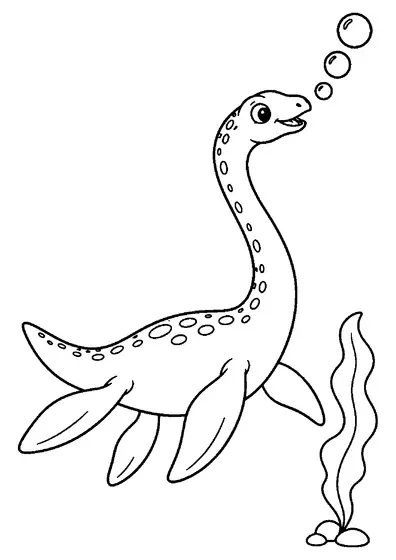
Pliosaur Swimming Through an Underwater Rock Arch
This prehistoric scene features a massive pliosaur navigating a sea environment with ancient rock arches, small fish, and ocean plants.

A4 format (landscape), black outlines on a white background · for home and classroom use
All coloring pages: Flying and Sea Reptile Coloring Pages
Similar coloring pages: Flying and Sea Reptile Coloring Pages


What else can you print? Free, no account needed
Custom Name Coloring Pages
Enter your child's name to generate a custom coloring page featuring large outline letters to color and decorate.
Open generator →Connect the Dots Generator
Eight connect-the-dots pictures across three difficulty levels. Features faint outline guides for younger children and dots only for older kids.
Open generator →Printables
Worksheets, tracing lines, mazes and dot-to-dots in A4.
Browse printables →
A Pliosaur Swimming Past Underwater Formations
Pliosaurs were massive apex predators of the Mesozoic seas. In an ocean setting featuring natural stone arches, aquatic vegetation, and passing fish, these marine reptiles moved efficiently using four large flippers to hunt across deep aquatic habitats.
How Pliosaurs Navigated Ancient Seas
Unlike true dinosaurs, pliosaurs belonged to a group of short-necked marine reptiles called pliosauroids. They relied on powerful limb movement that allowed them to glide smoothly through open ocean waters and around rocky sea structures.
Real Colors of Prehistoric Sea Life
- Pliosaur skin: Countershaded tones such as dark gray or navy blue on the back with a lighter cream belly for camouflage in deep water
- Underwater rock arch: Gray, brown, and dark tan stone covered in muted ocean sediment
- Marine plants: Deep olive green, emerald, and brownish kelp shades
- Fish: Silver, muted gray, and pale blue scales reflecting filtered sunlight