
Mosasaur by a Basalt Causeway
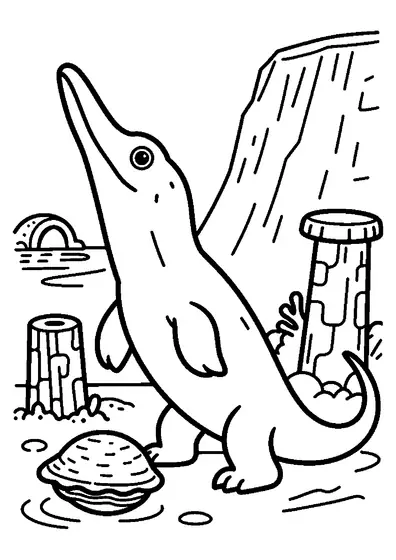
A massive marine predator named Mosasaur swims past a submerged basalt rock formation and a large ammonite.

A4 format (portrait), black outlines on a white background · for home and classroom use
All coloring pages: Flying and Sea Reptile Coloring Pages
Similar coloring pages: Flying and Sea Reptile Coloring Pages



What else can you print? Free, no account needed
Custom Name Coloring Pages
Enter your child's name to generate a custom coloring page featuring large outline letters to color and decorate.
Open generator →Connect the Dots Generator
Eight connect-the-dots pictures across three difficulty levels. Features faint outline guides for younger children and dots only for older kids.
Open generator →Printables
Worksheets, tracing lines, mazes and dot-to-dots in A4.
Browse printables →
Mosasaur Beside a Natural Basalt Causeway
Mosasaurs were giant apex predators of Late Cretaceous oceans, using powerful flippers and broad tails to navigate open waters. The sea reptile swims along a natural causeway composed of hexagonal basalt columns, accompanied by a large coiled ammonite.
How Basalt Causeways Form in the Ocean
Basalt causeways are geological structures created when lava cools rapidly upon contact with seawater or air, cracking into geometric columns. These submerged volcanic rock formations provided anchor points for sea creatures and camouflage for hunting marine reptiles.
Realistic Colors of Deep Ocean Predators and Basalt Rocks
- Mosasaur hide: dark olive green or navy blue with counter-shading
- Basalt columns: charcoal gray, dark brown, or black
- Large ammonite shell: mottled brown, tan, and reddish orange
- Surrounding seawater: deep blue-green with soft light filtering through