
How do you start English with a 3-year-old at home?
Start with one daily routine and two or three short phrases instead of setting up a separate lesson. A three-year-old learns mainly through context, movement, repetition, and interaction with an adult.
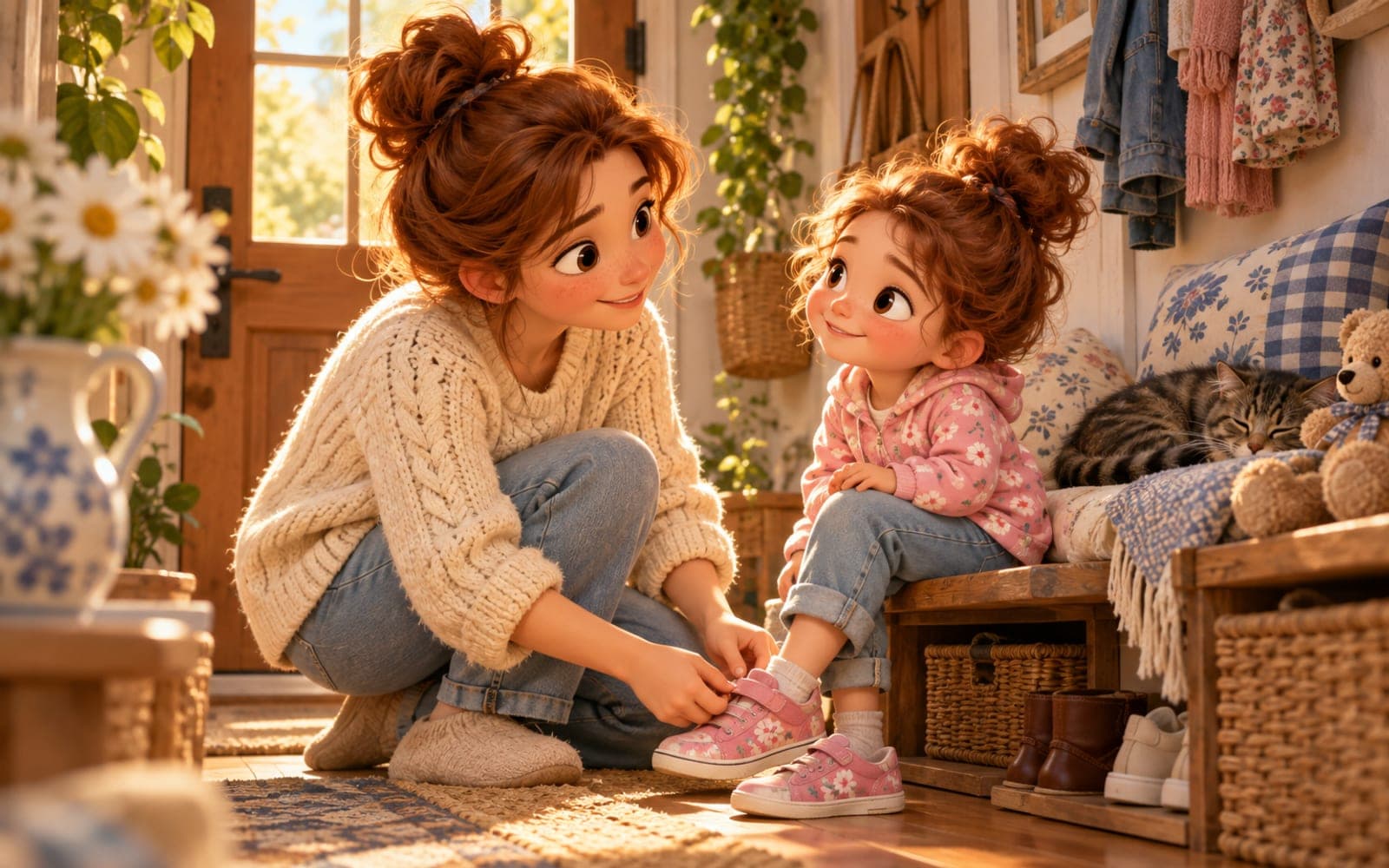
For the first week, you can focus only on getting dressed. Say “Shoes on!” with the shoes, “Coat on!” with the coat, and “Let’s go!” before leaving. Do not quiz your child later to see if they remember the words. If, after a few days, they respond to the phrase with the right action, learning is already happening.
In short:
- choose one routine for the week;
- use 2–4 short phrases in the same situation;
- add one action song or rhyme;
- look at a short picture book for 3–5 minutes;
- do not make your child repeat words;
- treat screens as something you use together, not the main source of English.
If you want a calm activity alongside language play, you can use printable coloring pages. While coloring, name only what is actually visible in English: “red,” “blue,” “cat,” “car.”
Why does a 3-year-old not need sit-down English lessons?
A three-year-old does not need a school-style format to become familiar with English. It is much easier to connect a new phrase with an action that is happening right now.
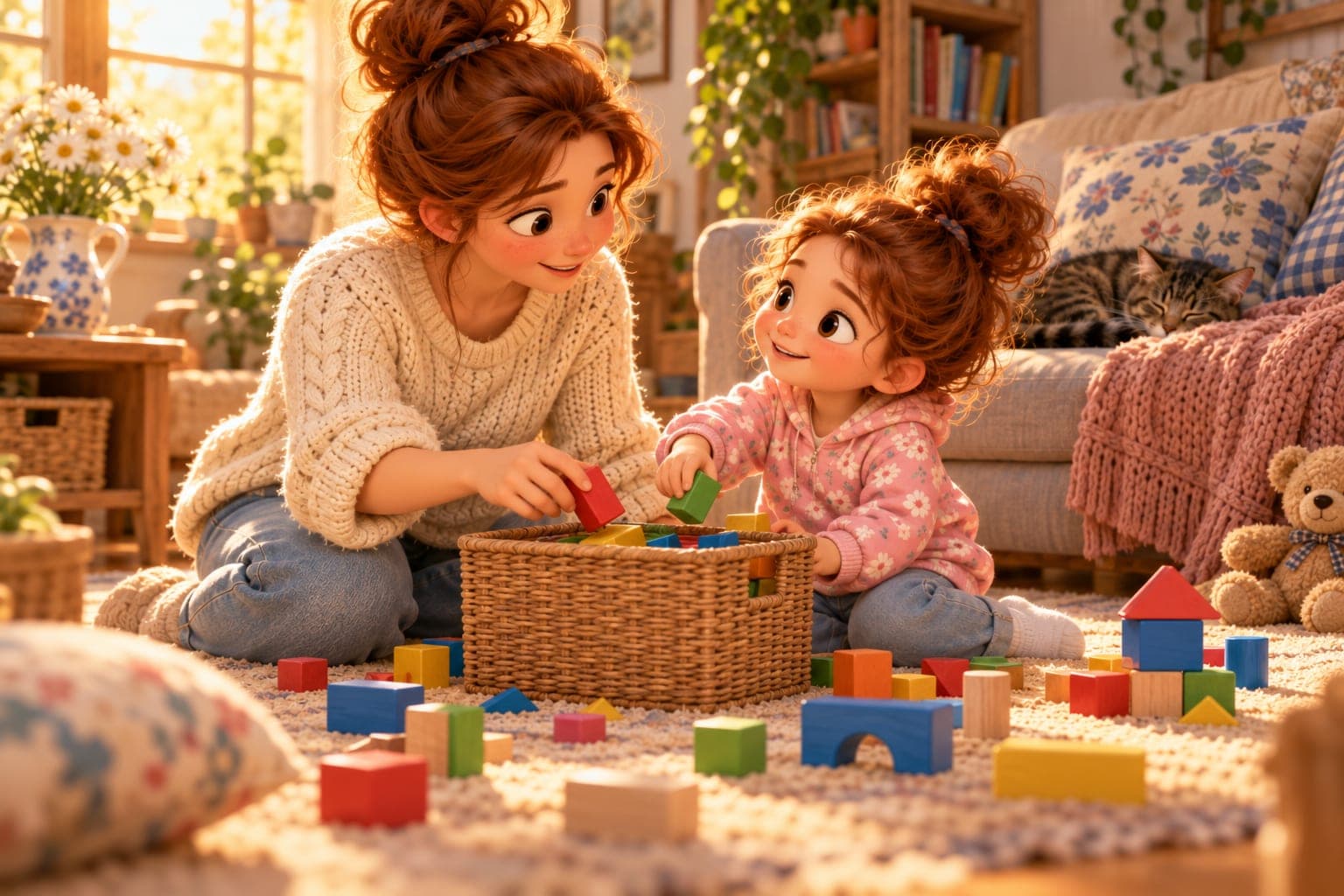
When you say “Wash your hands” at the sink, the situation supports the meaning. When you say “Let’s tidy up” while putting blocks into a box together, your child hears language in action. This is simpler than showing a vocabulary list and asking them to memorize it.
Useful English “sessions” for a three-year-old can fit inside an ordinary day:
- 30 seconds while putting on shoes,
- one minute while washing hands,
- one verse of an action song during play,
- three pages of a picture book before bed,
- two minutes of tidying with one repeated phrase.
One of these moments may last only 3–5 minutes. You do not need to add them up into a full “lesson.” What matters more is that your child regularly hears the same phrases in a context they can understand.
How can you weave English into dressing, meals, bath time, and tidying?
The easiest approach is to connect specific phrases with specific moments of the day. Then English does not compete with play — it becomes part of it.
Routine | Simple phrases | How to use them |
|---|---|---|
getting dressed | “Shoes on!”, “Coat on!”, “Ready?” | show the item and say the phrase just before the action |
mealtime | “Wash your hands”, “Sit down”, “More?”, “All done?” | say only what matches what is happening at the table |
bath time | “Bath time”, “Wash your hands”, “Wash your feet”, “All clean” | point to body parts and do the action with your child |
tidying up | “Let’s tidy up”, “Put it here”, “One more”, “Finished” | tidy together without quizzing vocabulary |
You do not need to use every phrase at once. Two or three for one routine are enough. After a week, keep the familiar ones and add one new situation.
Plan: one routine per week
Week | Routine | Starter phrases |
|---|---|---|
1 | getting dressed | “Shoes on!”, “Coat on!”, “Let’s go!” |
2 | handwashing and meals | “Wash your hands”, “Sit down”, “More?” |
3 | bath time | “Bath time”, “Wash your feet”, “All clean” |
4 | tidying toys | “Let’s tidy up”, “Put it here”, “Finished” |
After four weeks, do not give a test. Just watch how your child responds. If they reach for their shoes after “Shoes on!” or start picking up toys after “Let’s tidy up,” they understand the message.
Should a 3-year-old repeat English words?
No. At first, a child may go through a “silent period”: listening and understanding more and more while using few English words, or none at all.
When children are learning English as an additional language, understanding does not have to develop at exactly the same pace as speaking. Avoid turning every activity into a test such as “Say dog,” “Say red,” or “What is this in English?”
Instead, give your child a chance to answer with an action:
- “Where is the ball?” — your child points to the ball;
- “Give me the car” — they hand you the toy car;
- “Stand up” — they stand up;
- “Clap your hands” — they clap.
That is a genuine communicative response. Speaking often comes more easily when the child does not feel pressured.
How can you use songs and action rhymes?
Choose songs that let your child do something with their body. Movement supports meaning and allows them to join in without speaking.
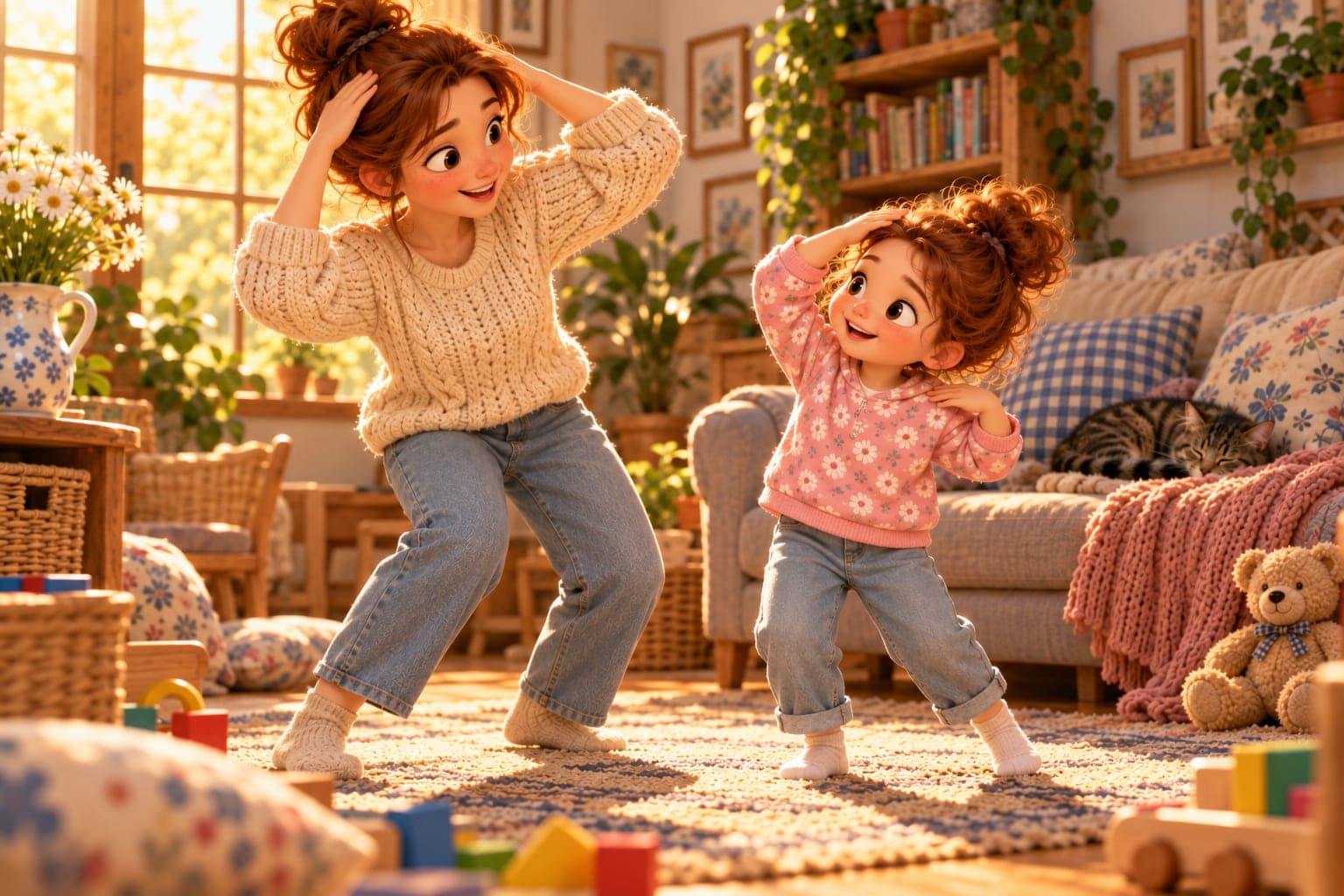
One song for several days is enough. With “Head, Shoulders, Knees and Toes,” touch the body parts. With “If You’re Happy and You Know It,” clap, stamp, and use gestures. You do not need to translate every word.
You can also make short rhythmic chants from everyday phrases. While tidying, repeat “Tidy up, tidy up,” and while putting toys away, say “In the box.” For a three-year-old, rhythm, repetition, and shared play matter more than reproducing every word perfectly.
If your child likes picture activities, you can combine a simple task with the fish dot-to-dot for 3-year-olds. While drawing, use only a few words connected with what you are doing, such as “fish,” “line,” “start,” and “finished.”
How do you read picture books in English?
Keep it short and talk about the pictures more than you worry about reading every line exactly. For a three-year-old, looking at the same book many times is often more useful than choosing a new one every day.
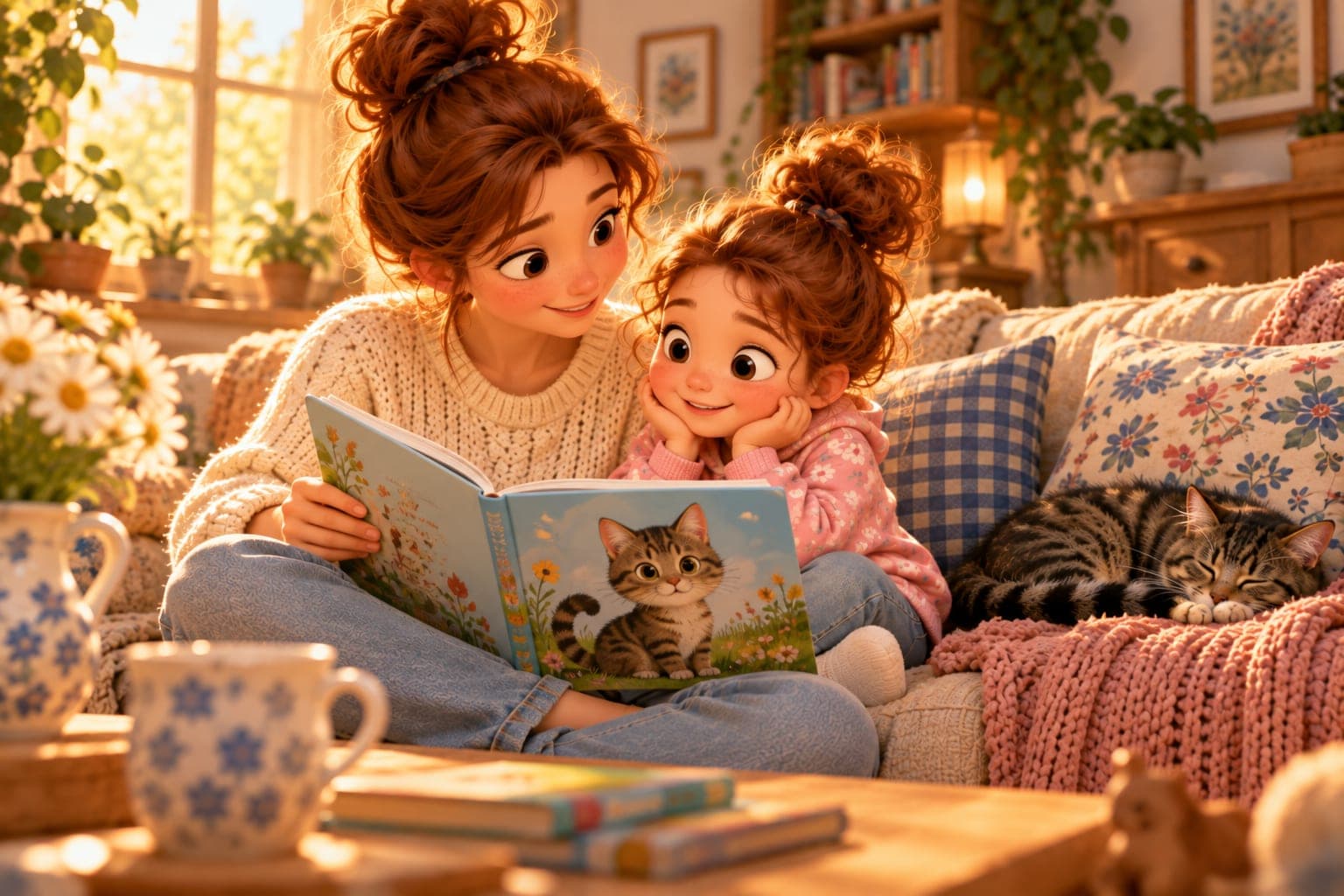
Choose a book with large illustrations and little text. On the first reading, name two or three things: “cat,” “ball,” “tree.” Next time, add a simple phrase: “A big cat,” “The ball is red.” Later, ask “Where is the cat?” and wait for your child to point.
You do not need to translate every sentence into the family’s home language. Your child can understand a lot from the picture, your tone of voice, and a familiar repeated story. If they lose interest after three minutes, finish without stretching the activity.
For other short screen-free activities, you can choose educational games, but for a three-year-old, shared interaction with an adult and simple age-appropriate play remain the most important.
Does a parent’s pronunciation need to be perfect?
You do not need a perfect accent to introduce simple English phrases. It is better to use a few confident, understandable sentences in natural situations than to avoid the language completely because you are afraid of making a mistake.
If you are unsure about pronunciation, check the word in a dictionary with audio and practice it before playing together. With songs, you can sing along with a reliable recording. If you do not know a word, simply say you will check it rather than guessing.
Interaction with a parent has another advantage: the adult can see the child’s response. You can slow down, repeat, show the object, or stop when your three-year-old is tired. A recording alone cannot do that.
How much English screen time is appropriate for a 3-year-old?
Screens can be an extra, but they should not replace conversation, movement, books, and shared play. WHO guidance for children ages 3–4 recommends no more than one hour a day of sedentary screen time; less is better.
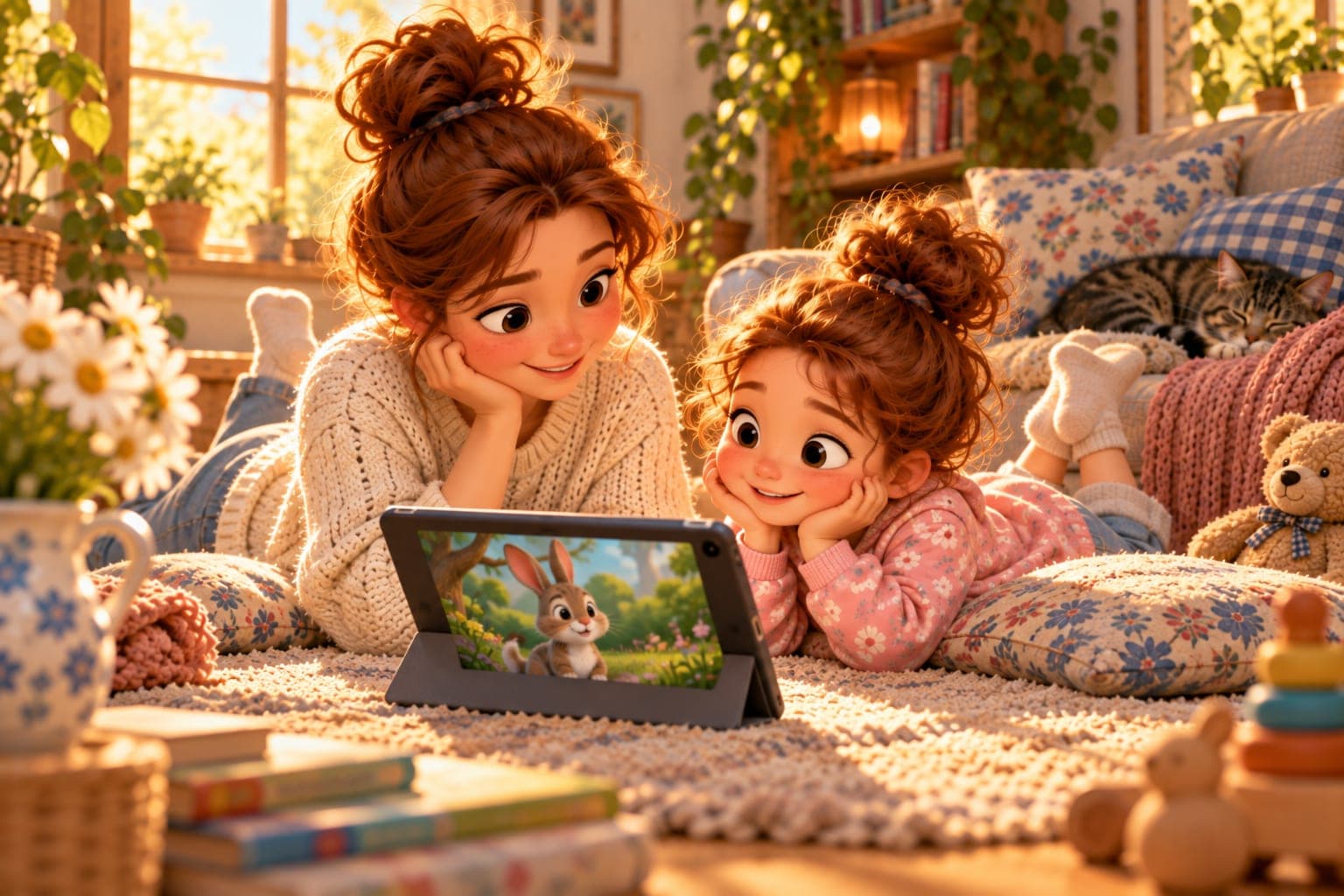
If you play a short English song or video, watch together. Pause after an interesting scene and name one thing: “Look, a dog.” Do a movement from the song. After the screen, bring the word into real life, for example by finding a toy dog.
Do not leave a long recording running just so “English is playing.” For a three-year-old, the most useful language is directed to them, connected to what they are doing, and part of shared interaction.
What should you do when a child mixes their home language and English?
Mixing elements from two languages can happen when children are exposed to more than one language and does not by itself mean the language systems are confused. A child may use whichever word is more accessible in that moment.
If your child combines a home-language word with “ball,” do not correct them harshly. Respond naturally with a full English model, for example: “Yes, the ball. Here is the ball.” They hear the target form without being made to feel that they said something “wrong.”
Research on early bilingualism shows that children can develop two languages without bilingualism itself being treated as a cause of language delay. The pace and vocabulary in each language can differ between children depending on how much they hear each language and in which situations.
What mistakes should you avoid when introducing English to a 3-year-old?
The most common mistake is turning shared play into a test. A three-year-old should experience language through action, not prove to an adult what they remember.
Especially avoid:
- forcing repetition — give your child time to listen and understand;
- introducing too many words at once — a few phrases a week are enough;
- constant correction — instead, calmly model the correct form in your own response;
- continuing after your child is tired — 3–5 minutes can be a complete and valuable session;
- relying mainly on screens — connect language with real situations and interaction;
- comparing with other children — families differ widely in how much English their children hear.
If you want a screen-free activity for a calmer part of the day, also see printable worksheets. For a three-year-old, choose only age-appropriate activities and treat them as play, not an obligation.
When should you discuss speech and language development with a professional?
Simply hearing two languages or sometimes mixing them is not a reason for diagnosis. If you are concerned about your child’s overall communication development, discuss it with a pediatrician or speech-language professional rather than dropping the additional language on your own.
It is especially worth asking for advice when difficulties affect communication more broadly, not only English — for example, your child clearly struggles to understand everyday messages, rarely attempts to communicate, or has lost skills they previously used. A professional should consider all the languages your child is exposed to.
Do not judge development only by the number of English words. For a three-year-old learning English as an additional language, early priorities are interest in interaction, understanding simple phrases in context, and feeling comfortable during play.
Sources
- World Health Organization, Guidelines on physical activity, sedentary behaviour and sleep for children under 5 years of age, 2019: https://www.who.int/publications/i/item/9789241550536
- Krista Byers-Heinlein, Casey Lew-Williams, Bilingualism in the Early Years: What the Science Says, 2013: https://pmc.ncbi.nlm.nih.gov/articles/PMC6168212/