
In Short: Which Letters Should You Teach First?
You do not need to begin with A, B, C. For children aged 4–6, it is often more useful to choose an order that quickly links letters to sounds and lets children blend simple words.
- Start with a small set that can be combined quickly, such as s, a, t, p, i, n.
- Add more useful consonants and vowels in manageable groups, for example m, d, g, o, c, k.
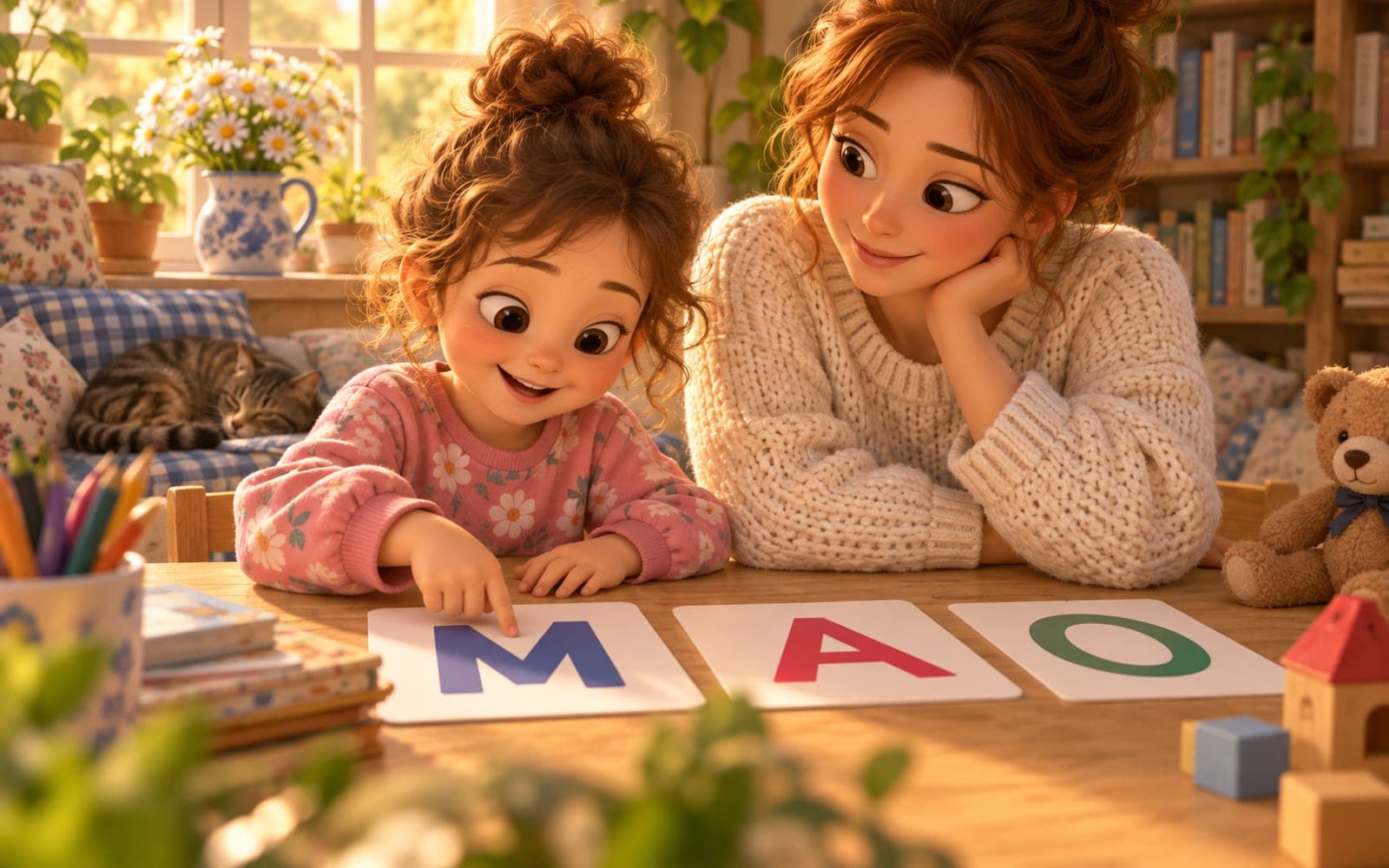
- Connect each new letter straight away with its sound and simple blending: m → /m/ → am, mat, Sam.
- Do not introduce easily confused shapes too close together, especially b–d–p–q.
- Build recognition first, then add careful handwriting practice.
- For calm practice at home, 1–2 new letter–sound correspondences a week can be enough, mixed with plenty of review.
Why Is Alphabetical Order Not the Best Order for Early Reading?
Alphabetical order is useful for organising and finding information, but it was not designed as a sequence for learning to read. A child does not need to know all 26 letters from A to Z before beginning to blend simple words.
Early reading depends on connecting a grapheme—the written letter or letter group—with its sound. The Education Endowment Foundation describes phonics as systematic teaching of the relationships between spoken sounds and the letters or groups of letters that represent them. That is why a practical sequence aims to create useful combinations early, such as s + a + t → sat.
If you want to separate letter names from letter sounds, see The Alphabet for Kids — Letter Names and Sounds. This guide focuses specifically on the order in which letter–sound correspondences can be introduced.
How Should You Choose the First Letters for Ages 4, 5 and 6?
A useful sequence should be systematic, but it can also take account of what your child already knows. There is no single universal order that every English-speaking child must follow in exactly the same way.
Use five principles when choosing the first letter–sound correspondences:
- Start with something personal. Letters from your child’s name are easy to notice on labels, drawings, and belongings. If their name begins with J, you can point out J early even if it is not yet in the main sequence.
- Introduce useful vowels early. Vowels such as a, i, o, e and u help children build many simple CVC words.
- Choose consonant sounds that are easy to stretch. Continuous sounds such as /m/, /s/, /f/, /n/, /r/ and /l/ can be held slightly longer, which often makes blending easier.
- Build from what is already known. A new letter should work immediately with earlier ones, for example after s, a, t, p, i, n you can blend sat, pin, tap, sit and nap.
- Separate look-alike letters. Avoid teaching b, d, p and q as a new set on the same day. Give each shape time to become secure before adding another similar one.
For 5-year-olds, you can use learning letters, and for 6-year-olds try letters and sounds.
What Phonics Letter Order Can Work in Practice?
The sequence below is one practical example, not an official or only correct order. Different phonics programmes group letters differently, so you can move individual letters when your child already knows them or has a strong reason to learn them.
Group | Letters | Example Words |
|---|---|---|
1 | s, a, t, p, i, n | sat, pin, tap, sit, nap, pat |
2 | m, d, g, o, c, k | mat, dog, dig, cot, kid, can |
3 | e, u, r, h, b, f, l | red, sun, hen, rub, fan, lip |
4 | j, v, w, x, y, z, q | jam, van, web, fox, yes, zip, quiz |
5 | common graphemes such as sh, ch, th, ck, ng, qu and vowel teams as needed | ship, chin, thin, duck, ring, queen |
Within groups 3 and 4, do not teach every visually similar letter one after another. If your child is working on b, leave some space before introducing d, p or q as a new target.
After the 26 basic letters are familiar, introduce common digraphs and other graphemes systematically. They are not “extra alphabet letters”; they are common ways English spelling represents sounds with more than one letter.
How Do You Link a Letter to Its Sound and Blending?
A new letter should not stay as an isolated shape to memorise. Show the grapheme, say the sound it commonly represents, and then use it straight away in blending with known letters.
Example with m:
- Show printed “m” and ask your child to find the same letter among 3–4 symbols.
- Say the sound /m/ cleanly, without adding an extra “uh”.
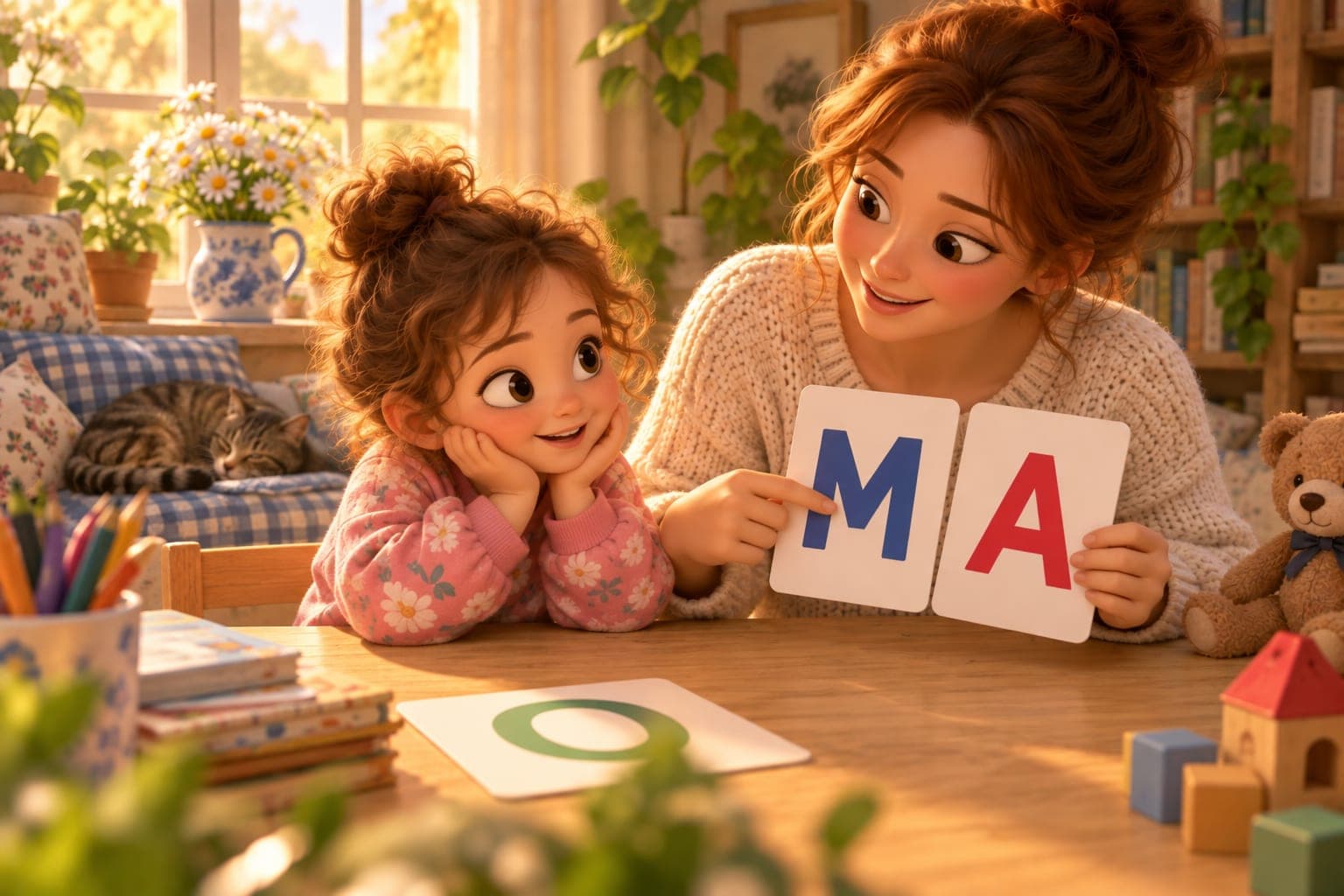
- Blend it with known letters: am, mat, Sam.
- Find a simple word where your child can hear /m/, for example map.
- Return to the same letter the next day in a different activity.
This approach is developed further in letters and sounds for Grade 1 / Year 2. When your child begins blending sounds into words, our guide How to Teach a Child to Read can also help.
Does a Child Need to Write a Letter Before Reading It?
No. Recognising a grapheme and connecting it with a sound can come before neat handwriting. Early literacy guidance in English-speaking systems usually treats reading, phonics, and writing as related but distinct skills that develop together over time.
A child aged 4–6 can first identify letters, match them, and spot them in simple words. Handwriting practice can then be added gradually. For tracing, use the letter and number generator, preferably in a short set of a few repetitions rather than a whole page of the same symbol.
Children who enjoy visual activities may also like alphabet and letter colouring pages. A personalised bridge from their own name to print awareness can be a name colouring page.

How Quickly Should You Introduce New Letters?
At home, a calm pace might be 1–2 new letter–sound correspondences a week, but readiness matters more than the calendar. If a new shape is still being confused with an earlier one after several days, do not add another simply because the schedule says so.
A simple weekly rhythm could look like this:
- day 1 – new letter, its sound, and 2–3 simple blends or words;
- day 2 – recognise the letter among other symbols;
- day 3 – blend it in simple words;
- day 4 – trace it, build it with craft sticks, or draw it with a finger;
- day 5 – review without prompting and mix it with previously learned letters.
If your child learns faster, there is no need to hold them back artificially. If one pair of confusing letters takes two weeks, that can also be an appropriate pace.
What Mistakes Should You Avoid When Teaching Letters?
A common problem is introducing too many new letter–sound correspondences at once. A few simple rules keep learning predictable.
- Do not require your child to recite the whole alphabet before beginning to blend words.
- Do not introduce several confusing look-alike letters together, especially b–d–p–q.
- Do not reduce learning to copying. Your child should also hear the sound, recognise the grapheme, and use it in a word.
- Do not correct every imperfect stroke. Recognition and correct movement direction come before neatness.
- Do not speed up when your child starts guessing instead of recognising.
When Should You Ask for Extra Support?
Occasional letter reversals and confusions are common while children are learning and do not by themselves indicate a disorder. Talk with the teacher, a speech and language professional, or another appropriate specialist if difficulties are marked, persistent despite regular practice, and also affect speech-sound awareness, understanding instructions, or language development.
You do not need to wait until every letter has been taught before asking for advice. A professional can help work out whether your child needs a different approach, more time, or additional support.