
Easter Egg Coloring Pages
Easter egg coloring pages for kids ages 6 to 10: eggs decorated with stripes, dots, diamonds, flowers, lace and mosaics, shown in baskets and cozy spring settings, free to print.
154 coloring pages · page 1 of 9
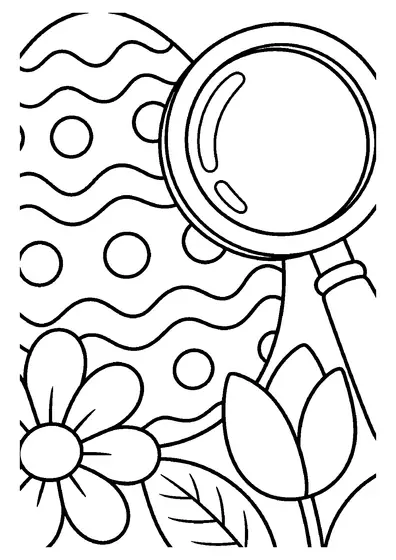
Easter Egg Under a Magnifying Glass
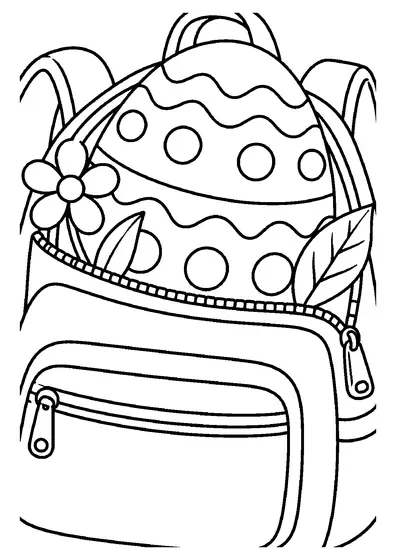
Easter Egg Peeking Out of a Backpack
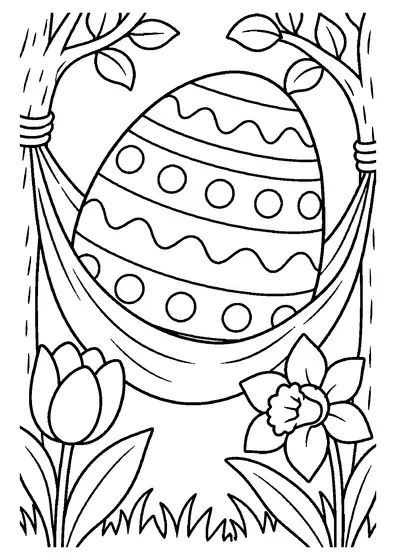
Easter Egg Relaxing in a Spring Hammock

Semicircle Easter Egg in a Breakfast Room

Striped Easter Egg in a Village Hall

Easter Egg with a Simple Sun Pattern in a Gazebo

Decorative Easter Egg in a Ceramic Holder on a Kitchen Island
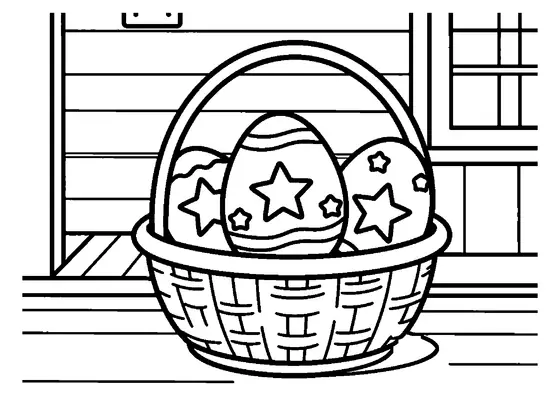
Basket of Patterned Easter Eggs on a Farmhouse Porch

Wavy Pattern Easter Egg in a Country Greenhouse
- Advertisement

Diamond-Patterned Easter Egg at a Market Stall

Honeycomb-Patterned Easter Egg on a Kitchen Counter

Large Striped Easter Egg on a Kitchen Table

Polka Dot Easter Egg on a Garden Bench

Floral Easter Egg in an Art Studio

Decorated Easter Eggs in a Wicker Basket

Plaid Easter Egg on a Country Porch
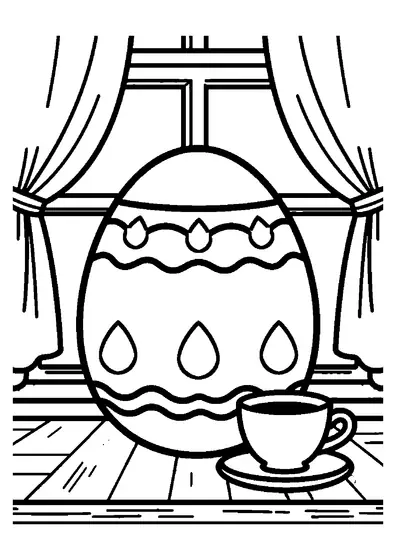
Easter Egg with Wavy Patterns on a Windowsill

Leaf Pattern Easter Egg on a Garden Table
Easter Egg Coloring Pages — what you will find on this page
These Easter egg coloring pages are all about pattern. Each egg is decorated with its own design, from stripes, polka dots, zigzags and diamonds to herringbone, Greek key, lace rosettes, feathers, botanical swirls and mosaics. Most pages place the egg in a small setting, such as a kitchen island, a garden bench or a market stall, so kids can color both the decoration and the scene around it.
Kids can color a diamond-patterned Easter egg at a market stall, a checkered egg in an embroidery studio, a Greek key egg in a stone courtyard, a lace rosette egg on a kitchen island and a striped egg with butterflies and flowers. Baskets full of patterned eggs sit on porches, dining tables and kitchen hutches, and a wheelbarrow and a train carry whole loads of eggs. Other designs show a herringbone egg on a woodworking bench, a mosaic egg on a café counter, a feather-patterned egg on an oak desk and a smiling-sun egg on a balcony table. A few pages add friendly characters, like a fawn discovering an Easter egg, a squirrel holding a giant egg and a princess painting an egg.
The pages are medium difficulty for kids ages 6 to 10. Bold outlines frame each egg, while dense patterns ask for patience and a steady hand. Coloring them builds pencil grip, hand-eye coordination and an eye for symmetry. Many kids like to choose two or three colors and repeat them across the whole pattern, which is a simple first lesson in design.
Younger kids can start with simple dots, stripes or hearts; older kids will enjoy the dense geometric and lace patterns, where every small section can get its own color. Use the pages as a warm-up for decorating real eggs: try a design on paper first, then copy it with dye or markers.
All sheets download for free and print in crisp black and white on A4 paper, or on US Letter with "Fit to page" selected. Colored pencils and crayons work on ordinary printer paper; for felt-tip markers and watercolors, use heavier paper or cardstock.
For more Easter fun, visit Easter Bunny Coloring Pages in the same section.
In short
Labugen's Easter egg coloring pages are free printable A4 sheets of eggs decorated with geometric, floral and lace patterns, shown in baskets and cozy spring settings. The medium-difficulty drawings are designed for kids ages 6 to 10.