
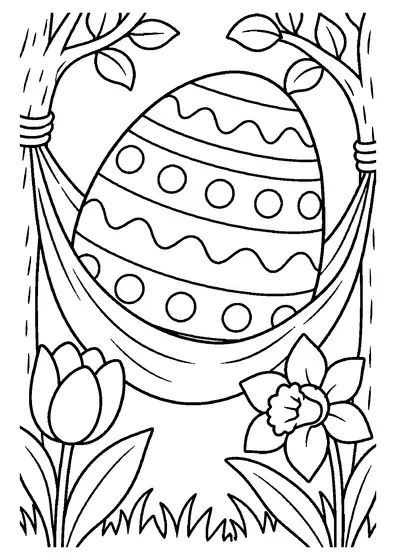
Easter Egg with a Simple Sun Pattern in a Gazebo
A large Easter egg embellished with a sun motif sits on a wooden table located within the sheltered space of a rustic gazebo.

A4 format (portrait), black outlines on a white background · for home and classroom use
All coloring pages: Easter Egg Coloring Pages
Similar coloring pages: Easter Egg Coloring Pages





What else can you print? Free, no account needed
Custom Name Coloring Pages
Enter your child's name to generate a custom coloring page featuring large outline letters to color and decorate.
Open generator →Connect the Dots Generator
Eight connect-the-dots pictures across three difficulty levels. Features faint outline guides for younger children and dots only for older kids.
Open generator →Printables
Worksheets, tracing lines, mazes and dot-to-dots in A4.
Browse printables →
Spring Celebration Inside a Garden Gazebo
This scene features an Easter egg decorated with a sun pattern resting on a wooden table. Set inside a rustic gazebo, the arrangement highlights traditional spring festive decor in a backyard structure.
Traditions Behind Sun Motifs and Easter Eggs
Decorating eggs with sun patterns is a folk art tradition that dates back centuries across various global cultures. The sun motif symbolized the return of warmth, light, and new life after cold winter months. Placing decorated eggs on festive tables within outdoor structures like garden gazebos remains a widespread seasonal custom during spring holidays.
Authentic Colors of Easter Decorations and Wood Structures
- Sun pattern on egg: bright golden yellow, warm amber, or sunburst orange
- Easter egg base: soft pastel cyan, lilac, or mint green
- Wooden table: warm oak brown, rich chestnut, or honey timber shade
- Rustic gazebo: weathered cedar gray or natural light pine tone