
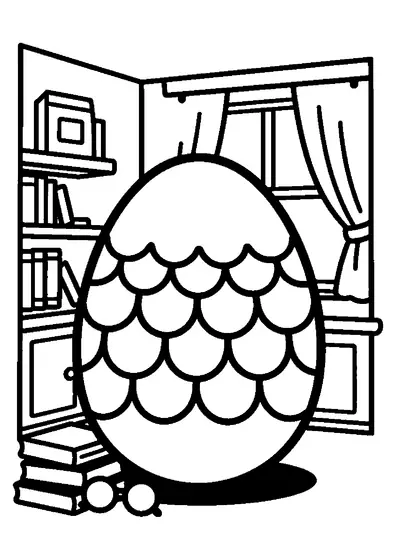
Semicircle Easter Egg in a Breakfast Room
An Easter egg adorned with semicircle patterns sits inside a display bowl near a sunny breakfast room window.

A4 format (portrait), black outlines on a white background · for home and classroom use
All coloring pages: Easter Egg Coloring Pages
Similar coloring pages: Easter Egg Coloring Pages



What else can you print? Free, no account needed
Custom Name Coloring Pages
Enter your child's name to generate a custom coloring page featuring large outline letters to color and decorate.
Open generator →Connect the Dots Generator
Eight connect-the-dots pictures across three difficulty levels. Features faint outline guides for younger children and dots only for older kids.
Open generator →Printables
Worksheets, tracing lines, mazes and dot-to-dots in A4.
Browse printables →
Decorated Easter Egg in a Bright Breakfast Corner
Spring morning sunshine fills breakfast rooms during holiday celebrations when families decorate their homes with seasonal displays. Decorative eggs featuring geometric shapes sit in table bowls near windows, catching natural morning light and adding festive cheer to the dining area.
Traditional Methods of Egg Decoration
Dyeing and decorating eggs for spring holidays is a tradition practiced around the world for centuries. Craftspeople use wax-resist techniques, stencil patterns, or layered dyes to create clean geometric patterns like arches, semicircles, and repeating wave designs on natural eggshells.
Traditional Colors of Easter Egg Decor
- Semicircle egg patterns: vibrant pastel shades of sky blue, lilac, soft mint, and canary yellow
- Decorative bowl: classic white ceramic, painted terracotta, or polished natural wood
- Window frame: clean white trim, light pine, or natural wood tones
- Sunlight reflections: soft warm yellow and bright white highlights