
Styracosaurus on a Scenic Volcanic Plateau
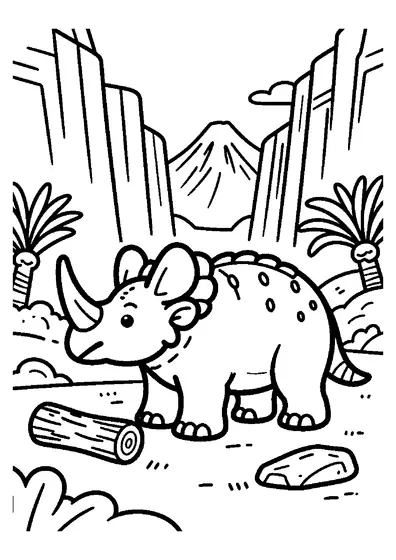
A Styracosaurus displays its long nose horn and spiked frill against an expansive volcanic plateau.

A4 format (landscape), black outlines on a white background · for home and classroom use
All coloring pages: Dinosaur Coloring Pages
Similar coloring pages: Dinosaur Coloring Pages


What else can you print? Free, no account needed
Custom Name Coloring Pages
Enter your child's name to generate a custom coloring page featuring large outline letters to color and decorate.
Open generator →Connect the Dots Generator
Eight connect-the-dots pictures across three difficulty levels. Features faint outline guides for younger children and dots only for older kids.
Open generator →Printables
Worksheets, tracing lines, mazes and dot-to-dots in A4.
Browse printables →
The horned dinosaur on the plateau
Styracosaurus stands within a volcanic landscape, its head framed by the dramatic spikes extending from its frill. A single long horn projects from the nose, while the sturdy body reflects the build of a large four-legged herbivore. The elevated plateau provides a broad setting shaped by volcanic geology.
How volcanic plateaus take shape
Some volcanic plateaus form when repeated lava flows spread across wide areas and cool in layers. Over time, weathering and erosion can cut valleys and expose bands of hardened rock. Once volcanic terrain becomes stable and develops soil, plants can return and support animal life.
Colors seen in nature and volcanic terrain
- Styracosaurus skin: no confirmed color is known; brown, olive, tan, or gray are reasonable natural interpretations
- Nose horn and frill spikes: their living coverings are not preserved with a certain color; pale tan, brown, or gray are plausible
- Frill: its actual appearance is unknown and may have included subtle or contrasting natural tones
- Volcanic plateau rock: black, charcoal, reddish brown, dark gray, or weathered tan
- Distant volcanic ground: gray and brown, sometimes rusty red where iron-bearing minerals oxidize