
Styracosaurus by Petrified Logs in a Canyon
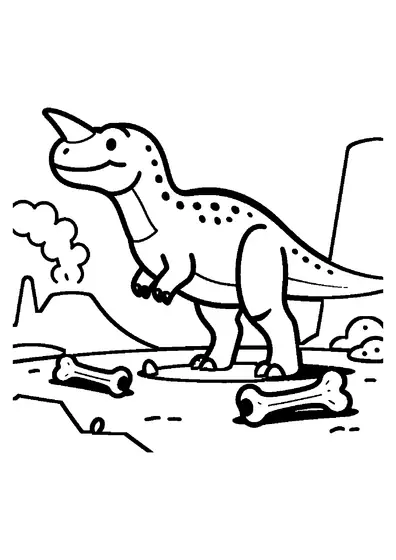
A horned Styracosaurus appears beside petrified logs, with the rocky walls of a prehistoric canyon rising around it.

A4 format (portrait), black outlines on a white background · for home and classroom use
All coloring pages: Dinosaur Coloring Pages
Similar coloring pages: Dinosaur Coloring Pages


What else can you print? Free, no account needed
Custom Name Coloring Pages
Enter your child's name to generate a custom coloring page featuring large outline letters to color and decorate.
Open generator →Connect the Dots Generator
Eight connect-the-dots pictures across three difficulty levels. Features faint outline guides for younger children and dots only for older kids.
Open generator →Printables
Worksheets, tracing lines, mazes and dot-to-dots in A4.
Browse printables →
Styracosaurus among canyon rocks
The scene centers on a Styracosaurus with its large neck frill and prominent horns. Petrified logs rest nearby, and the surrounding canyon walls create a rugged setting. These features bring together a recognizable horned dinosaur and traces of ancient trees preserved in stone.
How fallen wood becomes petrified
Petrified wood forms when buried tree material is gradually replaced by minerals carried in groundwater. The original shape and growth patterns can remain visible even though the material has turned to stone. Erosion may later expose these ancient logs in dry, rocky landscapes.
Natural colors of Styracosaurus and the canyon
- Styracosaurus skin: not known from fossils and possibly patterned in earthy or muted tones
- Frill: original colors are unknown; living animals often use contrasting markings for recognition or display
- Horns and beak: plausibly cream, tan, brown, or dark gray, like keratin structures in modern animals
- Petrified logs: commonly rust red, brown, tan, charcoal, or mineral-rich purple
- Canyon rock: often sandstone red, ocher, beige, brown, or weathered gray