
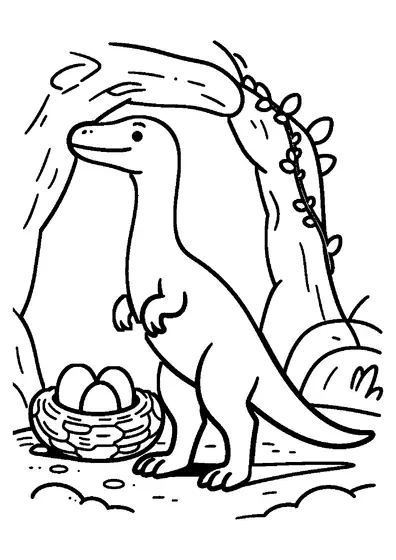
Stegosaurus Nest Beneath a Basalt Cliff
A plated Stegosaurus watches over a nest of eggs near a towering wall of basalt columns.

A4 format (portrait), black outlines on a white background · for home and classroom use
All coloring pages: Dinosaur Coloring Pages
Similar coloring pages: Dinosaur Coloring Pages




What else can you print? Free, no account needed
Custom Name Coloring Pages
Enter your child's name to generate a custom coloring page featuring large outline letters to color and decorate.
Open generator →Connect the Dots Generator
Eight connect-the-dots pictures across three difficulty levels. Features faint outline guides for younger children and dots only for older kids.
Open generator →Printables
Worksheets, tracing lines, mazes and dot-to-dots in A4.
Browse printables →
Stegosaurus, Its Nest, and the Basalt Cliff
The scene brings together a Stegosaurus, a nest of eggs, and a dramatic basalt cliff. The dinosaur is known for the large plates rising along its back and the paired spikes at the end of its tail. Its nest rests beside the animal beneath the tall stone columns, creating a prehistoric setting shaped by both animal life and volcanic rock.
Fascinating Facts About Stegosaurus and Basalt
Basalt columns form when thick lava cools and contracts, often breaking into tall geometric shapes. Stegosaurus lived much earlier than people and ate plants with its small, beaked head. Scientists still debate exactly how its back plates were used, though display and temperature control are among the proposed roles.
Natural Colors of Stegosaurus and Its Surroundings
- Stegosaurus skin: the exact colors are unknown, but natural greens, browns, and muted grays are plausible choices
- Back plates: their original colors are unknown and may have differed from the body
- Tail spikes: earthy gray, tan, or brown can suggest keratin-covered structures
- Basalt columns: usually charcoal gray, dark gray, or nearly black when fresh
- Eggs: fossil eggshell colors are generally unknown, so cream, tan, or pale gray are reasonable