
Deinonychus by a Roaring Canyon Waterfall
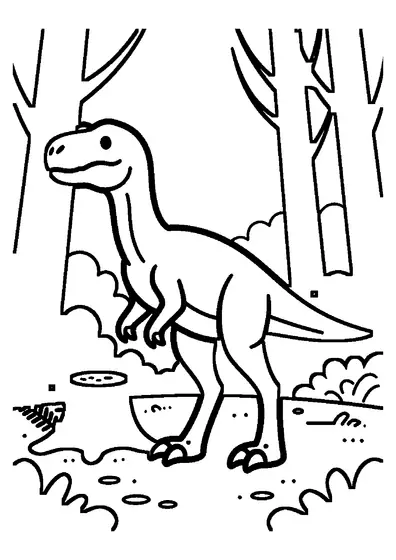
A swift Deinonychus stands beside a tall waterfall pouring through a rocky, jungle-covered canyon.

A4 format (portrait), black outlines on a white background · for home and classroom use
All coloring pages: Dinosaur Coloring Pages
Similar coloring pages: Dinosaur Coloring Pages


What else can you print? Free, no account needed
Custom Name Coloring Pages
Enter your child's name to generate a custom coloring page featuring large outline letters to color and decorate.
Open generator →Connect the Dots Generator
Eight connect-the-dots pictures across three difficulty levels. Features faint outline guides for younger children and dots only for older kids.
Open generator →Printables
Worksheets, tracing lines, mazes and dot-to-dots in A4.
Browse printables →
Deinonychus at the canyon waterfall
The agile predator appears near rushing water, surrounded by rock and jungle vegetation in the canyon. One enlarged, sickle-shaped claw on each foot is a defining feature of Deinonychus. Its long tail helped balance the body, while its grasping hands and lightweight build suited an active terrestrial hunter.
Life beside moving water
A waterfall gradually reshapes a canyon as moving water carries sediment and wears away weaker rock. Spray near the falling water can keep nearby surfaces damp and create a humid local environment. The roar comes from turbulent water trapping and releasing countless pockets of air as it strikes rock and the pool below.
Natural colors of the canyon setting
- Deinonychus feathers: the exact colors are unknown; natural browns, tans, grays, or darker patterns are plausible
- Sickle-shaped claws: their keratin coverings may have resembled the cream, brown, or dark gray claws of living animals
- Canyon rock: gray, tan, brown, or reddish depending on its minerals
- Waterfall: clear water appears white where it churns and foams, with blue, green, or gray reflections
- Jungle foliage: many shades of green, with brown or gray trunks and stems