
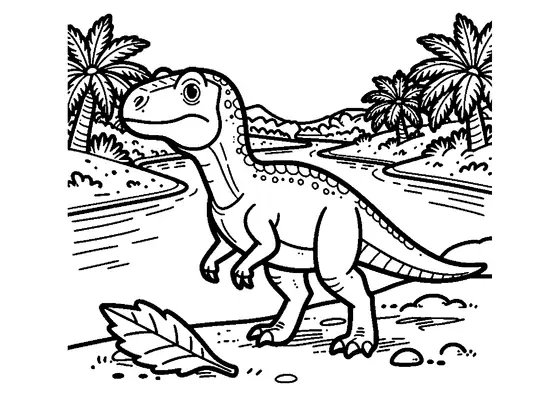
Ceratosaurus at the Edge of a Steaming Crater
A horned Ceratosaurus stands beside the steaming crater of a prehistoric volcano.

A4 format (portrait), black outlines on a white background · for home and classroom use
All coloring pages: Dinosaur Coloring Pages
Similar coloring pages: Dinosaur Coloring Pages

What else can you print? Free, no account needed
Custom Name Coloring Pages
Enter your child's name to generate a custom coloring page featuring large outline letters to color and decorate.
Open generator →Connect the Dots Generator
Eight connect-the-dots pictures across three difficulty levels. Features faint outline guides for younger children and dots only for older kids.
Open generator →Printables
Worksheets, tracing lines, mazes and dot-to-dots in A4.
Browse printables →
Ceratosaurus at a volcanic crater
The scene places Ceratosaurus at the edge of a steaming crater. The dinosaur is recognizable by the prominent horn on its nose, one of the features that distinguishes it from many other large theropods. The volcanic setting combines the animal with a powerful part of the prehistoric landscape without showing an eruption.
Heat and steam around volcanoes
Steam can rise near a volcano when underground heat warms water trapped in rock or soil. Volcanic regions may remain active long after lava stops flowing, producing hot springs, vents, and warm ground. Ceratosaurus lived in the Late Jurassic and shared its world with other large predators and many plant-eating dinosaurs.
Natural colors of Ceratosaurus and the crater
- Ceratosaurus skin: the true color is unknown; earthy brown, muted green, or gray are reasonable possibilities
- Nasal horn: the same color as the surrounding skin or a darker brown-gray
- Teeth and claws: cream, ivory, or pale tan
- Crater rock: charcoal, dark gray, rusty brown, or reddish black
- Volcanic steam: white or pale gray