
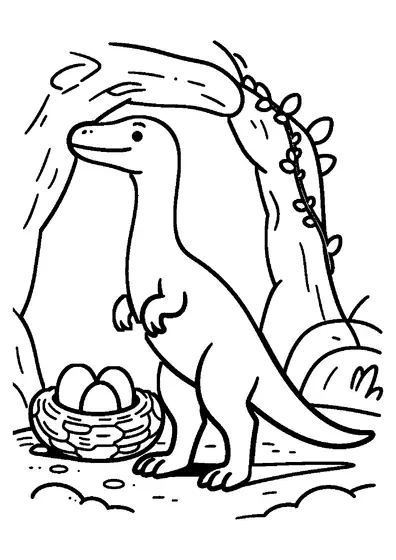
Oviraptor by a Nest of Prehistoric Eggs
A crested, toothless Oviraptor watches over a nest filled with prehistoric eggs.

A4 format (landscape), black outlines on a white background · for home and classroom use
All coloring pages: Dinosaur Coloring Pages
Similar coloring pages: Dinosaur Coloring Pages


What else can you print? Free, no account needed
Custom Name Coloring Pages
Enter your child's name to generate a custom coloring page featuring large outline letters to color and decorate.
Open generator →Connect the Dots Generator
Eight connect-the-dots pictures across three difficulty levels. Features faint outline guides for younger children and dots only for older kids.
Open generator →Printables
Worksheets, tracing lines, mazes and dot-to-dots in A4.
Browse printables →
Oviraptor guarding its nest
The scene shows an Oviraptor beside a nest of eggs, with its crest and toothless beak identifying the dinosaur. This caring behavior fits important fossil discoveries: close relatives have been found positioned over nests in a birdlike brooding posture. The name Oviraptor means “egg thief,” but that label came from an early misunderstanding of fossils found near eggs.
How a mistaken reputation changed
The eggs once thought to belong to another dinosaur were later recognized as oviraptorid eggs. Adults preserved on nests suggest that they were protecting or warming their own developing young rather than stealing a meal. Their arrangement around the nest also resembles the organized egg-laying patterns known from several other dinosaurs.
Possible natural colors of Oviraptor and its eggs
- Oviraptor feathers: the exact color pattern is unknown because its original pigments have not been confirmed
- Crest: its living color is unknown and may have differed from the rest of the head
- Toothless beak: likely a natural hornlike tone, though its precise shade is not preserved
- Eyes: the original iris color cannot be determined from known fossils
- Prehistoric eggs: fossil shells are now mineral-colored, while the eggs’ appearance when freshly laid is uncertain