
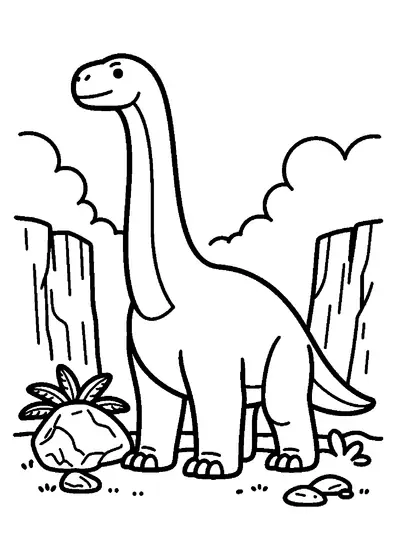
Therizinosaurus Among Giant Cycad Leaves
An unusual Therizinosaurus with enormous curved claws stands among broad leaves of giant cycads.

A4 format (portrait), black outlines on a white background · for home and classroom use
All coloring pages: Dinosaur Coloring Pages
Similar coloring pages: Dinosaur Coloring Pages



What else can you print? Free, no account needed
Custom Name Coloring Pages
Enter your child's name to generate a custom coloring page featuring large outline letters to color and decorate.
Open generator →Connect the Dots Generator
Eight connect-the-dots pictures across three difficulty levels. Features faint outline guides for younger children and dots only for older kids.
Open generator →Printables
Worksheets, tracing lines, mazes and dot-to-dots in A4.
Browse printables →
Therizinosaurus among giant cycad leaves
Therizinosaurus is presented with the exceptionally long claws that made this dinosaur famous. The surrounding giant cycad leaves place it among plants resembling forms that were widespread during the age of dinosaurs. Despite belonging to a group of theropods that included many hunters, Therizinosaurus had a small head, a beak, a long neck, and a body adapted largely for eating plants.
Why those remarkable claws mattered
The exact purpose of the huge hand claws is still debated. They may have helped the animal pull branches within reach, gather vegetation, defend itself, or display to other members of its species. Cycads, meanwhile, are seed plants rather than palms, even though their crowns of stiff leaves can look palm-like.
Natural colors of Therizinosaurus and cycads
- Therizinosaurus feathers: the original colors are unknown, although close relatives show that feather coverings were common in this dinosaur group
- Beak: its living color has not been preserved and may have been a muted hornlike shade
- Forelimb claws: their keratin covering could have appeared dark or earthy, but the exact color is unknown
- Cycad leaves: typically deep green to blue-green when healthy
- Older cycad foliage: yellow, tan, or brown as it dries