
Pachyrhinosaurus in a Rocky Conifer Grove
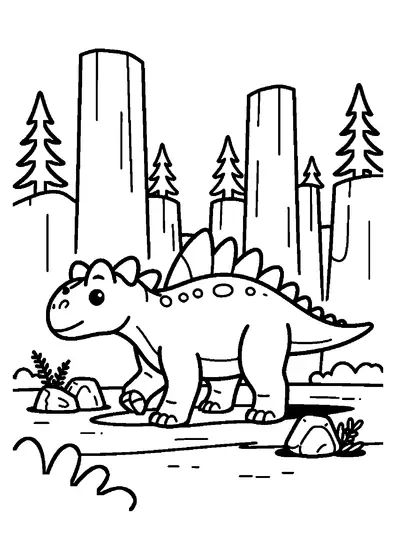
A massive Pachyrhinosaurus with a broad nasal boss stands near a rocky grove of conifer trees.

A4 format (portrait), black outlines on a white background · for home and classroom use
All coloring pages: Dinosaur Coloring Pages
Similar coloring pages: Dinosaur Coloring Pages


What else can you print? Free, no account needed
Custom Name Coloring Pages
Enter your child's name to generate a custom coloring page featuring large outline letters to color and decorate.
Open generator →Connect the Dots Generator
Eight connect-the-dots pictures across three difficulty levels. Features faint outline guides for younger children and dots only for older kids.
Open generator →Printables
Worksheets, tracing lines, mazes and dot-to-dots in A4.
Browse printables →
Pachyrhinosaurus in a rocky conifer grove
This heavy-bodied horned dinosaur is distinguished by the thick, bumpy mass of bone on its snout. Called a nasal boss, that feature occupied the place where a prominent nose horn appears in some of its relatives. Rocks and conifers establish the surrounding grove, while the dinosaur’s broad skull and sturdy build remain the central features of the scene.
A social herbivore of northern lands
Pachyrhinosaurus fossils have been found in North America, including regions that lay far north during the Late Cretaceous. Large collections of bones found together suggest that these plant eaters may sometimes have traveled in herds. Conifers were important parts of many prehistoric forests and reproduce with cones rather than flowers.
Natural colors of Pachyrhinosaurus and the grove
- Pachyrhinosaurus skin: the exact color and markings are unknown
- Nasal boss: its surface may have supported a keratin covering, but its living shade has not been established
- Frill: no surviving pigment evidence reveals its original color or pattern
- Conifer needles: usually green, deep green, or blue-green while healthy
- Grove rocks: naturally gray, brown, tan, reddish, or nearly black according to their minerals