
Overoraptor Beside a Rocky Nest
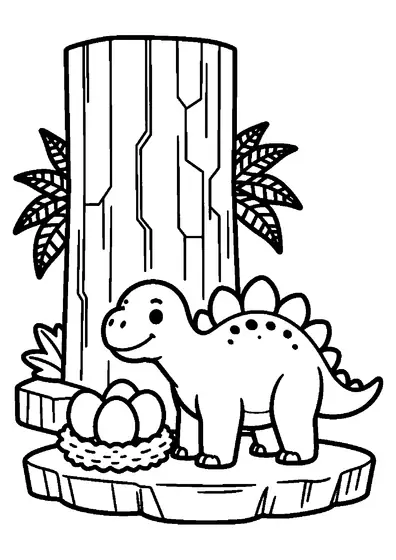
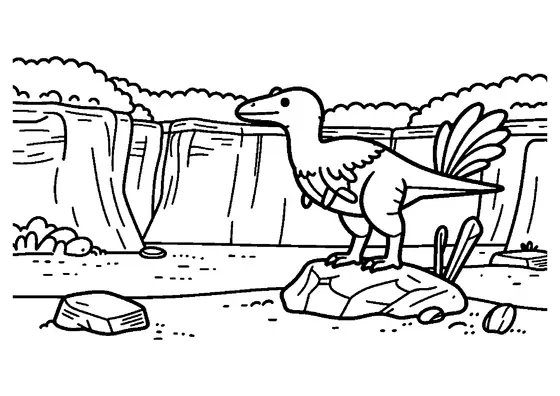
A small theropod dinosaur called Overoraptor keeps watch over its egg-filled nest built in a sheltered rocky hollow.

A4 format (portrait), black outlines on a white background · for home and classroom use
All coloring pages: Dinosaur Coloring Pages
Similar coloring pages: Dinosaur Coloring Pages



What else can you print? Free, no account needed
Custom Name Coloring Pages
Enter your child's name to generate a custom coloring page featuring large outline letters to color and decorate.
Open generator →Connect the Dots Generator
Eight connect-the-dots pictures across three difficulty levels. Features faint outline guides for younger children and dots only for older kids.
Open generator →Printables
Worksheets, tracing lines, mazes and dot-to-dots in A4.
Browse printables →
Overoraptor at a Rocky Nesting Site
Overoraptor was a small, agile dinosaur that laid eggs in protected rocky areas. This scene depicts the bird-like predator standing near its clutch of eggs within a natural stone enclosure, illustrating how these prehistoric creatures cared for their unhatched offspring.
Facts About Overoraptor
Discovered in Patagonia, Overoraptor was a slender carnivore closely related to early birds and dromaeosaurs. Scientists believe it possessed long legs adapted for fast running across open terrain. Like many theropods, it built simple ground nests to incubate its eggs safely.
Real Colors of Overoraptor and Its Surroundings
- Overoraptor feathers and skin: earth tones such as brown, tan, and dark gray for camouflage
- Dinosaur eggs: light beige, off-white, or pale blue-green
- Rocky hollow and stones: dark gray, brown, and weathered ochre
- Surrounding soil: reddish-brown earth and sandy beige