
Triceratops Walking Sideways
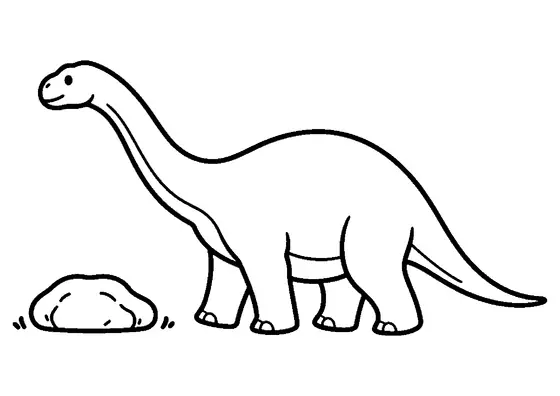
A young Triceratops walks peacefully across a patch of short grass.

A4 format (landscape), black outlines on a white background · for home and classroom use
All coloring pages: Herbivorous Dinosaur Coloring Pages
Similar coloring pages: Herbivorous Dinosaur Coloring Pages



What else can you print? Free, no account needed
Custom Name Coloring Pages
Enter your child's name to generate a custom coloring page featuring large outline letters to color and decorate.
Open generator →Connect the Dots Generator
Eight connect-the-dots pictures across three difficulty levels. Features faint outline guides for younger children and dots only for older kids.
Open generator →Printables
Worksheets, tracing lines, mazes and dot-to-dots in A4.
Browse printables →
A Triceratops Stepping Across Short Grass
The scene depicts a horned Triceratops moving quietly in profile. Its large bony frill and distinctive head horns frame its face as it walks evenly over low grass.
Fascinating Facts About Triceratops
Triceratops possessed a beak-like mouth filled with hundreds of teeth arranged in batteries, which continuously replaced themselves as they wore down. Its neck frill was made of solid bone, providing protection against predators and helping regulate body temperature. Scientists think young Triceratops lived in small family groups while navigating open floodplains.
Real Colors of Triceratops
- Dinosaur hide: Earthy gray, dusty brown, or muted olive green
- Facial horns: Off-white or weathered bone shade
- Bony frill: Muted brownish-gray with subtle color variations
- Short grass: Deep green or yellowish-brown