
Triceratops with Three Horns
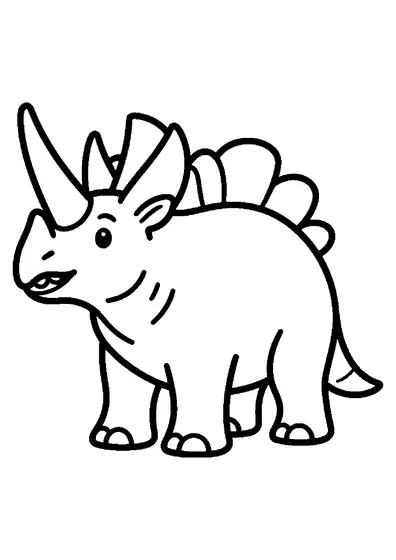
This illustration depicts a famous plant-eating dinosaur from the Late Cretaceous period featuring a prominent head shield and facial horns.

A4 format (landscape), black outlines on a white background · for home and classroom use
All coloring pages: Herbivorous Dinosaur Coloring Pages
Similar coloring pages: Herbivorous Dinosaur Coloring Pages



What else can you print? Free, no account needed
Custom Name Coloring Pages
Enter your child's name to generate a custom coloring page featuring large outline letters to color and decorate.
Open generator →Connect the Dots Generator
Eight connect-the-dots pictures across three difficulty levels. Features faint outline guides for younger children and dots only for older kids.
Open generator →Printables
Worksheets, tracing lines, mazes and dot-to-dots in A4.
Browse printables →
A Side View of the Horned Triceratops
The central subject is a Triceratops displayed from a side perspective. Its large head frill extends backwards over the neck, accompanied by two long horns positioned above the eyes and a shorter single horn located on the snout.
Horned Dinosaur Shield Structure
Triceratops used its massive bony frill primarily for display, thermoregulation, and protection against large predators. While many people associate three-horned dinosaurs with defense, paleontologists believe the structure also helped individuals recognize members of their own species. The neck shield was anchored directly to the skull bones, forming an extraordinarily solid helmet structure.
Natural Colors of a Triceratops
- Triceratops skin: Gray, brown, or olive green tones suited for camouflage in ancient forests
- Bony head frill: Muted earth tones with possible subtle pattern variations
- Facial horns: Dull off-white, light gray, or weathered bone shades
- Beak and mouth area: Dark gray or brown keratin covering