
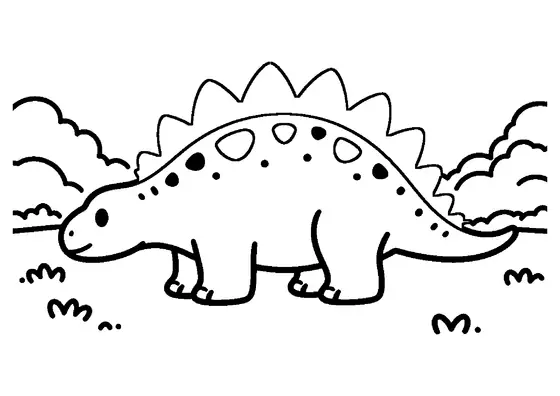
Triceratops on Grass
A young triceratops stands on a patch of grass displaying its distinct facial horns.

A4 format (landscape), black outlines on a white background · for home and classroom use
All coloring pages: Herbivorous Dinosaur Coloring Pages
Similar coloring pages: Herbivorous Dinosaur Coloring Pages



What else can you print? Free, no account needed
Custom Name Coloring Pages
Enter your child's name to generate a custom coloring page featuring large outline letters to color and decorate.
Open generator →Connect the Dots Generator
Eight connect-the-dots pictures across three difficulty levels. Features faint outline guides for younger children and dots only for older kids.
Open generator →Printables
Worksheets, tracing lines, mazes and dot-to-dots in A4.
Browse printables →
Triceratops on Ground Vegetation
A triceratops features its prominent neck frill and three sharp facial horns while standing on ground grass. This famous herbivore lived during the Late Cretaceous period and spent much of its day grazing near ground level. Its sturdy four-legged stance provided stability while navigating ancient floodplains and low vegetation.
Discoveries About Triceratops Anatomy
The name Triceratops literally translates to 'three-horned face' in Greek, referring to the two long brow horns and one shorter nasal horn. Its expansive bone frill served multiple purposes, including protecting the neck from predators and regulating body temperature in warm environments. Fossil evidence shows that Cretaceous grasses and ferns formed an essential part of prehistoric plant ecosystems.
Natural Earth Tones for Triceratops
- Triceratops hide: earthy brown, moss green, or dark terracotta
- Horns and beak: weathered cream, pale ivory, or light gray
- Neck frill accent: warm ochre, reddish-brown, or olive green
- Ground grass patch: deep emerald green, olive, or dry straw yellow