
Plateosaurus in Autumn Grass
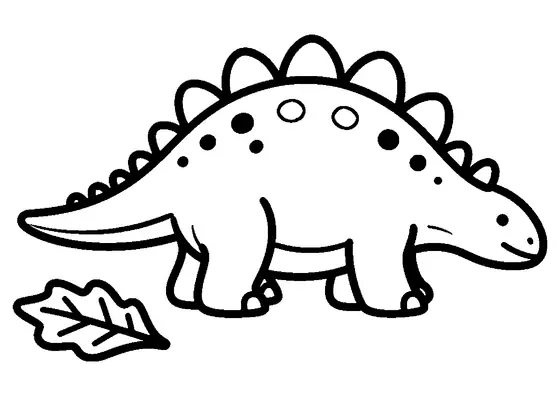
An early herbivorous Plateosaurus steps forward among low grass blades and a single fallen autumn leaf.

A4 format (portrait), black outlines on a white background · for home and classroom use
All coloring pages: Herbivorous Dinosaur Coloring Pages
Similar coloring pages: Herbivorous Dinosaur Coloring Pages


What else can you print? Free, no account needed
Custom Name Coloring Pages
Enter your child's name to generate a custom coloring page featuring large outline letters to color and decorate.
Open generator →Connect the Dots Generator
Eight connect-the-dots pictures across three difficulty levels. Features faint outline guides for younger children and dots only for older kids.
Open generator →Printables
Worksheets, tracing lines, mazes and dot-to-dots in A4.
Browse printables →
Plateosaurus Standing in Autumn Foliage
A bipedal Plateosaurus faces forward above a patch of seasonal grass and a broad leaf. The dinosaur exhibits a compact head, an elongated neck, and an extended tail balanced over grounded feet.
Insights into Plateosaurus Life
Plateosaurus lived during the Triassic period and was one of the earliest large land herbivores. Its sharp thumb claws helped gather vegetation or ward off predators while foraging through changing seasonal environments. Scientists believe it could walk on four legs or rise up on two legs to reach higher plant growth.
Natural Colors of Plateosaurus and Seasonal Vegetation
- Plateosaurus back: Sandy brown or dull rust red
- Underbelly: Pale beige or soft buff
- Autumn leaf: Deep orange or golden yellow
- Meadow grass: Dry yellow-green or brownish green