
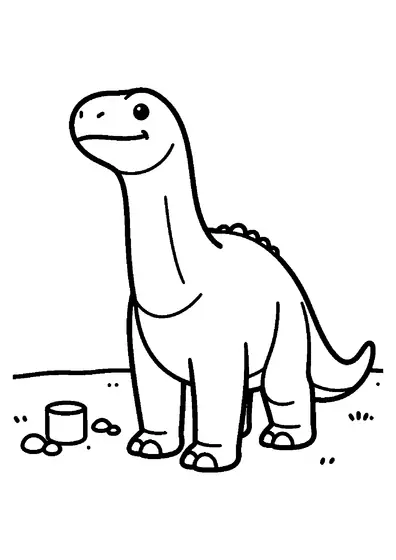
Diplodocus Walking Past a Rock
A remarkably long Diplodocus walks calmly in profile past a low rock.

A4 format (landscape), black outlines on a white background · for home and classroom use
All coloring pages: Herbivorous Dinosaur Coloring Pages
Similar coloring pages: Herbivorous Dinosaur Coloring Pages




What else can you print? Free, no account needed
Custom Name Coloring Pages
Enter your child's name to generate a custom coloring page featuring large outline letters to color and decorate.
Open generator →Connect the Dots Generator
Eight connect-the-dots pictures across three difficulty levels. Features faint outline guides for younger children and dots only for older kids.
Open generator →Printables
Worksheets, tracing lines, mazes and dot-to-dots in A4.
Browse printables →
A Long Diplodocus Passing a Rock
The scene shows an elongated Diplodocus moving slowly past a low rock on the ground. Its slender neck extends far out in front, while its whip-like tail trails behind its massive body.
Fascinating Facts About Diplodocus
Diplodocus is famous for having one of the longest tails of any land animal, consisting of about 80 tail vertebrae. Scientists speculate that Diplodocus could crack its tail like a whip to produce loud sonic booms that frightened off predators. Its teeth were slender and peg-like, designed for stripping leaves from branches rather than chewing them thoroughly.
Real Colors of Diplodocus
- Diplodocus skin: Slate gray, earthy brown, or muted olive green
- Back ridge: Slightly darker grayish-black tone
- Underbelly: Pale gray or light yellowish-tan
- Low rock: Weathered gray, granite, or dark brown stone