
Gallimimus in a Desert Badlands Valley
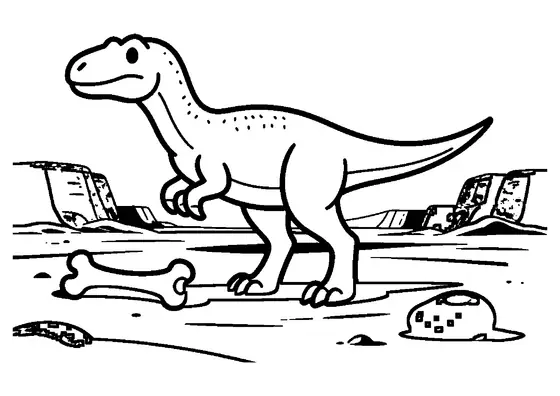
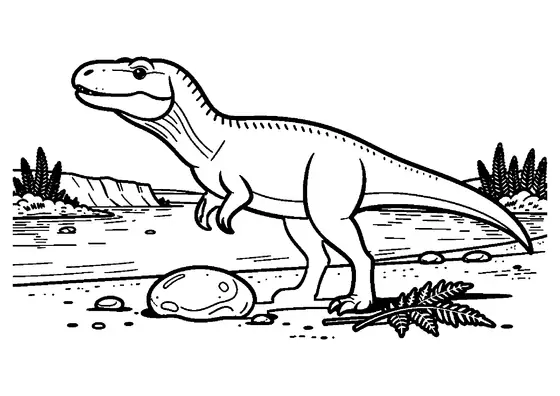
A swift Gallimimus runs through a dry, rocky desert valley with a shrub nearby.

A4 format (landscape), black outlines on a white background · for home and classroom use
All coloring pages: Dinosaur Coloring Pages
Similar coloring pages: Dinosaur Coloring Pages


What else can you print? Free, no account needed
Custom Name Coloring Pages
Enter your child's name to generate a custom coloring page featuring large outline letters to color and decorate.
Open generator →Connect the Dots Generator
Eight connect-the-dots pictures across three difficulty levels. Features faint outline guides for younger children and dots only for older kids.
Open generator →Printables
Worksheets, tracing lines, mazes and dot-to-dots in A4.
Browse printables →
Gallimimus Running Through the Valley
The scene captures Gallimimus in motion as it crosses a desert badlands valley surrounded by rocks. A shrub is the only named vegetation in this dry environment. With long hind legs, a lightweight build, a slender neck, and a small head, Gallimimus was shaped for efficient movement across open ground.
How Gallimimus Was Built for Speed
Gallimimus belonged to a group of dinosaurs often compared with modern ostriches because of their long legs and toothless beaks. Its stiff tail helped balance the body while it moved, and its elongated lower legs were well suited to running. Speed could have helped it travel between feeding areas or escape danger.
Realistic Colors for Gallimimus and the Badlands
- Gallimimus body: its exact color is unknown, but sandy brown, tan, muted rust, or gray would suit a natural palette
- Belly and throat: pale beige or light gray
- Beak: dull tan, brown, or charcoal
- Rocky valley: ocher, reddish brown, sandstone beige, or dark gray
- Shrub: dusty green leaves with gray-brown or brown stems