
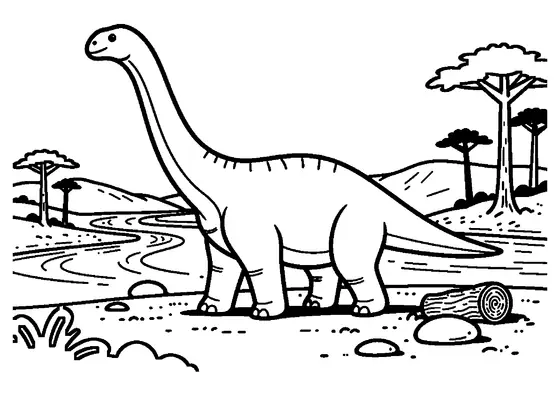
Dromaeosaurus on a Log in a Conifer Forest
A swift Dromaeosaurus stands on a fallen tree within a prehistoric conifer forest clearing.

A4 format (landscape), black outlines on a white background · for home and classroom use
All coloring pages: Dinosaur Coloring Pages
Similar coloring pages: Dinosaur Coloring Pages



What else can you print? Free, no account needed
Custom Name Coloring Pages
Enter your child's name to generate a custom coloring page featuring large outline letters to color and decorate.
Open generator →Connect the Dots Generator
Eight connect-the-dots pictures across three difficulty levels. Features faint outline guides for younger children and dots only for older kids.
Open generator →Printables
Worksheets, tracing lines, mazes and dot-to-dots in A4.
Browse printables →
Dromaeosaurus among forest conifers
This forest scene places Dromaeosaurus on a fallen tree in a clearing surrounded by prehistoric conifers. The raised position suits an agile predator moving through uneven woodland terrain. The established elements are the dinosaur, the fallen trunk, the clearing, and the conifer forest, with no additional animals specified.
Curious facts about Dromaeosaurus
Dromaeosaurus lived in North America during the Late Cretaceous and belonged to the same feathered dinosaur family as Velociraptor. Its enlarged, curved toe claw was probably useful for gripping and restraining prey rather than simply slashing at it. Fallen trees gradually return nutrients to a forest as fungi and small organisms break down the wood.
Natural colors for Dromaeosaurus and the forest
- Dromaeosaurus feathers: the exact colors are unknown; brown, rust, gray, or barred patterns are biologically plausible
- Eyes: amber, brown, or dark reddish brown
- Toe claws: dark horn brown or black
- Fallen tree bark: gray-brown, reddish brown, or deep umber
- Conifer needles: forest green, olive green, or blue-green