
Amargasaurus on a Wide Prehistoric Savanna
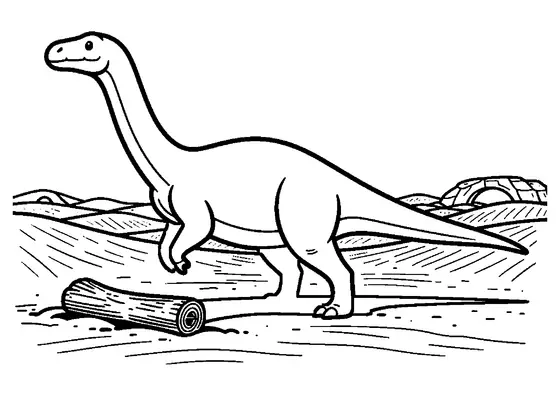
This prehistoric scene presents an Amargasaurus with its distinctive neck spines on a wide savanna.

A4 format (landscape), black outlines on a white background · for home and classroom use
All coloring pages: Dinosaur Coloring Pages
Similar coloring pages: Dinosaur Coloring Pages



What else can you print? Free, no account needed
Custom Name Coloring Pages
Enter your child's name to generate a custom coloring page featuring large outline letters to color and decorate.
Open generator →Connect the Dots Generator
Eight connect-the-dots pictures across three difficulty levels. Features faint outline guides for younger children and dots only for older kids.
Open generator →Printables
Worksheets, tracing lines, mazes and dot-to-dots in A4.
Browse printables →
The Amargasaurus and Its Prehistoric Surroundings
Amargasaurus is shown in an open savanna setting, where its long neck and prominent paired spines are central to its appearance. It belonged to the sauropod family, although it was smaller and shorter-necked than many famous giant sauropods. The broad landscape suits an animal that would have moved through its habitat while feeding on plants.
Surprising Facts About Amargasaurus Spines
The tall projections along its neck were extensions of the vertebrae. Scientists disagree about their precise appearance and purpose: they may have supported a skin covering, formed visible display structures, or helped discourage attackers. Fossils cannot reveal every detail of the soft tissue that once surrounded them.
Natural Colors for Amargasaurus and the Savanna
- Amargasaurus skin: its true color is unknown, but earthy brown, olive, tan, or muted gray are plausible
- Underside: a paler tan or gray than the back and sides
- Neck spines: a darker body shade or a subdued contrasting color for display
- Eyes: dark brown, amber, or black
- Savanna ground: sandy beige, dusty brown, or dry golden tones