
Baryonyx in the Rocky Shallows of a River Delta
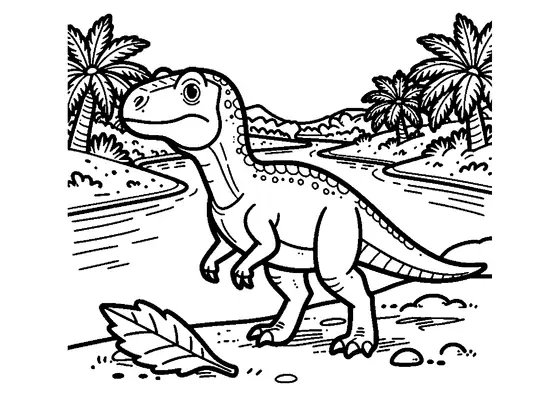
This prehistoric scene features a Baryonyx wading through the rocky shallows of a river delta among horsetails.

A4 format (landscape), black outlines on a white background · for home and classroom use
All coloring pages: Dinosaur Coloring Pages
Similar coloring pages: Dinosaur Coloring Pages


What else can you print? Free, no account needed
Custom Name Coloring Pages
Enter your child's name to generate a custom coloring page featuring large outline letters to color and decorate.
Open generator →Connect the Dots Generator
Eight connect-the-dots pictures across three difficulty levels. Features faint outline guides for younger children and dots only for older kids.
Open generator →Printables
Worksheets, tracing lines, mazes and dot-to-dots in A4.
Browse printables →
Baryonyx in a prehistoric river delta
Baryonyx is shown in shallow water within a rocky river delta. Horsetails surround the waterway, placing the dinosaur in a wet prehistoric habitat. Its long, narrow snout and large claws are important features of this unusual theropod, whose body was built differently from that of many other large meat-eating dinosaurs.
Life beside ancient waterways
Baryonyx had long jaws with many cone-shaped teeth, a form well suited to gripping slippery prey such as fish. Fossil evidence also suggests that it did not live on fish alone and could eat other animals. River deltas constantly change as flowing water moves sand, mud, and stones from one channel to another.
Natural colors of Baryonyx and its surroundings
- Baryonyx skin: its exact color is unknown; brown, olive, or gray are plausible natural choices
- Teeth and claws: ivory, cream, or pale tan
- River water: blue-green, muddy brown, or gray where it reflects the sky
- River rocks: mixtures of gray, tan, rust, and dark brown
- Horsetails: green stems, with older or dried growth turning yellow-brown