
Velociraptor on a Rocky Desert Plateau
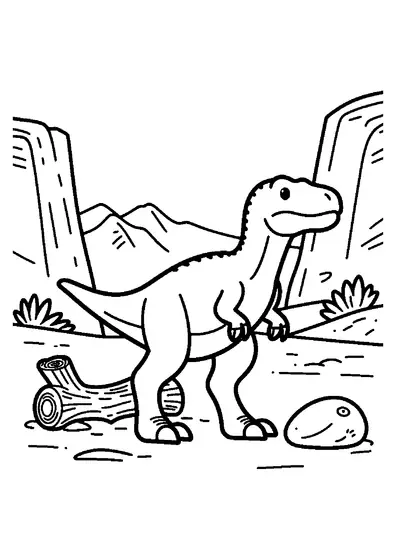
An agile Velociraptor stands beside bones on a rocky desert plateau surrounded by dramatic formations of exposed stone.

A4 format (landscape), black outlines on a white background · for home and classroom use
All coloring pages: Dinosaur Coloring Pages
Similar coloring pages: Dinosaur Coloring Pages


What else can you print? Free, no account needed
Custom Name Coloring Pages
Enter your child's name to generate a custom coloring page featuring large outline letters to color and decorate.
Open generator →Connect the Dots Generator
Eight connect-the-dots pictures across three difficulty levels. Features faint outline guides for younger children and dots only for older kids.
Open generator →Printables
Worksheets, tracing lines, mazes and dot-to-dots in A4.
Browse printables →
Velociraptor on the rocky desert plateau
The scene centers on a Velociraptor in an open desert setting. Bones lie nearby, and rocky formations rise around the plateau. The combination of an alert predator, weathered stone, and ancient remains creates a glimpse of a harsh prehistoric environment without adding details beyond the known scene.
Desert clues from the age of Velociraptor
Velociraptor fossils have been found in rocks formed from ancient desert sediments in what is now Mongolia. Wind can shape desert landscapes by moving sand and wearing exposed surfaces, while sudden water flows may cut channels through dry ground. Bones can survive as fossils when they are buried and mineral-rich water gradually changes or fills their original material.
Natural colors of the plateau and Velociraptor
- Velociraptor feathers and skin: the exact colors are unknown, but sandy brown, rust, cream, or darker markings are plausible
- Eyes: likely dark, with coloration depending on soft tissues that do not usually fossilize
- Claws: horn-like shades of cream, tan, brown, or charcoal
- Exposed bones: fresh bone is ivory to pale beige, while fossilized bone may be brown, black, rust, or gray
- Desert rocks and plateau: sandstone tan, ocher, reddish brown, pale gray, or dark volcanic tones