
Quetzalcoatlus Over a Volcanic Canyon
A gigantic azhdarchid pterosaur glides through a deep mountain gorge shaped by ancient volcanic activity.

A4 format (portrait), black outlines on a white background · for home and classroom use
All coloring pages: Flying and Sea Reptile Coloring Pages
Similar coloring pages: Flying and Sea Reptile Coloring Pages



What else can you print? Free, no account needed
Custom Name Coloring Pages
Enter your child's name to generate a custom coloring page featuring large outline letters to color and decorate.
Open generator →Connect the Dots Generator
Eight connect-the-dots pictures across three difficulty levels. Features faint outline guides for younger children and dots only for older kids.
Open generator →Printables
Worksheets, tracing lines, mazes and dot-to-dots in A4.
Browse printables →
Giant Quetzalcoatlus in a Volcanic Gorge
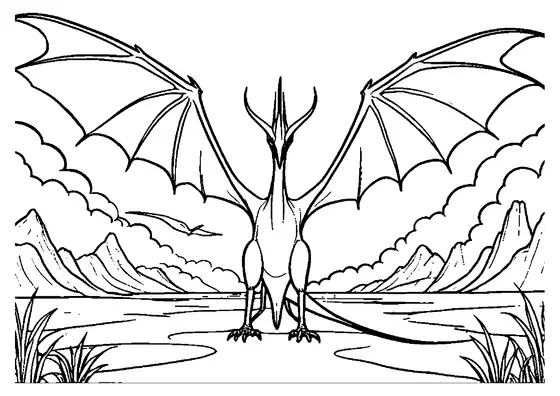
This prehistoric scene shows a towering Quetzalcoatlus moving through a rugged volcanic canyon. A massive volcano stands in the surrounding landscape while steep canyon walls frame the flying reptile. The harsh volcanic environment forms a dramatic natural setting along the flight path.
Flight Dynamics in Volcanic Terrain
Quetzalcoatlus was one of the largest flying animals in Earth history, possessing a wingspan comparable to a small airplane. Thermal updrafts generated by heat in volcanic valleys helped buoy massive flying reptiles, allowing them to travel vast distances over terrestrial landscapes. Deep canyons created natural wind funnels that supported soaring behavior without continuous wing flapping.
Realistic Colors of Quetzalcoatlus and Volcanic Rocks
- Quetzalcoatlus body cover: tan, grayish-brown, or pale cream pycnofibers
- Quetzalcoatlus long beak: dark amber, orange, or blackish horn tone
- Quetzalcoatlus wing membranes: dark brown or charcoal gray leathery skin
- Volcanic canyon walls: dark basalt gray, rust red, and charred brown rock layers
- Volcano peak: ash gray, dark charcoal, and deep reddish-brown volcanic rock