
Tapejara Over a Mangrove Estuary
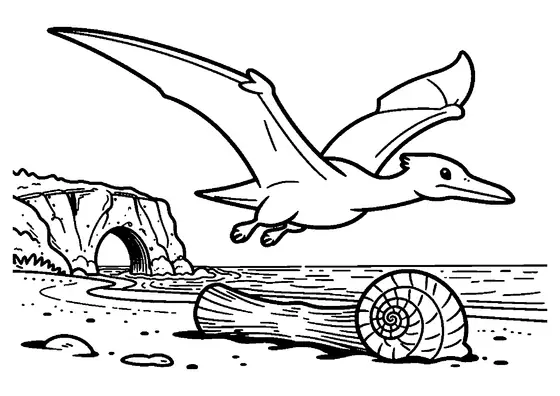
A crested prehistoric reptile glides over a muddy coastal wetland where thick root networks meet winding river channels.

A4 format (landscape), black outlines on a white background · for home and classroom use
All coloring pages: Flying and Sea Reptile Coloring Pages
Similar coloring pages: Flying and Sea Reptile Coloring Pages



What else can you print? Free, no account needed
Custom Name Coloring Pages
Enter your child's name to generate a custom coloring page featuring large outline letters to color and decorate.
Open generator →Connect the Dots Generator
Eight connect-the-dots pictures across three difficulty levels. Features faint outline guides for younger children and dots only for older kids.
Open generator →Printables
Worksheets, tracing lines, mazes and dot-to-dots in A4.
Browse printables →
Tapejara Soaring Above Prehistoric Mangroves
This coastal environment depicts a Tapejara spreading its wings over a river estuary. Below the flying reptile, mangrove roots extend into muddy banks and shallow water channels. The winding waterways and mudflats form an expansive coastal delta landscape.
Estuarine Life and Pterosaur Crests
Tapejara possessed a unusually large, sail-like crest on its snout that may have been brightly colored for communication. Mangrove estuaries served as vital nursery grounds for ancient marine life, offering abundant food sources in shallow, protected waters. Thick mangrove root structures trapped sediment along river mouths, gradually forming stable mudflats and shallow tidal channels.
Natural Colors of Tapejara and Estuary Habitats
- Tapejara body skin: light brownish-tan or muted olive gray
- Tapejara head crest: reddish-pink, orange, or striped pattern tones
- Mangrove roots: dark reddish-brown, charcoal, and moss-covered bark
- Mudflats: rich dark brown, wet silt gray, and dark mud tones
- Winding channels: murky brown, brackish green, or dark blue water