
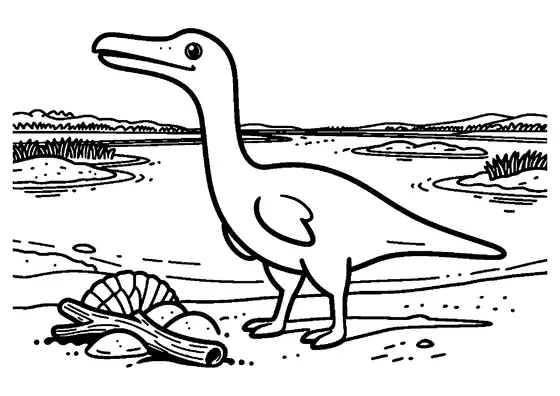
Pterodaustro Wading in a Shallow River Delta
A unique Cretaceous pterosaur searches for food along a marshy riverbank surrounded by ancient wetland plants and smooth stones.

A4 format (portrait), black outlines on a white background · for home and classroom use
All coloring pages: Flying and Sea Reptile Coloring Pages
Similar coloring pages: Flying and Sea Reptile Coloring Pages



What else can you print? Free, no account needed
Custom Name Coloring Pages
Enter your child's name to generate a custom coloring page featuring large outline letters to color and decorate.
Open generator →Connect the Dots Generator
Eight connect-the-dots pictures across three difficulty levels. Features faint outline guides for younger children and dots only for older kids.
Open generator →Printables
Worksheets, tracing lines, mazes and dot-to-dots in A4.
Browse printables →
Pterodaustro in a Prehistoric Wetland
Pterodaustro wades through calm delta waters in search of tiny organisms. Ancient horsetail plants grow near the shoreline, where smooth stones line the shallow riverbed. This unusual flying reptile adapted to life near coastal lagoons and muddy shores.
Fascinating Facts About Filter-Feeding Pterosaurs
Unlike most other flying reptiles, Pterodaustro used hundreds of bristle-like teeth to filter small crustaceans from shallow water. These modified teeth lined its long lower jaw like a fine comb. River deltas provided rich feeding grounds where shallow currents brought nutrient-dense algae and small aquatic life.
Natural Colors of Pterodaustro and its Habitat
- Pterodaustro body: Soft pinkish tone or gray skin, similar to modern filter-feeding birds like flamingos
- Beak and bristle teeth: Pale ivory or light tan shade
- Shallow river delta water: Murky greenish blue or clear teal
- Horsetails: Deep forest green along the jointed stems
- River stones: Earthy gray, brown, and charcoal tones