
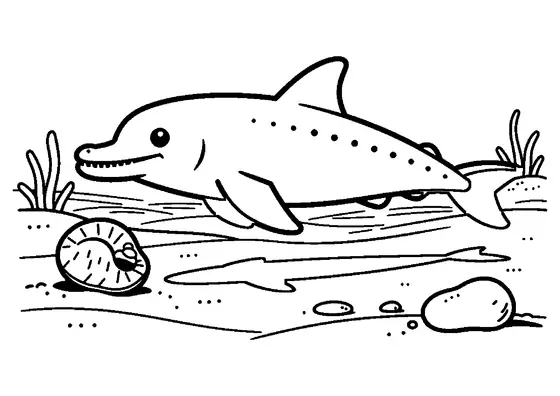
Ichthyosaur Swimming Above a Sandy Seabed
A streamlined Ichthyosaur glides effortlessly through clear ocean waters above a quiet sandy seabed.

A4 format (landscape), black outlines on a white background · for home and classroom use
All coloring pages: Flying and Sea Reptile Coloring Pages
Similar coloring pages: Flying and Sea Reptile Coloring Pages


What else can you print? Free, no account needed
Custom Name Coloring Pages
Enter your child's name to generate a custom coloring page featuring large outline letters to color and decorate.
Open generator →Connect the Dots Generator
Eight connect-the-dots pictures across three difficulty levels. Features faint outline guides for younger children and dots only for older kids.
Open generator →Printables
Worksheets, tracing lines, mazes and dot-to-dots in A4.
Browse printables →
Streamlined Ichthyosaur Above the Sandy Floor
This portrayal captures an Ichthyosaur gliding gracefully through sunlight-dappled waters over a sandy ocean floor. The streamlined body form shows how efficiently this sea reptile moved through open water in ancient marine environments.
Adapted for Speed in Prehistoric Waters
Ichthyosaurs evolved a dolphin-like body structure independently to swim rapidly after fast prey. Their large eyes allowed them to navigate and hunt efficiently even when diving down toward deeper, dimly lit stretches of the ocean seabed.
Realistic Colors of Ichthyosaurs and Ocean Sand
- Ichthyosaur back: Dark bluish-black or slate gray
- Underbelly: Pale silver or soft white for countershading
- Ichthyosaur eyes: Dark brown or black with shiny pupils
- Sandy seabed: Warm golden yellow, beige, or pale tan
- Sunlit ocean water: Bright cyan to translucent aqua blue