
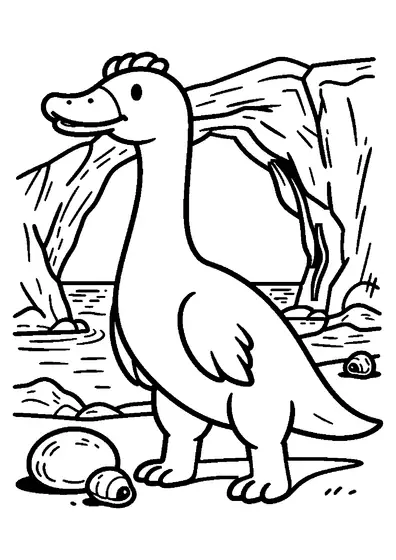
Cearadactylus on a Sandstone Cliff
A large pterosaur settles on a high rocky cliff overlook above an expansive prehistoric valley landscape.

A4 format (landscape), black outlines on a white background · for home and classroom use
All coloring pages: Flying and Sea Reptile Coloring Pages
Similar coloring pages: Flying and Sea Reptile Coloring Pages




What else can you print? Free, no account needed
Custom Name Coloring Pages
Enter your child's name to generate a custom coloring page featuring large outline letters to color and decorate.
Open generator →Connect the Dots Generator
Eight connect-the-dots pictures across three difficulty levels. Features faint outline guides for younger children and dots only for older kids.
Open generator →Printables
Worksheets, tracing lines, mazes and dot-to-dots in A4.
Browse printables →
Cearadactylus Resting Above the Valley
Cearadactylus perches high above the terrain on a rugged sandstone ledge. With folded wings, the flying reptile observes the vast valley below from its elevated vantage point. Rocky outcrops provided safe resting spots away from land predators.
Life Above Prehistoric Canyons
Cearadactylus lived during the Early Cretaceous period along coastal areas and open river valleys. Its large wingspan allowed it to catch thermal updrafts soaring high above rocky formations. High cliffs provided natural launch points for taking flight without wasting valuable energy.
Real-Life Colors of Cearadactylus and Sandstone Cliffs
- Cearadactylus skin: Mottled brown, olive green, or slate gray tones
- Wing membranes: Tan or dusky brown shades
- Sandstone rock: Layered shades of reddish orange, ochre, and warm gray
- Valley floor: Muted greens and earthy brown tones