
Mosasaurus in an Underwater Canyon
A massive ocean predator commands a deep marine canyon with steep rock walls and layered seafloor ledges.

A4 format (portrait), black outlines on a white background · for home and classroom use
All coloring pages: Flying and Sea Reptile Coloring Pages
Similar coloring pages: Flying and Sea Reptile Coloring Pages

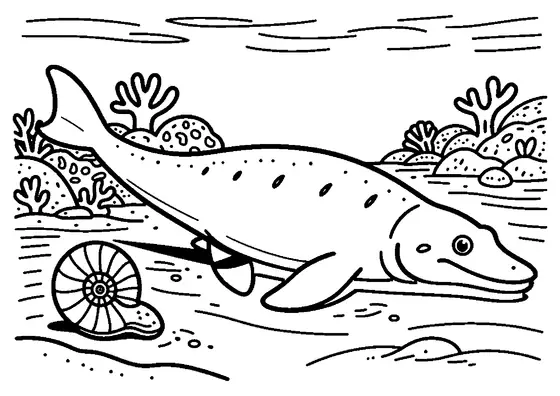

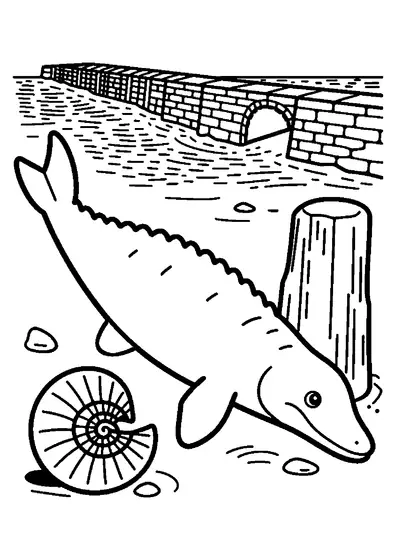
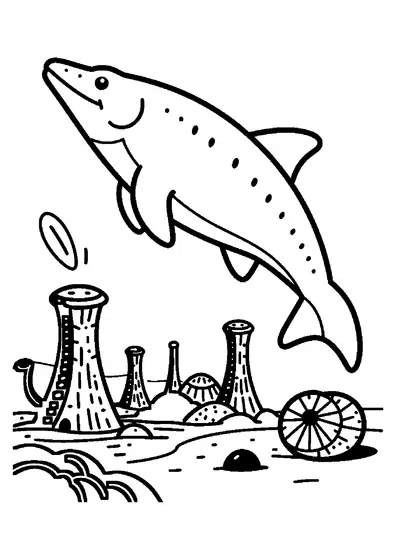

What else can you print? Free, no account needed
Custom Name Coloring Pages
Enter your child's name to generate a custom coloring page featuring large outline letters to color and decorate.
Open generator →Connect the Dots Generator
Eight connect-the-dots pictures across three difficulty levels. Features faint outline guides for younger children and dots only for older kids.
Open generator →Printables
Worksheets, tracing lines, mazes and dot-to-dots in A4.
Browse printables →
Mosasaurus Swimming in a Deep Oceanic Canyon
This view presents a Mosasaurus angled slightly from the front as it travels through a deep underwater canyon. Towering rock faces and broad horizontal seabed ledges form distinct geological layers throughout the chasm.
Underwater Canyons as Prehistoric Marine Corridors
Deep sub-sea canyons acted as primary migration channels and hunting zones for large Cretaceous marine reptiles. Nutrient-rich ocean currents rising along steep canyon walls attracted vast schools of fish and squids. The powerful tail fin of Mosasaurus enabled it to dive to great depths and maneuver through narrow rock passes.
Natural Color Spectrum of Deep Sea Canyons
- Mosasaurus hide: dark charcoal, deep blue-black, or gray for dark ocean water concealment
- Canyon rock walls: dark slate gray, brown, and dark greenish black
- Seafloor ledges: sandy gray, muted olive brown, and weathered rock tones
- Deep ocean water: dark royal blue shading into deep blue-violet near lower levels